Trump government concludes that PIX is 'unfair': why does the Brazilian system bother the US so much and what can happen to it now?
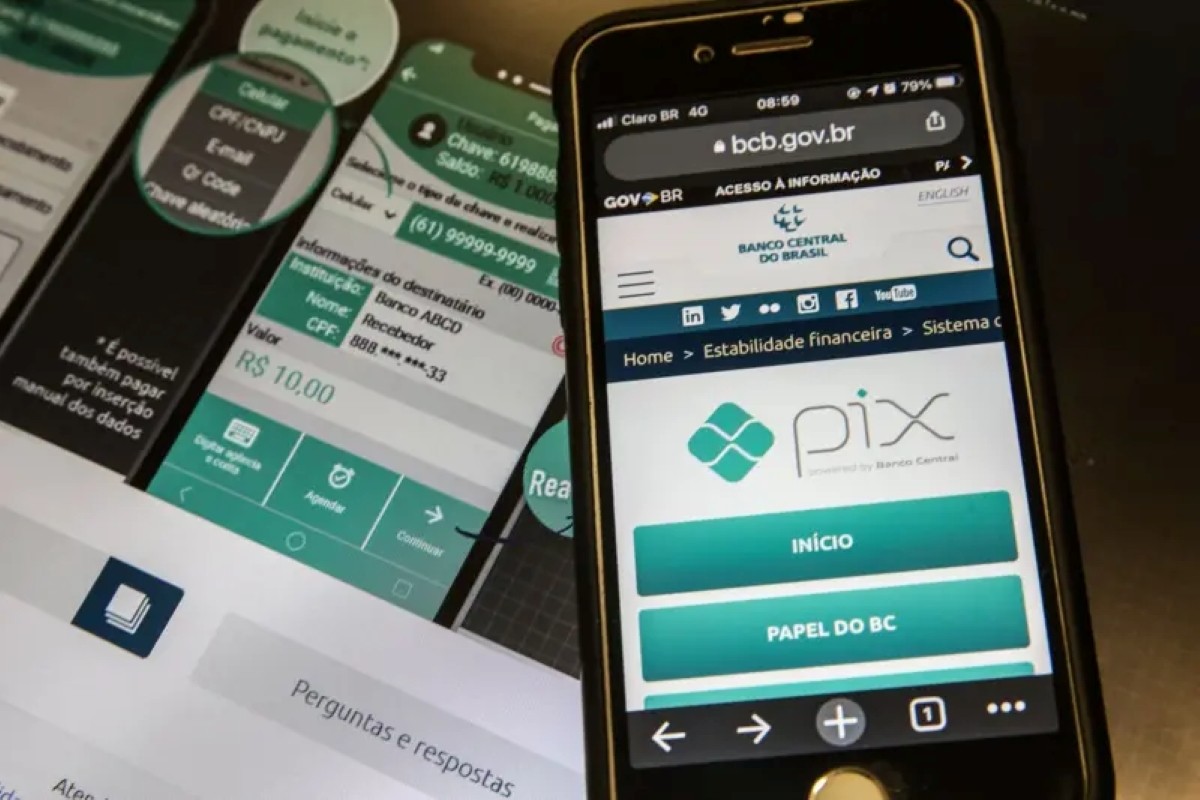
Trump government concludes that Pix is 'unfair': why does the Brazilian system bother the US so much and what could happen to it now?
Marcello Casal Jr/Agência Brasil
The United States government once again attacked the Pix payment system this Tuesday (06/02) upon concluding a major investigation into Brazil's commercial practices.
🗒️ Do you have any suggestions for a report? Send to g1
A trade investigation based on so-called Section 301 of the Trade Act of 1974 - a legal instrument that allows Washington to investigate foreign practices considered unfair or discriminatory against American companies and products - concluded that Brazil's trade practices are "unreasonable" and "burden or restrict US commerce".
One of the targets of the American document - produced by the Office of the United States Trade Representative (USTR) - is the payments system Pix.
"Brazil has unfairly harmed American companies that operate in competing electronic payment services, including through policies that favor its national champion, Pix", states the document.
USA proposes 25% tariff on Brazilian goods to punish 'unreasonable' practices
The American government accuses the Brazilian Central Bank of playing a dual role in Pix - "as regulator and owner/operator" of Pix - creating a "conflict of interest, in the absence of safeguards appropriate procedural procedures."
"The bank has acted as a regulator to disfavor US electronic payment service providers and favor Pix. For example, the Central Bank requires the use of Pix by financial institutions with more than 500 thousand accounts and requires that Pix be displayed on the main screen of the application of participating institutions with equal or greater prominence than any other payment or transfer functionality."
In addition, there is criticism that the Central Bank requires that Pix be offered fee-free to customers. According to the conclusion of the investigation, Brazilian authorities force American companies to promote the Brazilian competitor (Pix) without compensation to American institutions.
"Brazil's acts, policies and practices related to the preferential treatment given to Pix are unfair and discriminatory. It is unfair to require competitors to offer advantages to Pix, such as availability, visibility and fee limits, and Brazil discriminates against US electronic payment service providers by granting these advantages only to its national champion in Brazil."
For now, there is still no definition on the consequences of the conclusion of American investigations into commercial practices and Pix.
The American document proposes retaliatory tariffs of 25% on Brazilian products - but these measures have not yet been defined and will be discussed over the next few weeks.
Some dates have already been defined:
The American government is still receiving consultations from the public until July 1st about the measures.
On July 6th, there will be a public hearing in the USA.
The American government said which will be in dialogue with the Brazilian until July 15th, before announcing any decision.
This was not the first US attack on Pix.
Pix was mentioned in another USTR report on March 31st in which the US lists what it considers trade barriers from more than 60 countries against American companies.
At the time, the Brazilian government reacted and President Luiz Inácio Lula da Silva (PT) stated that "Pix is from Brazil". "No one is going to make us change Pix", he declared in an interview last week.
Even the president of Colombia came out in defense of the Brazilian payment system.
Gustavo Petro praised the model and, in a long post on social media, asked for the system to be extended to his country.
With the conclusion of investigations into Pix, a question now arises: what can the US do specifically against the Brazilian payment system?
Experts point out that pix goes against the interests of big techs and card companies
Getty Images via BBC
US weapons
Experts in foreign trade and economic regulation interviewed by the report stressed that the US do not have jurisdiction to act directly against Pix.
The tools available to Americans focus on the commercial sphere and are described in the legislation that was used to open the investigation against Brazil, section 301 of the 1974 Trade Act.
They range from the suspension of benefits and trade agreements to the restriction of imports of products and services or the imposition of tariffs on these goods and services.
In other words, the US could, for example, initiate a new tariff on exports Brazilians bound for American ports or remove Brazil from the General System of Preferences (GSP), a tariff benefit program instituted in the 1970s for developing countries.
"It is, therefore, more of a mechanism of external and economic pressure on the Brazilian State than a regulatory power over the payments infrastructure itself," said Camila Villard Duran, a specialist in economic law and currency market regulation.
Duran highlights that in the USTR's March report the language used in the Brazil chapter is similar to the one that describes alleged "unfair practices" in the payments sector in several other countries that are also criticized by the USA.
"The Brazilian case, in this sense, is not isolated, but integrated into a broader political strategy of contesting national practices in digital financial services", says she, who is an associate professor of law at the ESSCA School of Management, in France, and co-founder of the Women in Regulation Institute.
"Thus, the most plausible consequence is not a measure technically aimed at the Pix, but rather some form of broader commercial retaliation", assesses Duran.
In this sense, a Brazilian source close to the negotiations says it is difficult to risk saying what exactly will come after the investigation.
Historically, considers the source, the US has rarely used the instrument of section 301 of the 1974 Trade Law and, in the specific case of the investigation against Brazil, the scope of topics analyzed by the USTR is broad and goes well beyond Pix.
It also includes, for example, the tariffs to which American ethanol producers are subjected to access the Brazilian market and even illegal deforestation, accused of giving an unfair competitive advantage to Brazilian agricultural exports.
Renê Medrado, partner at Pinheiro Neto Advogados, makes a similar assessment and gives an example: even if the US were to opt for broad trade retaliation, it is difficult to estimate whether any tariffs would be placed on a broad list of products or whether they would be selective.
"And there is this that the American government Sometimes he says he's going to [do something], then he goes back...", he adds, commenting on the challenge of outlining possible scenarios.
"The scope of these measures will depend much more on the dynamics of bilateral politics and the effectiveness of Brazilian diplomacy", comments professor Camila Villard Duran.
What's at stake
Why is the US attacking Pix this year? In the USTR report from March last year, the Brazilian instant payments system had not even been mentioned directly, unlike what happened in this year.
Even in the document in which it formalized the investigation against Brazil, the agency did not mention Pix by name, despite having made indirect reference to it ("Brazil also appears to engage in a series of unfair practices with respect to electronic payment services, including but not limited to favoring its electronic payment services developed by g
overno", says the text).
The source heard by BBC News Brasil who is close to the negotiations comments that one of the hypotheses for the toughening of the tone now was the outcome of a recent meeting of the World Trade Organization (WTO) in which Brazil blocked a proposal from the USA and other countries to extend the moratorium on customs tariffs on electronic transmissions, which includes digital services such as streaming, software and games.
And there is also the great defeat that Trump's tariff suffered in the American judiciary in February this year, when the Supreme Court considered that the instrument that had been used to support the measures (the International Emergency Economic Powers Act, or IEEPA, for its acronym in English), did not actually authorize the American government to institute the tariffs.
In an article from March this year, two analysts from the American research center Brookings Institute pointed out that, given this setback, Section 301, used in the investigation against Brazil, could enter the government's menu American as an option to tax its commercial partners again.
On the financial sector side, jurist Camila Villard Duran draws attention to the expansion of Pix in Brazil, "which directly changes the competitive balance for American companies, such as Visa and Mastercard", but especially to the broader phenomenon in which it is inserted, of structural transformation and reorganization of the international monetary and financial order.
"Pix is no longer just an efficient payment system. It represents a model of public infrastructure, which reduces dependence on foreign private networks and concentrates, at the domestic level, jurisdictional control over data and financial flows", highlights Duran.
The professor points out that, in the USTR report, the US makes similar criticisms to those made against Brazil to countries such as India, Thailand and Pakistan, "where national public policies promote domestic payment systems, impose data localization requirements or create regulatory barriers to the actions of foreign companies".
"In all these cases, the US argument is similar: such measures would be discriminatory and would restrict the access of American companies to national markets", he adds.
Federal government post from July 2025: Lula administration has sought to use episodes to try to improve image
Reproduction/X/Federal Government
From economics to politics
Given this panorama, Duran assesses that the pressure on Pix and on payment systems in other countries is also linked to an even broader issue, of sovereignty.
What is at stake, she says, It is no longer just competition between companies, "but control over infrastructures considered critical."
"In my research, both on the creation of the digital euro and on the projects of alternative platforms for cross-border financial transactions, I notice that the idea of 'monetary sovereignty' is moving very quickly from the autonomy of monetary policy to jurisdictional control over payment infrastructures and the monetary data they generate", says Duran.
"Currency, in the digital economy, becomes each more information and, in this context, jurisdictional control over this data becomes a central element of state monetary power."
READ ALSO:
PIX threatened? What is the Trump government's investigation into commercial practices in Brazil
Why did the Trump government attack Pix again (and what can the US do against it)?
Source: G1