Trump criticizes Netanyahu for attacks on Lebanon and says he suggested Syria deal with Hezbollah
'Our fight is not over', says Netanyahu after the US and Iran sign a peace agreement
The President of the United States, Donald Trump, once again criticized his ally Benjamin Netanyahu, Prime Minister of Israel, this Tuesday (16).
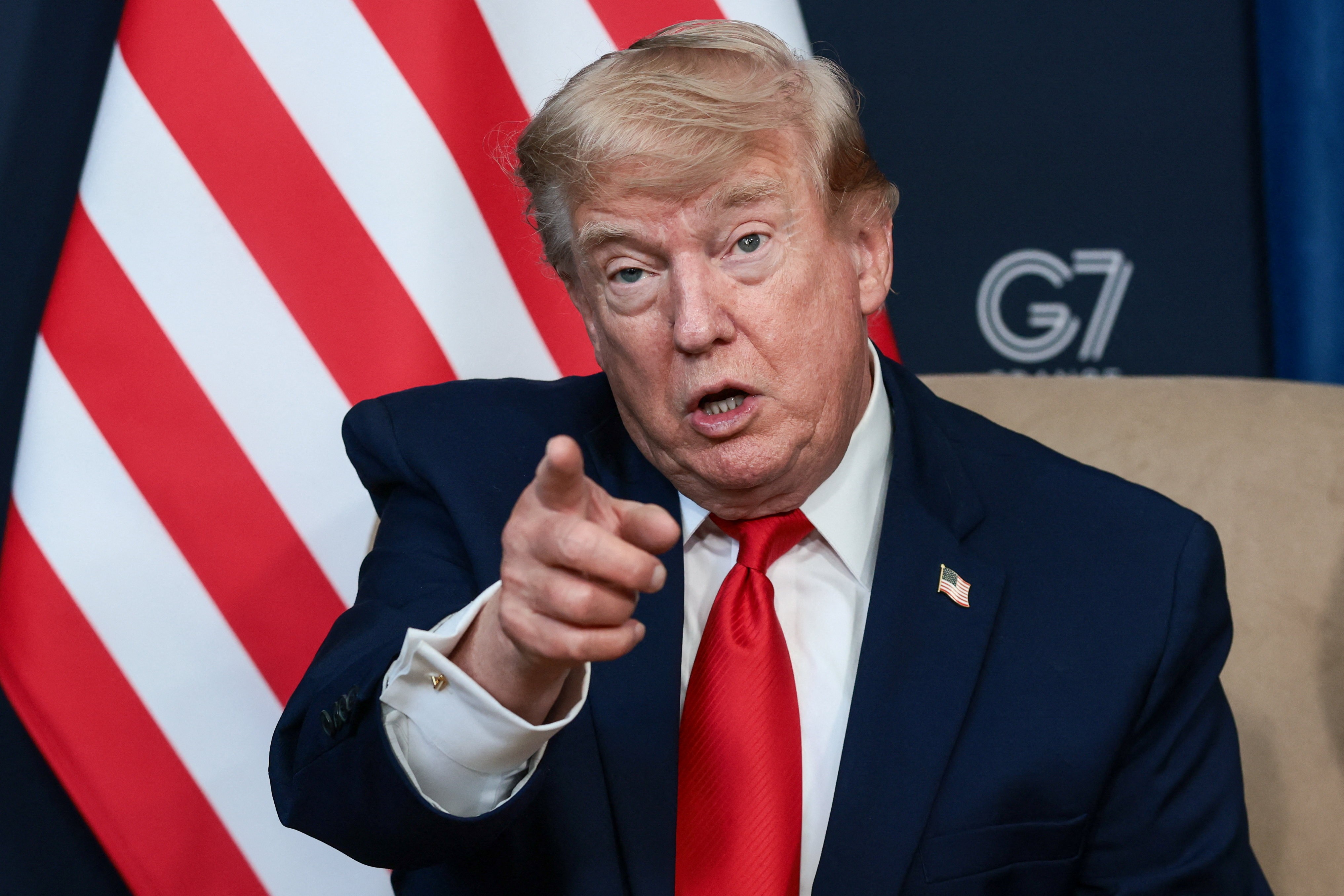
When speaking to journalists at the G7 summit, Trump once again stated his dissatisfaction with the offensive carried out by the Israeli Armed Forces on Beirut during the final negotiations with Iran on a peace agreement and said that the ally "must be more responsible" towards Lebanon.
✅ Follow the g1 international news channel on WhatsApp
Is the war over? Will the Strait of Hormuz reopen? what is known about the agreement between the US and Iran
The US president, who admitted having called Netanyahu "crazy" upon learning of the attack, stated that the two remain allies and have "a great relationship", but that he suggested that Syria start dealing with the extremist group Hezbollah, instead of Israel.
"If Israel can't do the job without killing everyone, Syria should do it", he said.
This Monday (15), Netanyahu stated that Israel's fight "it's not over" and that the country will continue to "neutralize threats". He said that his Army will continue in "security zones" already established in the Middle East and claimed that the war against the Iranians saved Israel from "nuclear annihilation".
Donald Trump
REUTERS/Evelyn Hockstein
Trump also spoke about the pre-signed agreement with Iran. He highlighted that now the negotiations will enter a second phase and that the US will not invest any money in Iran:
"We have a deal closed with Iran, and it must be successful; now we go to a second stage, which I think will be even easier. The only thing that really matters to me is that Iran will never have a nuclear weapon, and that is very clear. The signing took place electronically, US Vice President J.D. Vance said on Monday (15) on the North American network ABC.
President Donald Trump stated, however, that the final text should only be released after Friday (19), when a formal signing ceremony will take place in Geneva, Switzerland.
"The agreement is already fully signed. And the Strait [of Hormuz] is already partially open," said Trump shortly after arriving in France for the G7 summit - a group of the world's largest economies.
According to Reuters, the following signed the document:
Donald Trump;
J.D. Vance;
and Mohammed Qalibaf, President of Iran's Parliament.
The Trump administration understands that Qalibaf is authorized by Iranian Supreme Leader Mojtaba Khamenei to negotiate and sign the document on his behalf.
According to Reuters, the peace agreement provides for the immediate opening of the Strait of Hormuz and the end of the US maritime blockade of Iran.
In-person ceremony and uncertainty about the text
Pakistan announces peace agreement in war between the United States and Iran
The in-person signing ceremony scheduled for Friday will be attended by JD Vance, according to Trump. It is not yet known, however, which other US and Iranian officials will attend the event.
According to the US and Iran, technical discussions to deepen the treaty between the two countries will begin later this week. The final text of the document will be released after signing on Friday, according to Trump.
The treaty between the US and Iran also provides for the relief of sanctions and the unfreezing of Tehran's assets, but this has not yet occurred. According to Reuters, the US is ready to do this, but will wait to see the Iranian stance. Trump said he will not alleviate anything for Iran "until they do what they have to do."
Trump's speech makes it clear that distrust between Washington and Tehran remains despite the signing of the agreement.
The Iranian Foreign Ministry said on Monday that the country still harbors "deep distrust" towards the US.
No toll, but with 'service fee'
On Sunday night (14), Donald Trump stated in an interview with the newspaper "The New York Times" that the agreement signed between the US and Iran provides that there will be no toll charged in the Strait of Hormuz.
However, Iran said on Monday (15) that it will start charging a "fee for service" on ships crossing the sea route.
"We have always stated that we do not intend to charge transit fees, but fees will be charged for navigation services, environmental protection, ship insurance and other necessary services," said Foreign Ministry spokesman Esmaeil Baqaei.
Iran, whose territory borders most of the Strait of Hormuz, in practice, it controls transit through the canal, where ships carrying around 20% of the oil and gas consumed in the world travel.
The North American government had not yet commented on the rate announced by Iran until the last update of this report.
President Donald Trump during the G7 meeting, in Evian, France.
Reuters/Evelyn Hockstein
Source: G1