Trump considers new attacks on Iran's infrastructure, says broadcaster
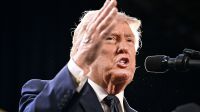
US President Donald Trump has declared that he may order new attacks on Iran's power plants and bridges because Tehran is taking too long to reach an agreement, American broadcaster Fox News reported on Wednesday (10), citing a telephone interview.
Just this Wednesday, Trump said in a publication on Truth Social
that Iran took too long to negotiate an agreement and now "will have to pay the price", without giving further details.
"Iran's Armed Forces are in complete chaos. Most of them, like the Navy and the Air Force, don't even exist anymore - they have been completely defeated. Iran just talks and doesn't act. The bully of the Middle East DIED!!! They took too long to negotiate an agreement that would have been great for them, now they will pay the price!!!", wrote the American president.
The president did not specify what this "price" would imply, but the statement comes after the US announced a new wave of attacks against Iran on Tuesday (9), after an Army Apache helicopter crashed near the Strait of Hormuz.
An American official told CNN yesterday that the new attacks were planned as a warning to Iran and that the US believes they will not disrupt negotiations to end the war.
Resumption of attacks
Iran's Revolutionary Guard said it carried out missile and drone attacks against American military bases in Jordan, Kuwait and Bahrain this Wednesday (10), in retaliation for US attacks on Iranian targets around the Strait of Hormuz.
The exchange of accusations, after US President Donald Trump claimed that Iran had shot down an American Apache helicopter near the strait, represents one of the most significant escalations since Washington and Tehran agreed to a ceasefire in April.
The American military said it attacked Iranian air defenses, ground control stations and surveillance radars, in a "proportionate response" to the shooting down of the helicopter, whose two crew members were rescued.
The retaliatory strikes, just days after Iran exchanged bombing raids with Israel for the first time since the ceasefire, have cast new doubts on the prospects for a deal to end the war, which began on February 28 with joint US and Israeli strikes on Tehran.
The US strikes lasted about four hours, with US Central Command reporting shortly before 10pm (Brasília time) that operations had ended. An American official said nearly 20 Iranian targets had been hit.
The IRGC (Iranian Islamic Revolutionary Guard Corps) reported that the island of Qeshm and the port city of Sirik were attacked. Iranian media also reported explosions in Bandar Abbas, another port city, and later near Jask, at the entrance to the Strait of Hormuz.
Peace deal seems distant
The ceasefire in early April was announced with plans for peace talks. Since then, diplomats have sought to reopen the Strait of Hormuz, end the American blockade of Iranian ports and create a path for negotiations over Iran's nuclear program.
Trump has repeatedly stated that a deal is close, but despite several rounds of indirect negotiations mediated by Pakistan and Qatar, the two sides still appear a long way off.
Fighting in a parallel war between Israel and Iran-backed Hezbollah militants in Lebanon continued, and Tehran maintained restrictions on most shipping through the strait, which before the war carried a fifth of the world's crude oil and liquefied natural gas.
Washington maintained its own blockade of Iranian ports.
Trump said any peace deal must ensure that Iran cannot develop a nuclear weapon. Iran denies any ambition in this regard.
Tehran's demands include the lifting of international sanctions, the release of billions of dollars in frozen assets, recognition of its control over the strait and an end to fighting in Lebanon.
Iran threatens to attack countries that host US troops | CNN NEW DAY
Source: CNN