Tren de Aragua: understand the operation of the Venezuelan faction in Brazil
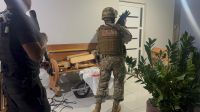
The Civil Police of Roraima revealed that the Venezuelan Tren de Aragua faction has been growing in Brazil since 2018. An investigation revealed an extensive money laundering and arms trafficking scheme by one of the largest criminal organizations in Latin America in several Brazilian states.
The main points investigated were an illegal financial operation with cryptocurrencies and the supply of heavy weapons to the Red Command, mainly to Rio de Janeiro. CNN Brasil found that an "established relationship" was found between the factions.
The investigation demonstrated that members of the Tren de Aragua used Roraima as a strategic corridor for the movement of weapons from Venezuela, Colombia and the United States, destined for the communities of Rio and Amazonas.
"Rio de Janeiro is only what it is today because of the rifles. And Tren de Aragua is one of the suppliers", an intelligence source linked to the investigation told the report. The main targets of the Rota do Norte operation this Tuesday (16) were arms merchants.
Another factor that surprised the authorities is money laundering with cryptoactives. A man identified as the faction's main financial operator was arrested this Tuesday, suspected of moving more than R$300 million in cryptocurrencies in the last year alone.
Investigators from the Civil Police and the Ministry of Justice and Public Security are concerned about the method used by Venezuelan criminals and reinforce the need to improve the sector's regulatory ecosystem, in addition to greater asset blocking.
Even with the use of shell companies and secret companies to hide illicit resources, CNN Brasil found that the scheme is not considered as sophisticated in comparison to the dynamics of other factions operating in the country.
According to the investigation, there is no evidence that the faction is part of the Brazilian formal market, that it operates a national drug trafficking scheme, or that it is involved with other major criminal factions, such as the PCC (Primeiro Comando da Capital).
Authorities state that, mainly because it is the first operation and due to recent investments in technology and intelligence in the Brazil Program against Organized Crime, new national operations against large criminal organizations should be seen in the coming months.
Insertion of the faction in 2018
The investigation by Draco (Department for the Repression of Organized Criminal Organizations), which began at the end of 2024, resulted from other investigations into local crimes such as homicides and drug trafficking almost 10 years ago.
Investigations related to the actions of Tren de Aragua date back to the first surveys between 2018 and 2019, when the first signs of the actions of criminal migrants linked to Venezuelan factions in Roraima emerged.
With the Venezuelan migration crisis in 2018, there was a change in the criminal dynamics of Roraima. The overload on pillars such as education, health and security resulted in an increase in the crimes of homicides by firearm and drug trafficking - previously less seen in the state.
Based on this work, the institution deepened its investigations, initially focused on the violent actions of the criminal organization.
Venezuela Tren de Aragua faction is target of operation in Brazil | LIVE CNN
Operation Rota do Norte
The Civil Police of Roraima presented at the end of this Tuesday (16) the partial result of Operation Rota do Norte, one of the largest integrated actions ever coordinated by the institution against transnational organized crime.
Carried out in the states of Roraima, Amazonas, São Paulo, Rio de Janeiro, Minas Gerais and Paraná, the operation is the result of more than a year and a half of investigation and its main objective was to dismantle the financial structure of Tren de Aragua, considered one of the most dangerous in operation in Latin America.
In total, the Court issued 25 preventive arrest warrants, 18 against Venezuelans and seven against Brazilians. To date, 13 warrants have been executed, six in Roraima, five in Amazonas, one in Rio de Janeiro and one in Paraná. The teams are continuing efforts to locate the remaining suspects.
In addition to the arrests, the operation resulted in the execution of 30 search and seizure warrants at residential properties, commercial establishments and other addresses linked to those under investigation and to companies used, according to investigations, to move and conceal resources arising from the organization's criminal activities.
During the operation, two arrests were also made in the act. One of them occurred in the state of São Paulo, for drug trafficking. The other was registered in Manaus (AM), for illegal possession of a firearm and ammunition.
Among those arrested is an investigator located in Rio de Janeiro identified as the main financial operator of the Venezuelan faction.
READ MORE: State needs to be more organized than crime, says Attorney General of SP
Strategic role
According to the police, he played a strategic role in the movement, concealment and management of resources arising from the criminal organization's illicit activities, being considered one of the main pieces of the faction's financial structure.
To date, the teams have seized R$76,725 in cash, US$48,285 US dollars and 35 euros, totaling around R$350,000 in seized values. 11 vehicles were also collected, including luxury cars, as well as 17 cell phones and three money counting machines.
The investigations also resulted in the seizure of ecstasy, methamphetamine, marijuana, cocaine and loló. A .380 caliber pistol and ammunition of various calibers were also seized, including 7.62, 5.56, 9 mm and .380.
The operation mobilized teams from the Civil Police of the six states involved and had the support of RENORCRIM (National Network of Specialized Units for Combating Criminal Organizations), the MJSP (Ministry of Justice and Public Security) and specialized units to combat organized crime of the participating Civil Police, strengthening integration between security forces in combating organized crime of an interstate and transnational nature.
The operation was supported by the American company Chainalysis, a global leader in blockchain intelligence and research, whose work was decisive in the tracking, recovery and freezing of virtual assets.
The Civil Police of Roraima seeks to weaken the financial, logistical and operational capacity of the Tren de Aragua, interrupting criminal flows related to drug trafficking, the illegal circulation of weapons, money laundering and the financing of criminal activities in different regions of the country.
Source: CNN