Treasury redoes calculations and says that congressional agendas could have a fiscal impact of R$111 billion per year
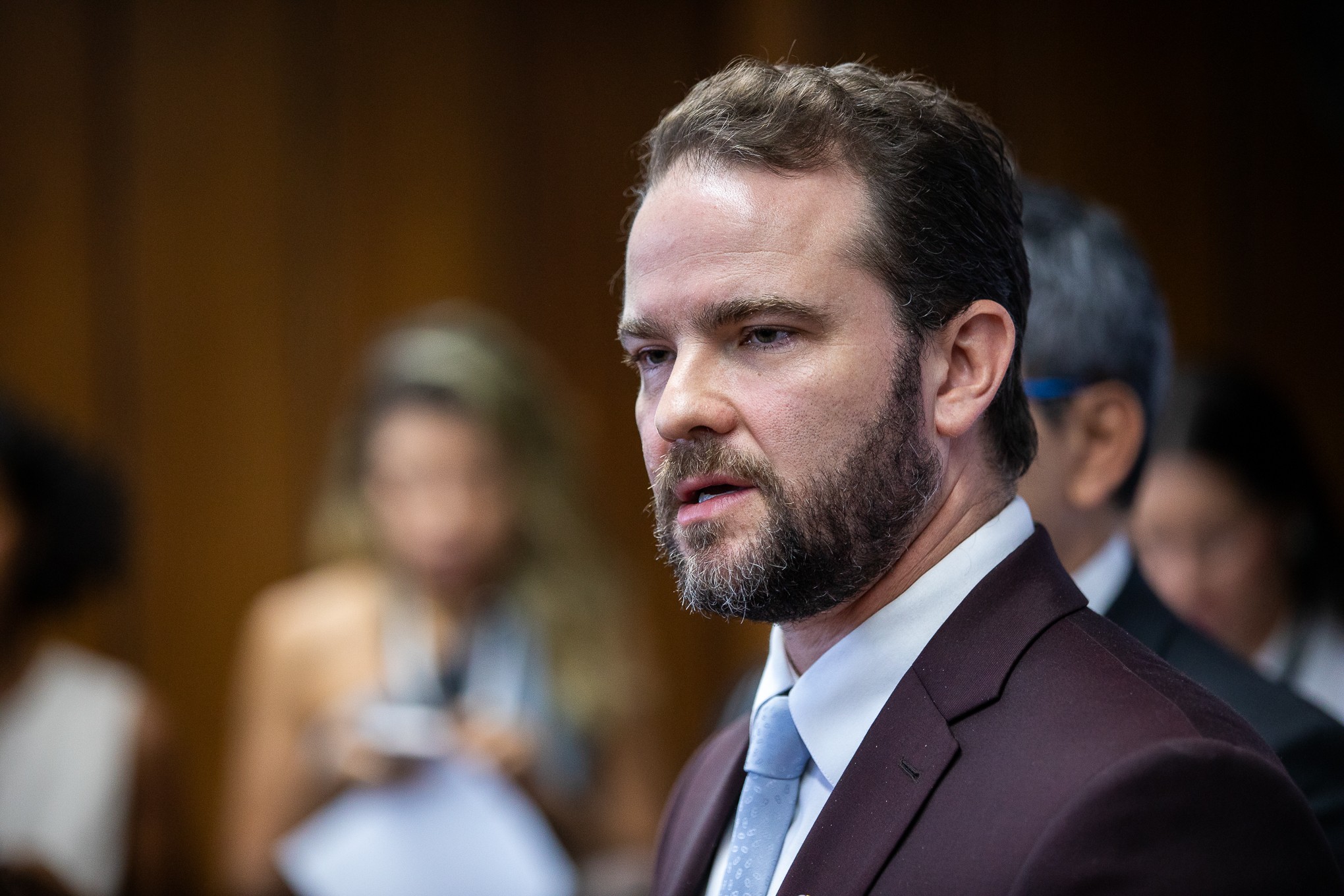
The Ministry of Finance redid the calculations on the impact of the approval of the so-called "bomb agendas" being analyzed by the National Congress, the new estimate is R$111 billion per year. The value concerns the fiscal impact of nine projects in progress.
Interlocutors from the ministry had initially informed g1 that the impact would exceed R$2 trillion in ten years. According to new estimates released this Thursday (11), the effect will be the equivalent of more than R$1 trillion in ten years.
Still, the impact is greater than the savings of R$855 billion in 10 years estimated by the Social Security reform, approved in 2019 - the result of years of mobilization in the National Congress and broad debate with society.
Bomb agenda is a term used in the National Congress to designate bills or proposals that create expenses billionaires or reduce revenue. These measures have a strong negative impact on public accounts.
CCJ of the Senate approves PEC on retirement for health agents and endemic diseases
See the estimated impact of each measure
PL 5.122/2023, which deals with the renegotiation of rural debts with equalization of interest rates by the Union, accounts for a cost of up to R$140 billion over 13 years.
PLP 108/2021, which raises the ceiling of Simples Nacional, implies a revenue waiver of R$50 billion per year.
PEC 231/2019, which expands the Municipal Participation Fund, reduces the Union's net revenues by R$10 billion annually.
PEC 5/2023, relating to the expansion of tax immunity for religious temples, has a minimum cost estimated at R$10 billion per year.
PLP 11/2026, which creates benefits for non-profit entities, represents a waiver of R$ 1 billion per year.
PEC 383/2017, which links resources to the Unified Social Assistance System, generates an average additional expense of R$ 9 billion per year, considering the total increase between 2026 and 2030.
PL 4.728/2020, which establishes a new Special Program of Tax Regularization (Pert), has an average cost of R$8.8 billion annually.
PL 1,365/2022, which refers to doctors and dental surgeons, would increase the union's expenses by R$8.4 billion per year, not counting states, municipalities and the Ebserh network.
PEC 14/2021, which creates differentiated retirement for community health workers and those fighting endemic diseases, increases the financial insufficiency of pension schemes by R$ 3 billion per year.
With the exception of the PEC das Igrejas, which does not generate a loss of revenue, as both individuals and companies would have to bear this loss, the other proposals imply an increase in expenses and, consequently, in the Brazilian public debt - which is already at a high level for countries emerging markets.
"The estimates combine revenue waivers and mandatory expenses, including equalization of interest rates and social security impacts, which directly affect public accounts. Annual averages assume uniform distribution of costs, without monetary updating, so that the effective impact in each year may be higher", say the Ministries of Finance and Planning, in a note.
Pressure on interest rates
The former president of the Central Bank, Roberto Campos Neto, explained, in the past, that The interest rate is high in Brazil due to the current level of debt - considered high by the standards of emerging countries. "Interest is high because the debt is high', and not the other way around", he said at the time.
Because of this, analysts are asking for the opposite, for the government and the National Congress to approve proposals to reduce public spending and, therefore, allow for a containment of Brazilian debt.
The objective is to curb inflation and allow a sustainable fall in the Brazilian interest rate, benefiting the whole of society. The Minister of Finance, Dario Durigan, has expressed concern in recent days about the "bomb agendas".
According to him, the proposals under analysis have to be evaluated "in light of the fiscal responsibility law, which is not only valid for the government, it is also valid for Congress".
"It is necessary for us, all of us, be it the government or Congress, to have fiscal responsibility", said the minister this Wednesday (10). expenses.
In recent days, the Dean of the Supreme Court published messages criticizing the bomb agendas, highlighting that parliamentarians cannot create expenses for the Union, States and municipalities without determining the sources of funds to cover holes in public coffers.
Minister of Finance, Dario Durigan
Washington Costa/MF
Source: G1