Tourist misbehavior leads Japanese city to cancel cherry blossom festival
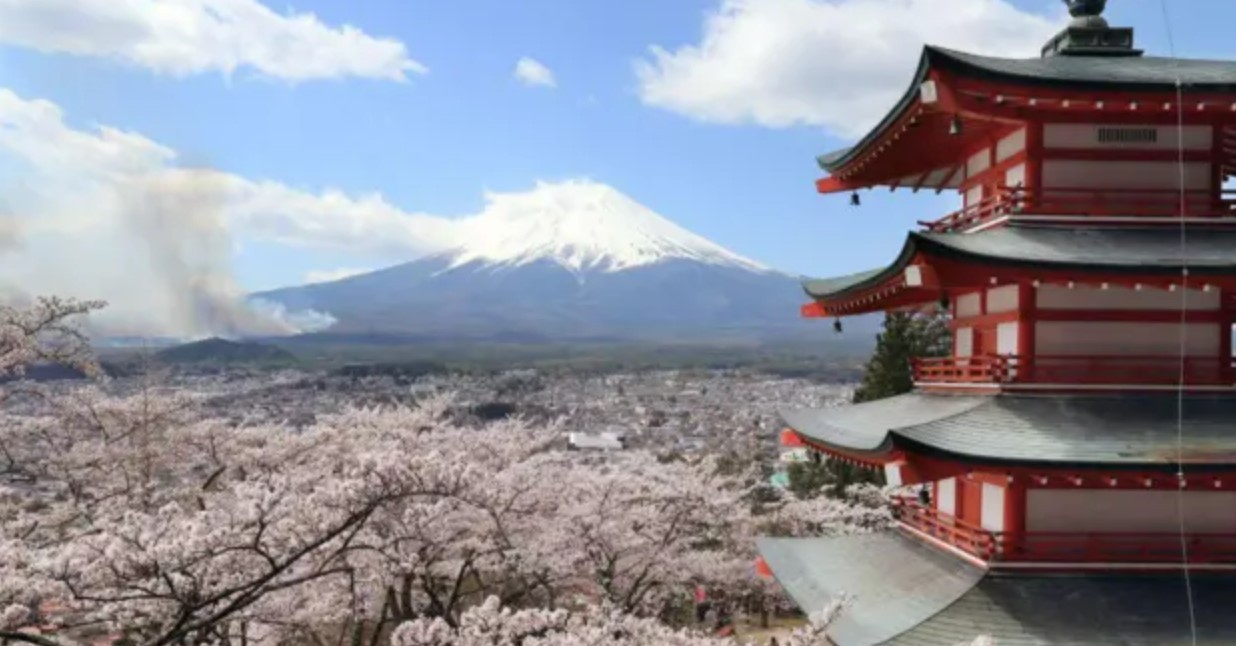
Japan's Cherry Blossom Festival
BBC/Getty Images
Authorities in a small town near Mount Fuji in Japan have canceled this year's Cherry Blossom Festival, saying it is impossible for local residents to manage the spike in tourist numbers.
The influx of visitors to the city of Fujiyoshida creates litter and chronic traffic congestion. Some residents claim to have observed tourists trespassing or defecating in private gardens.
The region is a popular destination in spring, when the Japanese cherry trees, famous throughout the world, reach their peak of flowering and can be admired with Mount Fuji in the background.
Mount Fuji: city doubles the rate of tourist access to Japan's icon
Tipping in Japan? Tourists try, but Japanese don't like the idea
See the videos that are trending on g1
But Fujiyoshida's picturesque landscape threatens "the calm life of citizens", as the city's mayor explains: "We have a strong sense of crisis." (3/2) and increase the number of visitors, creating a "dynamic atmosphere in the place."
But the municipal government claims that the number of visitors in recent years has "increased exponentially, exceeding the city's capacity to receive them and resulting in excessive tourism, with serious impacts on the living conditions of local inhabitants."
Currently, 10,000 visitors head to the city daily during the peak cherry blossom season, according to authorities in Fujiyoshida, which has its estimated population by 44,000 inhabitants.
The increase "is due to factors such as the cheap yen and the explosion of popularity fueled by social media."
Municipal authorities report that tourists "opened the doors of private homes without permission to use the bathroom." They also invaded, littered and "defecated in private backyards, creating an uproar when residents complained."
The festival will not take place, but the city is preparing for an increase in the number of visitors in April and May.
'Be careful! Taking photos in the middle of the street is dangerous.
Stay on the sidewalk', says the sign in English and Japanese in Fujiyoshida, Japan
BBC/Getty Images
This is not the first time that Japanese authorities have had to take action in relation to photo-hungry tourists.
In 2024, the local government blocked off one of Japan's most iconic spots in the city of Fujikawaguchiko with a large dark barrier, to try to stop misbehaving tourists trying to capture the privileged image of the mountain Fuji.
Residents of Fujikawaguchiko have accused foreign tourists of littering and parking illegally there as they search for the perfect image.
The famous image in the town of Fujikawaguchiko shows a convenience store in the foreground, with the best-known view of Japan's Mount Fuji rising behind it
BBC/Getty Images
And Japan is not the only country trying to stop the crowds caused by tourists.
On Monday (2/2), Italy began charging a fee of 2 euros (about R$12.40) for access to the observation area of the symbolic Trevi Fountain, in Rome.
Visiting the fountain was free, but authorities say that the ticket will help control the number of tourists, as well as raise funds for the maintenance of the monument.
In Venice, also in Italy, day visitors who intend to visit the city on certain days between April and June will need to pay 5 euros (about R$ 31) if you book in advance, or 10 euros (about R$62) if you don't have a reservation.
See more:
'Tourismphobia': why traditional tourist destinations are trying hard to scare away visitors
Why are Europeans outraged by mass tourism?
Source: G1