'The priority is to find people alive', says head of the Brazilian mission in Venezuela
Earthquakes in Venezuela leave more than 1,400 dead
Brazilian teams sent to help rescue earthquake victims in Venezuela focus their efforts on searching for survivors.
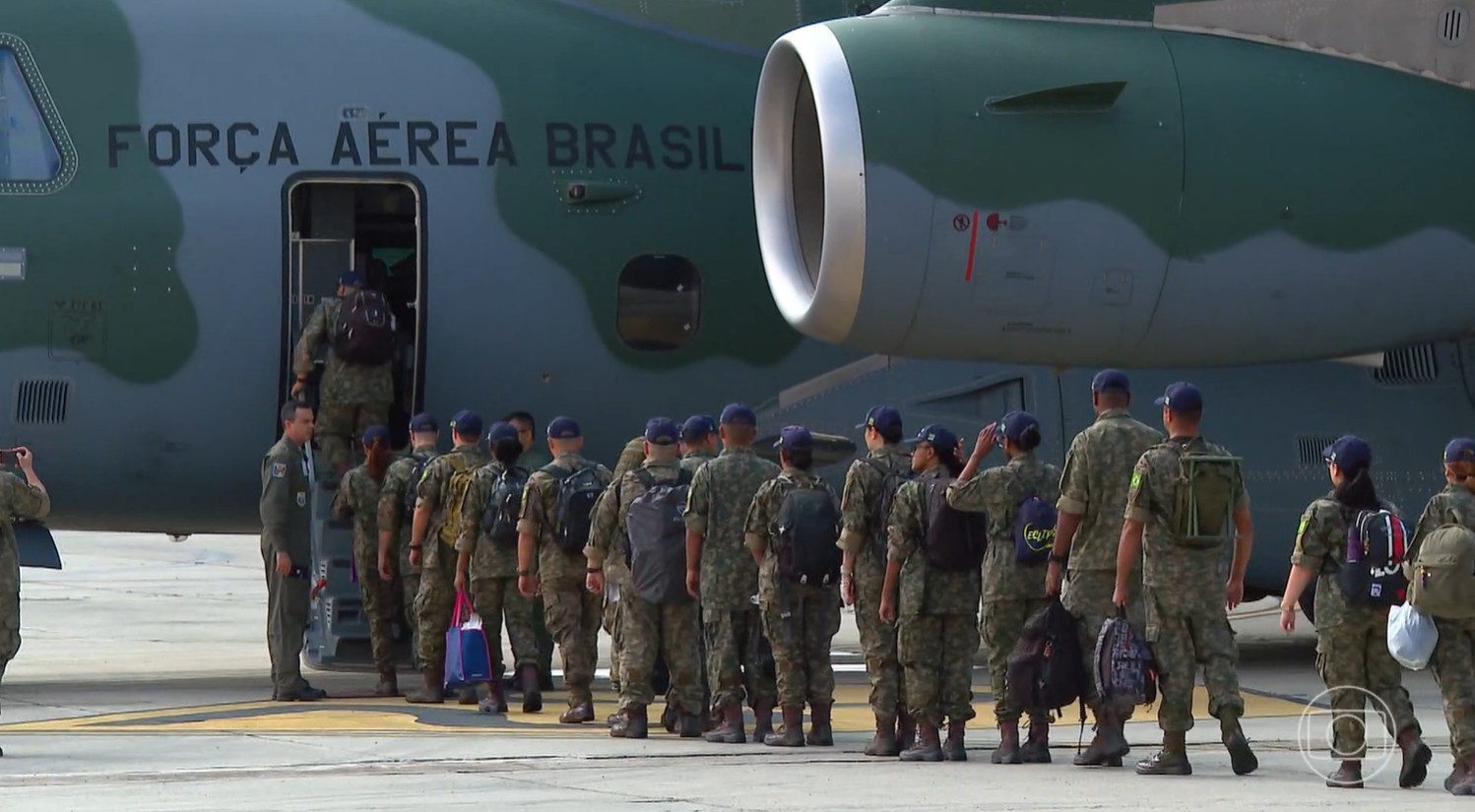
The operation brings together around 130 Brazilian agents, who have been in the country since Friday (26) and work together with international teams to define priority search areas.
LIVE: See the latest earthquake updates
✅ Follow the g1 international news channel on WhatsApp
The first hours after a disaster are decisive in saving lives. Therefore, the Brazilian mission has firefighters, sniffer dogs and Anatel experts, who help locate cell phones of possible victims under the rubble.
"The priority is to find people alive in the rubble. Whenever there is any sign of survivors, we begin careful work to access the area, stabilize the structures and carry out the rescue safely", said the head of the Brazilian mission, Armin Braun, in an interview with GloboNews.
According to him, although the first Although 72 hours are considered the most important in search and rescue operations, it is still possible to find survivors several days after the disaster.
"We have already followed cases of people rescued after a week or even ten days. If there is access to water, a survival space under the rubble or good physical conditions, the chances increase," he said.
In addition to the searches, Brazil set up a field hospital to treat victims, especially after the collapse of health units in the affected region, and also provides humanitarian assistance in others fronts.
Braun explained that the entire operation is coordinated with the Venezuelan government, the Brazilian Embassy and the United Nations Office for the Coordination of Humanitarian Affairs (OCHA), responsible for defining action priorities.
According to him, the response to the disaster will occur in stages: after the search and rescue phase, efforts will be focused on caring for the victims, reestablishing essential services and, finally, rebuilding the areas affected.
"Due to the devastation we saw, it will take a few months to reestablish essential services. Reconstruction of the infrastructure could take a year or more", he assessed.
FAB planes take off towards Venezuela; aircraft carry a field hospital and medical teams.
Reproduction/Jornal Nacional
Devastating earthquakes in Venezuela
On Wednesday night (24), Venezuela was hit by two earthquakes of magnitudes 7.5 and 7.2, recorded less than a minute apart. The tremors devastated areas of the country, causing the collapse of buildings and houses in Caracas and other cities.
In the following hours, at least 20 aftershocks were recorded, according to the Venezuelan government. Aftershocks were also felt in cities in northern Brazil.
➡ Aftershocks are lower-intensity tremors that occur after a main earthquake.
The Venezuelan government's most recent report, released this Saturday (27), points to 1,430 deaths, more than 3,000 injured and 3,100 homeless people. The numbers were presented by the president of the National Assembly, Jorge Rodríguez, to the state press.
The number of deaths after earthquakes in Venezuela rises to 1,430 and searches enter a critical phase.
Reproduction/Jornal Nacional
International organizations, however, estimate that the impact of the disaster could be even greater.
The United Nations (UN) and the United States Geological Survey (USGS) estimate that the number of victims will increase due to the intensity of the earthquakes, the damage caused to infrastructure and the high population concentration in the affected areas.
The International Organization for Migration (IOM), a UN agency, estimates that around 6.8 million people have been affected by the earthquakes, with approximately 2 million in the Caracas region alone.
The United Nations Office for the Coordination of Affairs Humanitarian aid (OCHA) estimates that more than 50,000 people are still missing, while rescue teams from several countries continue to search for survivors under the rubble.
Technicians look for cell phone signals in the rubble in Venezuela: "the priority is to find people alive"
Source: G1