The paradox of taxes in Latin America: those who have less pay more
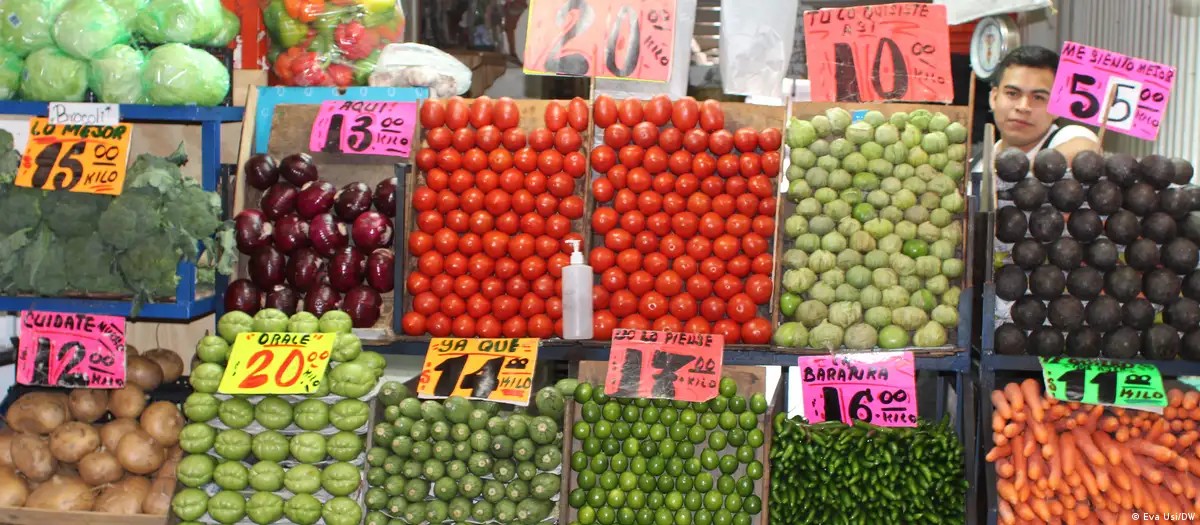
The bulk of revenue in Latin America is paid for by the poorest, points out Oxfam
Eva Usi/DW
By prioritizing the taxation of consumption instead of income, governments in the region perpetuate inequality, instead of reducing it, experts point out. Taxes finance schools, hospitals, roads and pensions and, in theory, should also help reduce inequalities. However, in Latin America - one of the most unequal regions in the world - tax systems do not seem to fulfill this role.
"In Latin America and the Caribbean, fiscal policy raises little, unfairly, and deepens extreme inequality", states Oxfam in its publication Unchecked wealth, democracy at risk: why Latin America and the Caribbean need a new fiscal pact. According to the international anti-poverty organization, "the tax structure works contrary to what it should: it wastes its redistribution potential and protects those who have the most."
For Verónica Paz Arauco, Oxfam's director of programs in the region, the result is evident: "Today, those who support the tax system are, proportionally, those who have the least", he tells DW.
"Low and middle-income households finance it mainly through taxes on consumption", he explains. "While a person belonging to the poorest 50% can allocate around 45% of their income to paying taxes, the richest 1% contributes less than 20%", he criticizes.
Taxes collected in relation to GDP
disclosure/DW
The graph above, which shows the share of tax collection in the Gross Domestic Product (GDP) of the countries of Latin America and the Caribbean, reveals another inequality: in comparison with the member countries of the Organization for the Economic Cooperation and Development (OECD), known as the "club of rich countries", the region collects significantly less taxes.
The difference is even more evident when compared to the nations that lead the Inequality-Adjusted Human Development Index (IDHAD): Iceland, Denmark, Norway, Switzerland, Netherlands, Belgium, Finland, Germany, Ireland and Sweden. In these countries, the share of taxes in GDP exceeds 35% and reaches around 45% in Denmark. The only exceptions are Switzerland (27.2%) and Ireland (21.7%).
Those who have more pay less
A large part of tax revenue in Latin America comes from taxes on consumption, while taxes on income, profits and assets have a much smaller weight. In other words, the region taxes everyday consumption more than large incomes and fortunes.
"Lower-income families have less savings, so they allocate proportionally more of their income to consumption. This means that taxes on consumption have a regressive effect", explains, in an interview with DW, Ricardo Cantú Calderón, researcher at the Center for Economic and Budgetary Research (CIEP), in Mexico.
"Taxation is based on taxes that deepen inequality", economist María Julia Eliosoff, director of economic projects at the Friedrich Ebert Foundation in Argentina, tells DW in the same vein. This is "a very clear situation of injustice", he assesses.
However, this imbalance is not explained solely by the fact that those who have less allocate a greater part of their income to paying taxes. The way in which higher incomes and wealth are taxed - or are not taxed - is also important.
"An important part of the income of the richest people comes from capital, which continues to be insufficiently taxed, and there are broad tax benefits", points out Verónica Paz Arauco, from Oxfam.
Cantú Calderón, from CIEP, agrees and adds that people with large assets can resort to financial strategies that allow them to obtain more favorable tax treatments.
Eliosoff agrees and highlights that income from assets is almost non-existent in the region.
But wouldn't increasing taxation on those who earn more discourage investment and compromise growth, as some argue? For Cantú, this idea "doesn't have much basis".
"In the short term, investors react, but in the long term this adjusts", he states.
Informal economy is also a challenge for revenue
This scenario is compounded by another structural challenge in the region: the high informality in the job market. According to the International Labor Organization (ILO), practically one in every two workers in Latin America and the Caribbean (46.7%) worked informally in the first half of 2025.
"This situation limits revenue, especially in direct taxes and social contributions, and pushes States to depend more on indirect taxes such as VAT [Value Added Tax on products and services]", says Arauco, from Oxfam.
The weight of great fortunes
The debate on Those who pay taxes gain another dimension when observing the concentration of wealth.
The combined fortune of billionaires from Latin America and the Caribbean reaches 622.9 billion dollars - a value almost equivalent to the combined GDP of Chile and Peru. Oxfam data also indicates that, in this century, the wealth of this small group has grown 16 times faster than the region's economy.
Billionaires in Latin America and the Caribbean
publicity/DW
Arauco, from Oxfam, explains that the absence of taxation - or insufficient taxation - on the wealth accumulated by the richest is directly reflected in the lack of resources for essential public services, such as health, education and care systems.
How to make the system fairer tax?
"The key is not to eliminate taxes on consumption, but to ensure that they are the best possible", maintains in an interview with DW Julián Folgar, economist at the World Bank for Argentina and professor of Public Finance.
"Reforms that expand the tax base, reduce unjustified preferential treatments and improve compliance with the rules can generate simultaneous gains in equity, efficiency and revenue", he details.
The challenge for Latin America, therefore, is not just collecting more, but to build more progressive tax systems, capable of reducing inequalities without compromising economic growth. In the end, the debate is not just about how much to raise, but also who pays the bill.
Source: G1