The next domino of time
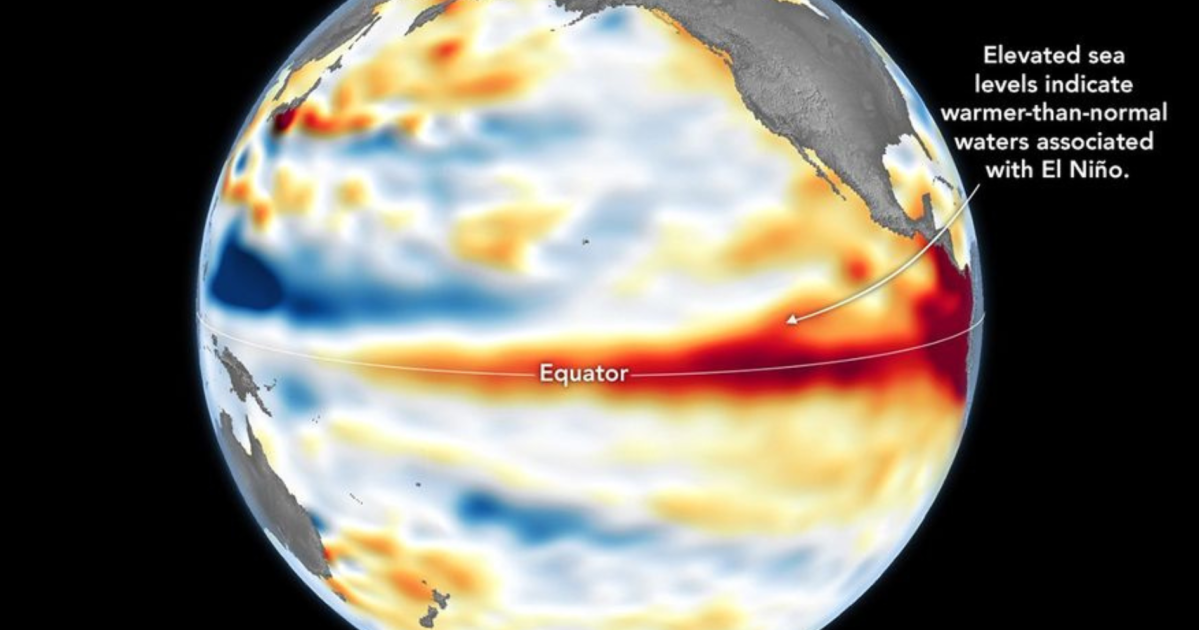
The Brazilian electricity sector has just gained a new variable to monitor in the coming months. The confirmation of El Niño by the National Oceanic and Atmospheric Administration (NOAA), on June 11, marks the beginning of a new phase of the global climate system, with the potential to influence rainfall, temperatures, renewable generation and energy prices.
The metaphor of the domino effect helps to understand the moment. An event in the Pacific Ocean can trigger a sequence of interconnected impacts on the climate (so-called atmospheric teleconnections) and, consequently, on the economy. In the current case, the first piece is already in motion.
The persistent warming of the waters of the Equatorial Pacific, in its central and eastern portion, associated with changes in atmospheric circulation patterns, consolidated the planet's entry into the active phase of El Niño. NOAA projections indicate a 63% probability that the phenomenon will reach the Very Strong El Niño category between November and January, which would place it among the most intense events since modern records began in 1950.
The possibility of a very strong El Niño draws attention not only because of the projected intensity, but also because of the recurrence of these events in recent decades. If current projections are confirmed, 2026/27 could join the historical episodes of 1982/83, 1997/98, 2015/16 and 2023/24, reinforcing an increasingly frequent sequence of extreme events.
Events of this magnitude tend to influence the global average temperature and are often associated with the hottest years on record. Not by chance, projections indicate that the current cycle could contribute to new global heat records in the coming months.
Still, it is important to interpret the signs with caution. El Niño does not act in isolation nor does it produce the same effects in all episodes. Its main influence is to increase the probability of certain weather patterns, while the intensity and distribution of impacts depend on the interaction with other atmospheric and oceanic factors. In other words, it influences the direction of the sequence of dominoes, but it does not alone define where each piece will fall.
In Brazil, the effects follow known patterns, although with variations with each event. The South Region tends to record above-average rainfall, with a greater frequency of extreme events. The northern part of the North and Northeast regions presents a greater risk of below-average rainfall, irregular rainy season and increased water stress. Temperatures, in turn, are expected to remain above average in much of the country, especially in the Central-West, Southeast and interior of the Northeast.
For the electricity sector, the phenomenon adds complexity to the planning scenario. Although the current volatility of the Difference Settlement Price (PLD) is not yet directly associated with the phenomenon, the consolidation of a strong El Niño tends to increase hydrological uncertainties and keep prices more sensitive over the coming months.
The increase in rainfall in the South and south of the Southeast may favor Affluent Natural Energy (ENA) in the region. At the same time, higher temperatures should pressure demand for electricity, especially in the Southeast, while reduced rainfall in the North could limit part of the system's water recovery.
This context occurs precisely at a time of structural load growth. According to PLAN 2026-2030, consumption is expected to increase by around 5% in 2026, reaching approximately 85 average GW, compared to around 81 average GW recorded in 2025.
Renewable sources must also feel the effects differently. Solar generation tends to benefit in strategic areas in the interior of the Northeast and north of Mina Gerais, where less cloudiness can increase the availability of radiation. For the rest of the Southeast and Midwest, the scenario remains more uncertain.
In the case of wind generation, impacts should vary throughout the year. During part of the wind harvest, at the beginning of the second half, the phenomenon may reduce the intensity of winds in some regions. On the other hand, the prospect of less rain in the Northeast at the end of the year tends to favor generation in important hubs in Bahia and on the border between Piauí and Pernambuco.
Dryer soil increases the risk of fires and can impact transmission lines and electrical infrastructure. Data from the National Institute for Space Research (Inpe) shows a reduction in fire outbreaks in 2025, but a heat and drought scenario could reverse this trend. Furthermore, the warmer atmosphere favors severe storms and extreme events, impacting cities and infrastructure.
There are still uncertainties about the final intensity of the phenomenon and its regional impacts. But current signs point to a hotter and more challenging second half of the year for the management of the country's energy and water resources.
In the electricity sector, monitoring the evolution of El Niño will be as important as monitoring reservoirs, load and prices. In a system increasingly exposed to climate variability, anticipating risks remains one of the main decision-making tools.
The articles published by CNN Infra seek to stimulate debate, reflection and shed light on views on the main challenges, problems and solutions faced by Brazil and other countries in the world. The texts published in this space do not necessarily reflect the opinion of CNN Brasil.
Source: CNN