The extreme measures that countries adopt to combat excessive tourism
With global tourism on track to reach 1.8 billion trips a year, several tourist destinations have been testing controversial new measures to control crowds
Getty Images via BBC
Cherry trees continue to bloom near Mount Fuji in Japan. And tourists continue to arrive to watch them.
But this year, there will be no annual festival.
Authorities in the city of Fujiyoshida, Japan, have canceled the annual celebration of the sakura (cherry blossoms). The reason was complaints from local residents.
They reported that visitors threw rubbish, invaded gardens and even entered private homes.
The festival used to attract 200,000 visitors to the city, which has an estimated population of 44,000 residents.
The cancellation is the latest sign that, while global tourism reaches record highs, the patience of residents of the most popular destinations is running out.
See the videos that are trending on g1
In In 2025, Japan received around 43 million visitors, the highest number in its history.
At the same time, Europe received more than half of international flights, estimated at 1.5 billion. Projections indicate that this number is expected to reach 1.8 billion by 2030, and governments are struggling to manage the pressures.
Some countries are taking measures that would have seemed extreme just a few years ago.
These include controlling crowds using artificial intelligence, building physical barriers and charging tickets at triple the price for foreigners, as well as canceling famous festivals, such as Fujiyoshida.
Many of these countries want to continue receiving visitors. They simply want tourists to be more spread out, behave better or visit at other times of the year.
The BBC spoke to tourism boards and industry leaders in several countries to find out what assertive measures are being taken to try to reduce the problems generated by excessive tourism.
Japan: lockdowns and restrictions
The Japanese city of Fujiyoshida used to receive 200,000 visitors during the annual cherry blossom festival, which was canceled in 2026 due to the Tourist misbehavior
Getty Images
The cancellation of the cherry blossom festival was not the first measure taken by Japan to manage overflow tourists.
In 2024, the city of Fujikawaguchiko built a physical barrier to block a popular photo spot of Mount Fuji. The measure was an attempt to prevent visitors from continuing to climb onto rooftops, ignoring guards and safety regulations.
Kyoto has also long struggled with crowds.
The city has banned people from photographing geishas and restricted access to certain boulevards in the historic district of Gion, one of the most popular spots among visitors.
Recently, Kyoto has also turned to technology, launching digital crowd management tools.
The objective is to try to work together with tourists, in a more sustainable way.
Entitled Congestion Forecast, the new tool predicts the best days and times to visit the most important places.
At the same time, the Smart Navi application provides real-time updates on crowding levels; the Hidden Gems initiative promotes six quieter districts, away from famous temples; and Hands Free Kyoto ("Hands Free") offers visitors transportation and luggage storage services to reduce crowds on public transport.
The installation of a large barrier to block a symbolic view of Mount Fuji made headlines in 2024
AFP via Getty Images
"There is no silver bullet for overtourism, but we intend to continue implementing measures to protect citizens' daily lives while ensuring that visitors can have a comfortable stay," says the manager of the Kyoto Sustainable Tourism Promotion Division, Kousaku Ono.
Tour operators are also adjusting to the current situation.
Socio-environmental development-oriented operator Inside Travel Group has deliberately shifted its focus in relation to Japan to five little-visited regions: Toyama, Nagoya, Nagasaki, Aomori and Yamaguchi.
"Overtourism is one of the biggest threats facing the future of the travel sector, which needs face it head on", says the company's managing director, Tim Oakes.
"These are places that really want to welcome visitors, as long as they are not crowded."
United States: higher prices for international visitors
Half of visits to national parks in the United States are concentrated in the 25 best-known, such as Yellowstone
Getty Images via BBC
The United States has now taken a stance that is clearly focused on the financial side.
Your vast system of national parks comprises 433 units, with a total area of 34 million hectares, and offers countless attractions for visitors.
But half of visits are concentrated in the 25 best-known parks, generating overcrowding, long lines and excess trash.
To try to reduce the problem, in 2026 the United States created a surcharge of US$100 (about R$520) per person for international visitors, in 11 popular national parks in the country. They include Yellowstone, Yosemite and the Grand Canyon.
The "America the Beautiful" annual passport covers all federal recreation sites. Now, it costs US$250 (about R$1,300) for non-residents of the country - three times more than the US$80 (about R$416) charged to American citizens.
This policy follows an executive order that directed the United States Department of the Interior to increase tickets for foreigners.
Reports indicate that the measure is generating even longer lines at the entrance to the parks, as employees now need to check citizenship and ID documents. identification of visitors.
Workers at the parks and their surroundings do not believe that this strategy is enough to combat crowds.
"It is unlikely that the increase in tickets alone will significantly reduce excessive tourism in the high season", says Kevin Jackson, one of the founders of EXP Journeys. His company offers private travel experiences near Yellowstone, Grand Canyon, Zion, Moab and Yosemite parks.
"Demand for the iconic parks remains high, and for the type of trips we offer, the most expensive ticket represents a relatively small percentage of the total trip cost," he explains.
But he noted that some international travelers may opt for lesser-known parks where the surcharge is not applied.
This is the case of Canyonlands, in the State of Utah.
To reduce pressure on overcrowded national parks in the United States, the country started to encourage visitors to visit less famous scenes, such as Canyonlands, in the State of Utah
Getty Images via BBC
Dulani Porter is the executive vice-president of the tourist destination marketing company SPARK. She highlights deeper structural issues.
"Pricing is not a visitor management plan," she says.
Porter points out that overcrowding in parks like Zion and Yosemite is largely determined by domestic summer travel patterns, school calendars, and limited highway and parking capacity.
She also questions the impact on neighboring communities.
International visitors contribute disproportionately to the local tourism economy. And even a small reduction can harm hotels, restaurants and tour operators.
"Overtourism is fundamentally a systemic issue," she says. "Not just a price issue."
Jamaica: Reprogram seasonality
Jamaica offers rain insurance on select tour packages to encourage visitors during off-season months, including hurricane season
Getty Images via BBC
Jamaica, on the other hand, has been using incentives, not restrictions.
Eager to attract tourists after the destruction caused by Hurricane Melissa in 2025, the Caribbean island has been taking creative steps to bring in visitors outside of high season.
The companies Jamaica Tourism, JetBlue and WeatherPromise have partnered to offer, starting in March, rain insurance for all packages bound for Jamaica until the end of November, including the hurricane season.
If weather conditions reach the threshold to be considered "excessive rain", travelers who opt for insurance will be automatically reimbursed.
And they will also be able to take advantage of the trip to visit some of the country's indoor attractions, such as the Bob Marley Museum in capital, Kingston, or to sample rum in the Nassau Valley.
"This partnership helps give our customers the confidence to book trips to Jamaica year-round," says Jamie Perry, president of Paisly, the company behind JetBlue Vacations.
"By reducing the perception of travel risk during traditionally quieter times, we are helping to create better experiences for customers and local communities."
Spain: crowd management by algorithm
Mallorca aims to spread the word to visitors its lesser-known attractions, in an attempt to reduce crowds on its highly contested beaches
Getty Images via BBC
The Spanish island of Mallorca was the scene of one of the most emblematic protests against tourism ever held.
Now, it is betting on artificial intelligence to solve part of its problems with crowds.
Later this year, Mallorca will integrate an AI-powered platform into its new website.
Using real-time visitor data, the tool will guide tourists on the best times to visit popular places, suggesting less congested alternatives, such as glass craft workshops and traditional llatra (palm leaves), or visits to vineyards and olive oil producers.
The objective is to expand visitation to locations outside the island's "sun and beach" itinerary.
"With Mallorca's PID [Intelligent Destination Platform], we integrate mobility, accommodation and resources into a single platform, which allows us to anticipate flows, improve the visitor experience and strengthen decision-making", explains the recently appointed local Tourism Minister Guillem Ginard, president of the Foundation for Responsible Tourism in Mallorca.
In addition to technology, the foundation launched the Ca Nostra ("Our Home") campaign, to encourage visitors and residents to treat Mallorca as their temporary home, protecting its scenery, traditions and communities.
Denmark: incentives for good behavior
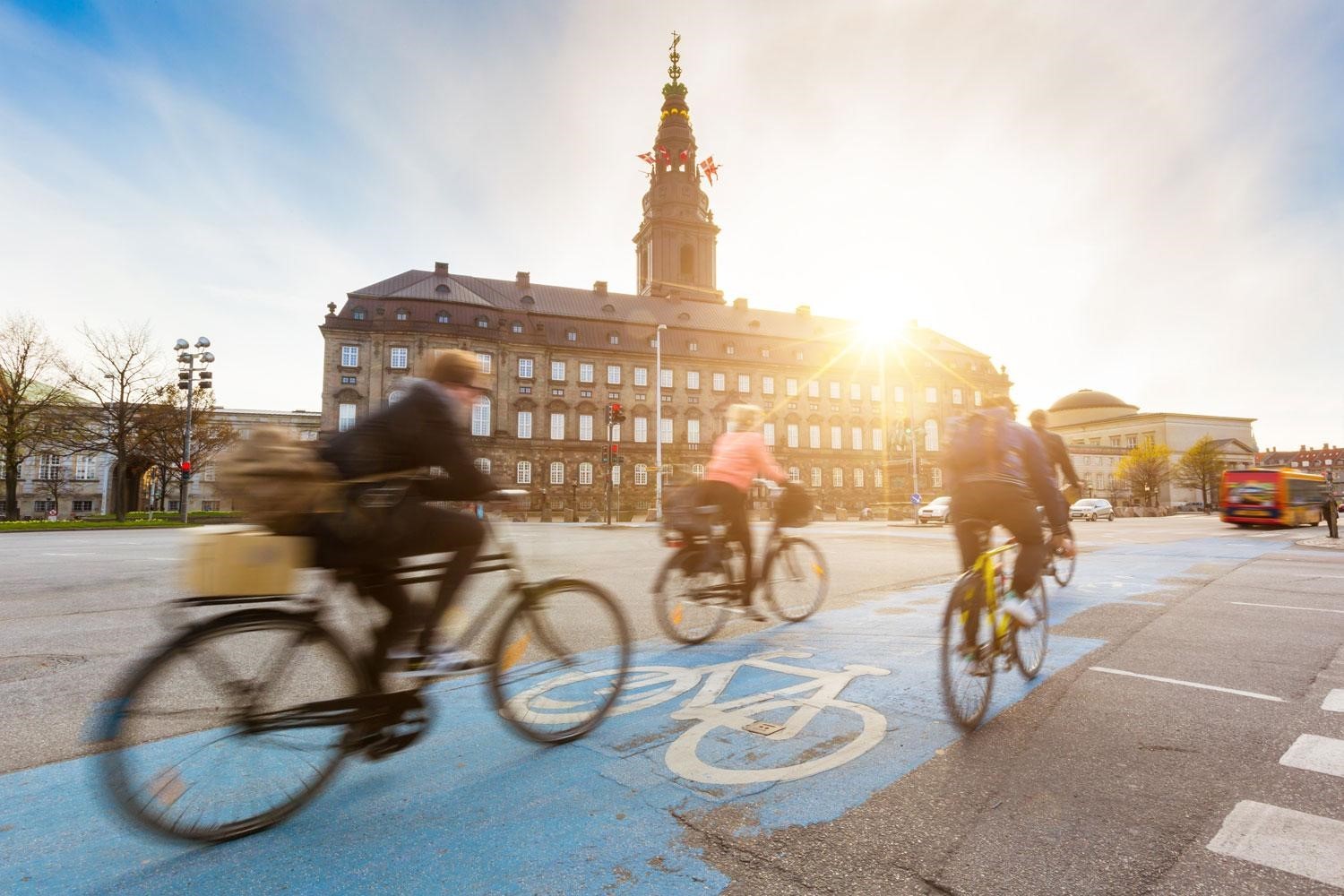
Copenhagen wants to become the first carbon neutral capital in the world
Disclosure
The Danish capital, Copenhagen, is one of the fastest growing tourist destinations in Europe. Projections indicate that the number of visitors is expected to increase by 24% by 2030.
To combat some of the first problems being caused by excessive tourism, the city is carrying out experiments with incentives for good behavior.
Launched in 2024, the CopenPay program allows visitors to "pay" for experiences with sustainable actions, such as kayaking collecting trash from canals or going to museums by bicycle.
More than 30 thousand visitors have already participated in the initiative, which caused bicycle rentals to increase by 59%.
"About half of participants say they are motivated to participate because they are looking for different and exclusive experiences," says Rikke Holm Petersen, director of marketing, communications and behavior at Wonderful Copenhagen.
She noted that seven out of ten participants also said they had taken new habits home, such as cycling more and sorting trash correctly.
This model attracted interest from more than 100 destinations across the world. the world. Berlin, Germany, and the French region of Normandy are adopting similar schemes.
"Many participants told us that all cities should have this program," said Petersen.
"We are seeing an important change in tourist behavior. They want to leave the destination better than they found it."
VIDEOS: g1's most watched
Source: G1