The difficult and long work of supporting children traumatized by the earthquakes in Venezuela
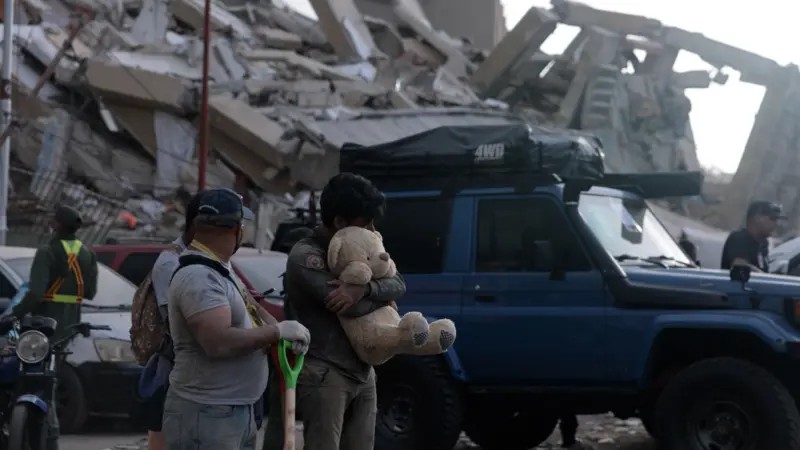
Relatives of migrants who were deported on flight 164, which arrived in Venezuela on the day of the two earthquakes (24/6), outside the buildings that collapsed in La Guaira
Nicole Kolster/BBC
Amid the rubble left by the earthquakes that hit Venezuela, displaced children face a new challenge: dealing with the trauma of the tragedy. In La Guaira, where the UN runs a shelter for families who have lost their homes, humanitarian organizations intensify psychological support for minors, many of them marked by loss and fear.
Favorite g1 on Google and follow the main news of the day
Andreina, mother of three children, watches her youngest, five years old, entertained with ropes she found. "Yesterday, she burst into tears. She told me she was relieved to still have me. She met a girl here who lost her mother and father", she says, to the RFI report.
Girl is rescued with a smile on her face in Venezuela
"It's very difficult. I found out that my nephews died, but I don't have the courage to tell my daughter. The shock would be too strong for her to bear now", adds Andreina.
In the shade of a large shed, dozens of children play football, draw or participate in group games. They are supervised by childhood professionals, under the coordination of the United Nations Children's Fund (Unicef). The entity estimates the number of children in need of humanitarian aid in the country at 680,000.
READ ALSO:
Almost all the heads of government in La Guaira died in the earthquake, says Venezuela's president
What the improvised morgue looks like where corpses pile up in the open after earthquakes in Venezuela
"There is trauma, yes. We noticed that in their drawings", explains Johana Gando, psychologist at the Venezuelan NGO Fundainil. "They draw families and houses. Some children break down emotionally while drawing, because the traumatic event comes to light", says the professional.
The psychologist says that the team avoids asking questions about what happened or whether the children lost family members. "Our job is to support them and offer them tools to deal with their emotions."
Children 'don't understand what happened'
Roberto Benes, regional director of Unicef for Latin America, highlights that the occurrence of two earthquakes, at short intervals of time, triggered the urgent need for support.
"There is an immediate need for access to medical assistance and psychosocial support, but, above all, access to drinking water, which is absolutely fundamental. Secondly However, the impact of the trauma caused by the earthquake is significant and should not be underestimated", he highlights.
According to Claudia Gonzalez Pacheco, head of External Relations at the NGO World Vision Venezuela, "these children do not understand what happened, but they are terrified".
"Any sudden movement or noise puts them on high alert and terrifies them", he explains.
"Yesterday, there was a storm here in Venezuela, and my two-year-old grandson started shaking all over because of the thunder. This double earthquake had a devastating emotional impact", highlights Claudia Gonzalez Pacheco.
"The trauma manifests itself both immediately and in the long term - even more so if we think that Venezuela will not recover from this tragedy in a matter of weeks, but rather months or even years."
Source: G1