The dance of indexes
On May 5, 1989, the newspaper O Estado de S. Paulo published a report with the same title as this article, in which it described the heterodox juggling act with which the Brazilian government successively altered the official inflation indicators (IGP, IPC, IPCA) in an attempt to cover up a reality that was already out of control. Inflation had become a crisis of institutional credibility. It was easier to blame the index than structural causes.
The Real Plan broke this cycle by understanding the inertial and institutional nature of the phenomenon. By introducing the Real Unit of Value (URV), aligning expectations, opening the market and imposing fiscal discipline, the plan rebuilt confidence in the Brazilian business environment.
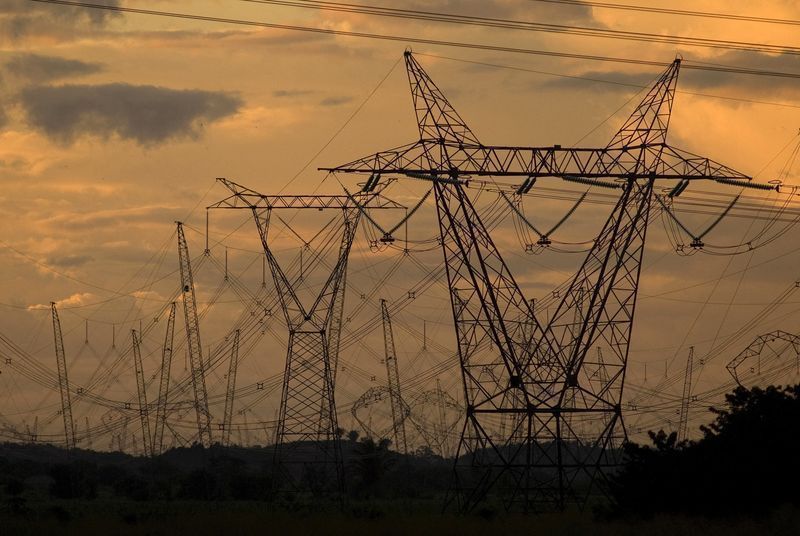
Three decades later, the national electricity sector faces a crisis of an identical institutional nature. Under the energy transition narrative, the country is witnessing the exhaustion of a sectoral governance model. The proliferation of cross-subsidies, the asymmetric expansion of MMGD (Distributed Micro and Minigeneration) without the proper allocation of systemic costs and regulatory centralization measures, such as LRCap (Capacity Reserve Auction in the form of Power), have transformed the market into a tangle of economic distortions under an exhausted model.
The electrical matrix has changed in 25 years, with wind and solar plants accounting for a quarter of installed capacity, at zero marginal cost and non-dispatchable. The variability of sources and the decentralization of generation structurally altered the premises of the current model of the Brazilian electricity sector, based on the reforms of the 1990s and later reoriented in 2002.
The core of the problem lies in the mismatch between physics and accounting. Price formation in the short-term market (PLD) remains umbilically linked to computational models designed for a centralized and predictable hydrothermal matrix. It turns out that the current reality is marked by the intrinsic volatility of wind and solar sources, the decentralization of supply and the pressing requirement for operational flexibility.
In light of this, the technical debate took refuge in a new "dance of indexes". If the 1980s were about inflation, today the electricity sector is consumed with discussions about the calibration of risk aversion parameters that define the PLD, alpha and lambda factors. There is a risk of believing that algorithmic refinements and computational parameter adjustments will be able to remedy anomalies that are fundamentally market architecture.
Signs of financial stress are already visible. Methodological changes in price formation exposed traders to severe mismatches, transforming regulatory risk into market risk itself. Unlike the traditional financial market, the Brazilian electricity sector lacks robust risk mitigation mechanisms, for example, there are no daily margin calls - the foundation of risk management in futures markets, which are capable of quickly limiting losses and preventing the domino effect; and for consumers, there is no structure similar to the Credit Guarantee Fund (FGC) to contain contagion, as adopted by the British market after the recent crisis among traders. The result is an environment where price shocks convert, with dangerous speed, into systemic liquidity crises.
National economic history demonstrates that parametric patches only postpone the collapse. The electricity sector does not need a new algorithmic calibration, but a refoundation of its institutional bases. It is urgent to migrate to a model that dismantles cross subsidies, transparently separates the suitability requirements of the system from the energy product itself, appropriately prices all services that maintain the reliability of the network, with a pricing system that adheres to the reality of the operation.
The electricity sector is experiencing its "pre-Real" institutional twilight. Mitigating this asymmetry requires recognizing that the solution will not emerge from changing the parametric indices of dispatch models - whose changes have been made more frequently than the pre-Real Plan period altered inflation indices - but from a new pact of predictability and economic rationality. The sooner the better, as attacking the symptom does not cure the disease.
* Erik Rego is a professor at the USP Polytechnic School, former director of Electric Energy Studies at EPE and a specialist in energy regulation and market, with more than 20 years of experience in the sector
The articles published by CNN Infra seek to stimulate debate, reflection and shed light on views on the main challenges, problems and solutions faced by Brazil and other countries in the world. The texts published in this space do not necessarily reflect the opinion of CNN Brasil.
Source: CNN