The 1969 Song That Robert Plant and Roger Waters Consider the Most Poetic Ever Written
Por Equipe Editorial CifraNET · 24/06/2026
Publicidade
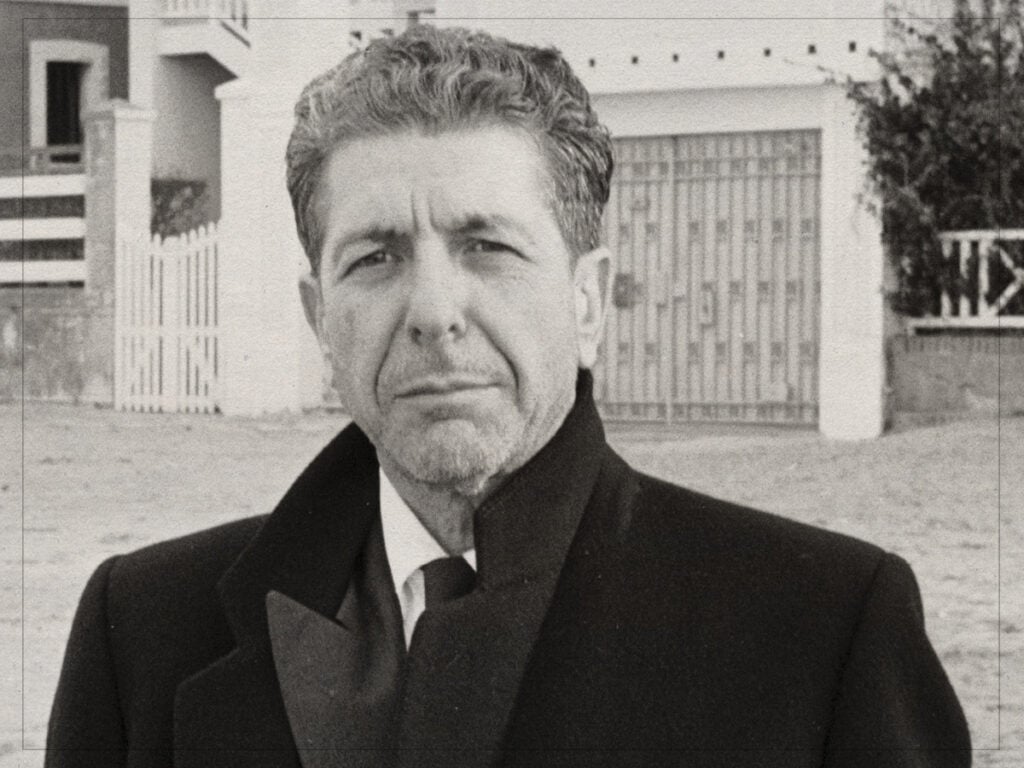
What defines true poetry? For William Wordsworth, it is the "spontaneous overflow of powerful feelings." Allen Ginsberg, in turn, believed that poetry was "the only place where people can express their original human mind." For Robert Plant, lead singer of Led Zeppelin, and Roger Waters, bassist and main composer of Pink Floyd, the answer is clear: Leonard Cohen.
At the end of the 1960s, Leonard Cohen already stood out as a unique poet and musician, adopting the beatnik style even before it became fashionable. He moved to the Greek island of Hydra, a rustic and peaceful place, still without electricity or telephone lines, which symbolized for Cohen a refuge where the human desire for progress and freedom had not yet left its mark. It was in this scenario that he composed "Bird on the Wire", a song that reveals a man's internal struggle between human imperfections and the search for liberation - whether of the soul, society or himself.
Although the explosive energy of Led Zeppelin, led by Plant, seems distant from Cohen's introspective delicacy, the poetry transcends musical styles and genres. Plant recalls the impact "Bird on the Wire" had on his life: "I was listening to Leonard Cohen and I thought, 'Wow, those lyrics!' How could I get close to that? It has nothing to do with squeezing lemons, you know what I mean?", he commented, highlighting the depth and originality of the work.
Roger Waters shares this admiration. Known for his contributions to Pink Floyd's psychedelic and countercultural rock, especially on iconic albums such as *The Dark Side of the Moon*, *Wish You Were Here*, *Animals* and *The Wall*, Waters recognizes the influence of Cohen's poetry on his own music. He declared that Leonard Cohen and Bob Dylan opened the door for poetry and song lyrics to legitimately intertwine. Regarding "Bird on the Wire", Waters stated: "That song is so simple, so moving, so brilliant. I love it."
What unites Plant and Waters in this song is the way it exposes the human soul in a universally recognizable setting: summer, freedom, relief from responsibilities, the moment when the world slows down and we slow down with it. For these rock stars, whose lives are marked by intense tours and vibrant crowds, finding that time to slow down was nearly impossible. Cohen, with his music, transports you to this place of introspection and deep feeling.
Furthermore, "Bird on the Wire" carries with it a reflection on the end of an era - the decline of the 1960s. Cohen even said that "everything was ending. The 60s were coming to an end. Maybe that's what I meant." For Plant and Waters, this song symbolized the end of a cycle and the beginning of a new chapter in music and culture, marking the transition to the 1970s, when both reached the height of their careers.
This poetic masterpiece, then, is not just a song for Robert Plant and Roger Waters; it is a landmark that represents the depth of artistic expression, the connection between poetry and song, and the passage from one generation to another. "Bird on the Wire" remains a timeless legacy, revered by two of rock's greatest icons, who found in it an inexhaustible source of inspiration and emotion.