The 10 Worst Movie Lines in 1976 That Should Be Forgotten Forever
The year 1976 is remembered for cinema classics that marked an era, with memorable performances and dialogues that became icons of popular culture, such as "You talking to me?" from Taxi Driver, "Yo, Adrien!" by Rocky and "I'm mad as hell" by Network. However, not all speeches from this period have stood the test of time well. Although a quality script is essential for creating an unforgettable film, some lines said in productions from that year are inconsistent because they are rude, lazy or simply illogical, damaging the reputation of works that could be more appreciated.
The script is the backbone of a film, and in 1976, despite many scripts shining, some lines clashed and ended up tarnishing the cinematic experience. Below, we explore ten of these lines that, if possible, should be erased from cinema history.
In The Front (Martin Ritt), which covers the Hollywood Black List period, the character Hecky Brown, played by Zero Mostel, repeats a line that sounds disrespectful and out of context: "I was just trying to get laid. This girl, this communist girl, she had a big ass." This line not only compromises the seriousness of the film, which deals with a delicate political topic, but also slows down the pace of the narrative, damaging the audience's immersion.
In The Enforcer (James Fargo), the third film in the Dirty Harry franchise, Clint Eastwood plays Harry Callahan, who has to deal with a female partner due to an affirmative action program. The line "If she wants to play lumberjack, she'll have to learn to hold her part of the log" exemplifies the misogynistic tone and bad jokes that divert attention from the plot's true antagonists, making the film less impactful and more dated.
The Eagle Has Landed (John Sturges) presents Donald Sutherland with an Irish accent so forced and full of clichés that the line "The top o' the morning to you. It's not Irish whiskey, but it'll do to be going on with" sounds caricatured and unconvincing. The stereotypical representation undermines the authenticity of the film, which could easily dispense with this character and his lines to maintain credibility.
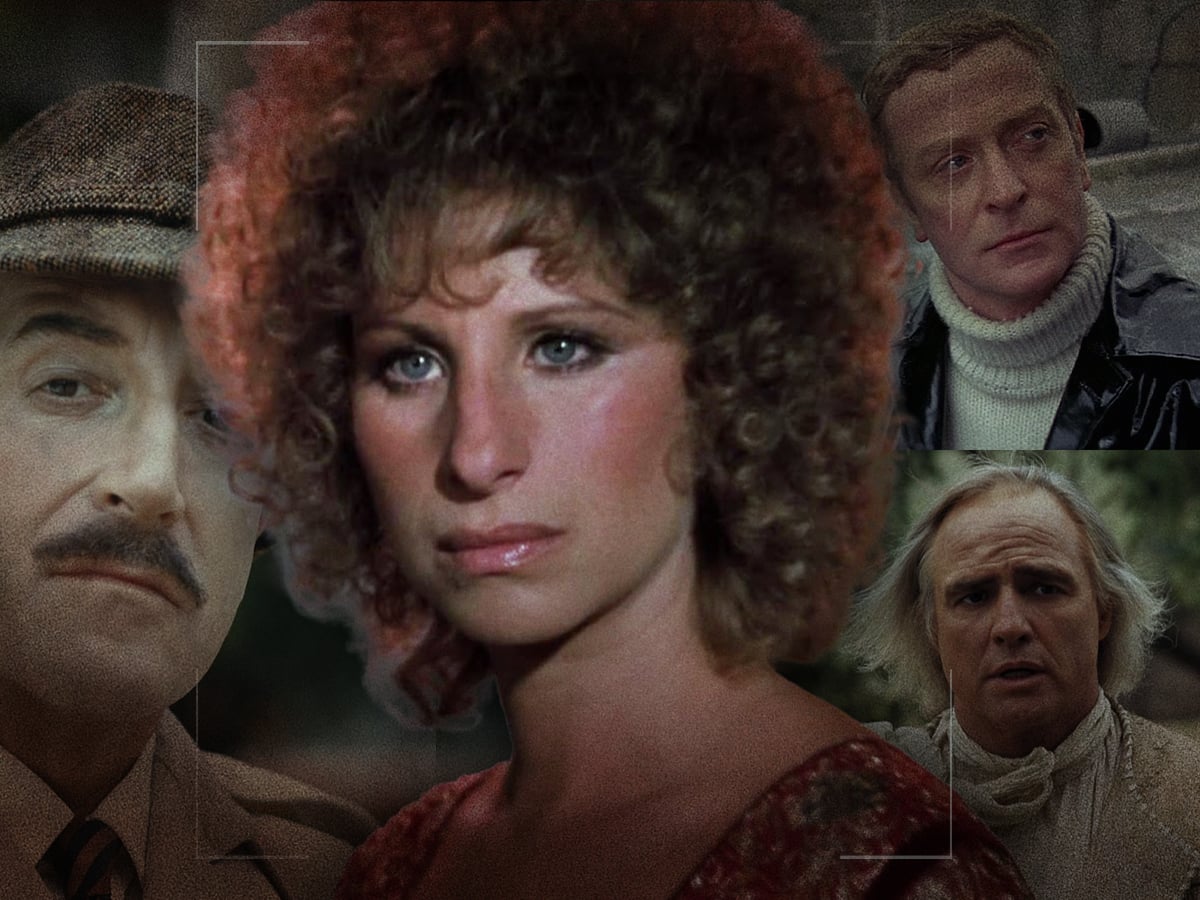
In The Pink Panther Strikes Again (Blake Edwards), a comedy classic with Peter Sellers, a scene appears that uses lazy homophobic jokes, as when an elderly woman observes the character Clouseau and his former nemesis Dreyfus in an ambiguous situation and assumes intimate contact between them, leading to the line "Dirty old men!". While the series has signature humor, this line feels outdated and unnecessary.
The 1976 version of A Star is Born (Frank Pierson), starring Barbra Streisand and Kris Kristofferson, contains a racist line that hasn't aged well: "Will you welcome, please, the Oreos." The derogatory term used to refer to an African-American group within the film reinforces stereotypes and undermines empathy with Streisand's character, who already suffers from weak chemistry between the protagonists and a superficial representation of the country music scene.
The thriller The Tenant (Roman Polanski) features a line that tries to minimize the protagonist's paranoia: "You know, little things that get blown up out of all proportion? You know what I mean?". Polanski, in addition to directing, acts in the film and the attempt to frame his character as a victim seems uncomfortable, especially in light of the filmmaker's personal controversies, which casts a shadow over the work.
In the sports film The Bad News Bears (Michael Ritchie), known for its authenticity in youth representation, the character Kelly Leak says "Well the baseball you guys play is for f--ts and old farts with nothing better to do with themselves". Although it portrays the raw language of the time, the repeated use of homophobic insults highlights a cultural problem that the 2005 remake chose to eliminate, showing how cinema can evolve in terms of social sensitivity.
The Outlaw Josey Wales (Clint Eastwood) features a stereotypical and offensive line from the Comanchero chief, who says: "Now, if one of you has to, you can take that old woman over there. She might be worth one donkey". Although the film is progressive in approaching Native American characters in a more complex way, this line reinforces violent and misogynistic stereotypes that are at odds with the rest of the narrative.
In The Missouri Breaks (Arthur Penn), Marlon Brando plays a character whose main characteristic is being excessively flatulent, with the line "Lower your voice. I feel an attack of gas and that could be perilous to both of us". This choice of crude humor compromises the coherence of the film, which had the potential to be a revisionist Western classic, especially with the presence of Jack Nicholson.
Finally, the remake of King Kong in 1976 (John Guillermin) tried to update the 1933 classic, but the line "Coast to coast tours, beauty and the beast, that's a grotesque farce!" sounds like a poorly executed attempt to replicate the iconic line "It was beauty that killed the beast". The lack of originality and the forced tone harmed the film's reception, which was surpassed by the 2005 version, which maintained the original line.
These lines exemplify how poorly conceived dialogue can harm even films with large casts and relevant themes. The critical review of these lines helps to understand how cinema evolves and how respect for the context and the public's sensitivity is fundamental to the construction of lasting works.