Tesla presented misleading data to approve autonomous cars in Europe, agency says
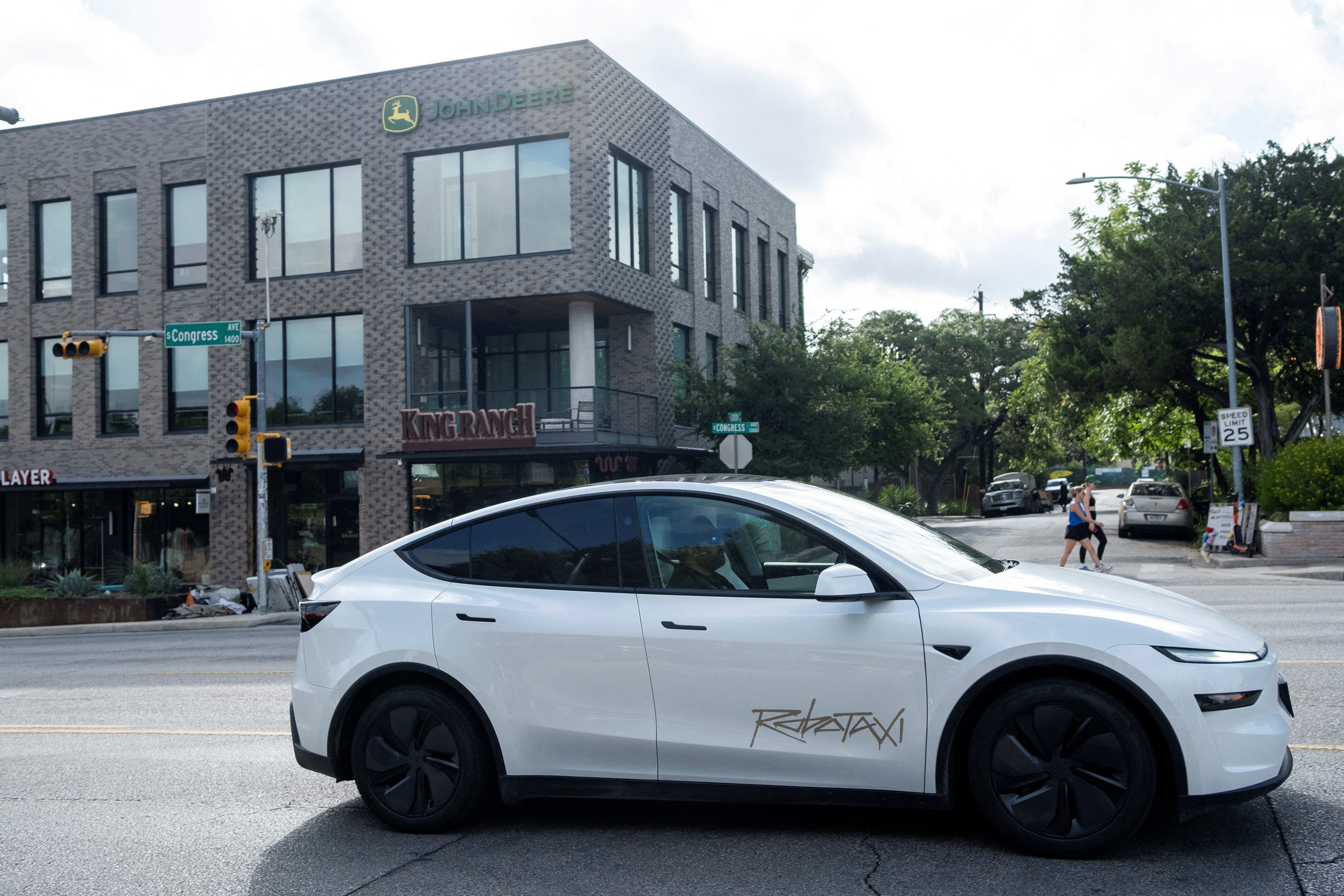
Tesla robotaxi in Austin, Texas.
Joel Angel Juarez/Reuters
In its efforts to obtain European approval for its "Full Self-Driving" (FSD) autonomous driving system, Tesla presented safety statistics to regulatory authorities in Sweden and the Netherlands that researchers say constituted a misleading marketing practice.
The data was prepared by the company itself. A Reuters analysis published last month showed that Tesla Chief Executive Elon Musk and other company leaders have cited with increasing frequency over the past year statistics that indicate FSD would be up to 10 times safer than human drivers.
Reuters, however, identified several invalid data comparisons behind those numbers, which would have inflated Tesla's safety claims.
Tesla has presented potentially exaggerated safety data to some European regulators, according to correspondence obtained by Reuters through public records access requests.
Now on g1
The manufacturer is seeking broader FSD approval in a region where it is trying to regain market share.
The company contacted RDW, the Dutch traffic regulatory agency, in late 2024 to begin the process.
In a letter sent to RDW in November 2024, Tesla provided a link to its safety report and stated that "the increase in "Use" of FSD "contributes to safer roads."
The company charges a monthly subscription for the system, which can drive the vehicle in certain situations, but still requires the driver to remain attentive.
After more than a year of testing and discussions with Tesla, RDW approved the use of FSD in the Netherlands in April. The regulatory agency is now seeking European Union-wide approval of the system on the company's behalf.
RDW declined to comment on the issues raised by Reuters about Tesla's safety statistics.
In a statement, the agency said it "does not rely on marketing claims or external statistics" to make decisions and that it carries out its own "tests, analyzes and verifications" of the system on public roads and test tracks. The agency did not say whether it evaluated Tesla's safety statistics in the United States.
RDW further stated that Tesla "collected a lot of data" during the tests and that the agency "validated, tested and audited this information."
The agency, however, did not specify what kind of data was collected or what was measured.
Tesla did not respond to requests for comment.
Saving 32,000 lives?
Shortly after the decision was announced on April 10, Tesla policy manager Ivan Komusanac emailed Swedish regulators asking for similar approval for the FSD.
He attached a slideshow making the claim that Tesla vehicles equipped with the system can travel more than seven times longer between accidents than the average human driver in the United States.
The presentation also claimed that FSD could have saved 32,000 lives and prevented 1.9 million injuries.
Researchers interviewed by Reuters said these figures are highly misleading because they are based on the unrealistic assumption that all vehicles in the United States - including more accident-prone cargo trucks and motorcycles - would be replaced by Tesla cars equipped with the FSD system.
The estimate also assumes that each Tesla vehicle is, in fact, at least seven times safer than the one it replaces.
The Reuters analysis also found that Tesla tends to overestimate the safety of the technology when comparing the accident rate in vehicles with FSD that deploy airbags to the overall accident rate in the United States, which includes less serious occurrences.
The company also compares its cars to the average vehicle in the country, which is significantly older than the Tesla average, which could skew the results as new safety features are gradually being incorporated by the industry.
Anders Eriksson, an investigator at the Swedish Transport Agency, declined to comment on the data provided by Tesla, but said that regulators "look beyond the headline numbers" and that the evaluation of systems of this type is not based "just on aggregate safety claims, but on the body of evidence presented."
The regulator did not respond to Reuters' questions about what other evidence was presented by the Tesla.
Dudley Curtis, spokesman for the European Transport Safety Council, said the organization is "certainly concerned" that Tesla had submitted "unreliable safety data" from the United States to Swedish regulators after being briefed by Reuters about the correspondence.
He added that if Tesla wants to sustain safety claims, it should "provide the data to a university, subject it to independent verification by a qualified researcher, and then we can debate them."
Tesla bets on FSD for recovery in Europe
Tesla says approval of FSD in Europe is essential for sales growth in the region.
The company is trying to regain market share after falling sales last year, amid protests against Elon Musk's political activities, including support for far-right European parties.
The lack of approval could make it difficult for Tesla to compete in a region where Chinese electric vehicle manufacturers are gaining ground in a big way. constant.
In the coming months, the approval of representatives of at least 55% of the Member States, which accounts for 65% of the bloc's population, will be required for the FSD to be released throughout the European Union.
Meanwhile, bloc countries can approve the technology individually.
In Greece, the regulatory body stated last month that it intends to authorize the FSD and cited data "from the other side of the Atlantic" that would indicate a "significant reduction in accidents".
The Greece's Transport Ministry declined to answer whether the data cited came from Tesla's safety report.
Regulators in other European countries have also been receiving an increasing volume of messages from drivers citing Tesla statistics and calling for quick approval of the FSD, according to emails obtained by Reuters.
In Norway, Tesla drivers have written to road regulators citing the company's safety report.
One said the technology is "significantly safer than manual driving" and power
would "reduce accidents by up to 90%", with the potential to save lives on the country's roads.
Stein-Helge Mundal, from the Norwegian Public Roads Administration, responded to some of these requests by stating that the numbers released by Tesla "are produced by the company itself", which makes it "difficult to establish a correlation with official accident statistics".
Source: G1