Technology in the food industry helps reduce waste by up to 50%
Food waste remains among the main global challenges in the production chain and has been pressuring companies in the sector to invest in technology to increase operational efficiency and reduce losses.
According to a survey by Avery Dennison, the global cost of food waste could reach US$540 billion by 2026, driven mainly by failures in logistics, distribution and inventory management.
In Brazil, the scenario is also worrying. Data from the Pact Against Hunger indicate that the country wastes around 55.4 million tons of food per year, equivalent to approximately 30% of national production.
In view of this scenario, integrated management systems and data analysis began to gain prominence within the food industry, especially in operations that work with perishable products and high turnover.
Companies in the sector have been adopting ERP and automation platforms to improve demand predictability, inventory control and supply chain planning. According to Alan Gomes, director of SPS Group Minas and specialist in SAP solutions, one of the biggest bottlenecks is still the lack of information integration.
"Many companies don't know exactly where waste occurs. When you can integrate data into a robust system, you can better predict demand, plan purchases and avoid excesses or stockouts", he says.
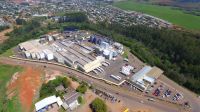
Technological advances are already beginning to produce concrete results in some industrial operations. At Grupo Farina, the holding company responsible for brands such as Pita Bread, Reali Pães and Tá Pronto, the use of SAP solutions made it possible to reduce operational losses by up to 50% in certain processes, according to the company.
With units in Jarinu and Atibaia, in the interior of São Paulo, the group operates on a high-scale production model and continuous supply of perishable inputs. In 2025 alone, the company claims to have surpassed the mark of 458 million packages produced.
In this context, operational control has become strategic to avoid waste and improve margins.
Food is expected to become more expensive in 2026 | MARKET OPENING
According to Daniel Carvalho, information technology manager at Grupo Farina, before the implementation of integrated solutions, there was less visibility over operational indicators and difficulties in integrating production and materials management.
"The main challenges were related to the lack of structured metrics and the difficulty of integrating production and inventory. This made it difficult to measure losses and efficiency", he states.
The transformation began in 2012, with the adoption of SAP systems, but has gained intensity in recent years, with the more strategic use of data analysis and process automation.
In addition to monitoring production and stocks, the company started to automate purchasing decisions and supply planning, reducing operational failures and increasing predictability.
According to the Farina Group, between 2020 and 2023 the company recorded its biggest growth cycle, driven by the integration of operations and professionalization of management. Currently, the group has three operating units and revenues of more than R$300 million.
The movement follows a broader trend in the food industry, which has been accelerating investments in digitalization given the need to gain efficiency in an environment of high costs and pressured margins.
In addition to reducing losses, experts point out that the use of technology also strengthens traceability, sustainability and quality control throughout the production chain.
For Alan Gomes, waste is no longer just an operational issue and has become a strategic position within companies. "Those who can better control data gain efficiency, competitiveness and sustainability throughout the entire chain", he states.
How does the producer finance the harvest in Brazil?
Source: CNN