TCU approves Lula government accounts for 2025 with reservations; rapporteur warns about the situation of state-owned companies
Billionaire leak from state-owned companies puts pressure on public accounts
The Federal Audit Court (TCU) approved, this Wednesday (10), with reservations, the accounts of the President of the Republic, Luiz Inácio Lula da Silva (PT), referring to the 2025 financial year. The case's rapporteur is Minister Benjamin Zymler. (understand what the government's accounts are)
One of the rapporteur's reservations involves the resources that the federal government placed in state-owned companies that do not directly depend on the Treasury to operate.
According to the opinion, the government did not adequately monitor the use of this money - especially in cases where the amounts were parked for a period or generated financial income later.
According to Zymler, the analysis that supported the authorization of the federal guarantee did not sufficiently demonstrate the viability economic-financial aspect of the state-owned company's restructuring plan nor its effective payment capacity.
The opinion points to possible non-compliance with public governance and fiscal responsibility standards that require prior assessment of the risks involved in the operation.
The rapporteur also made reservations about the allocation of resources managed by Pré-Sal Petróleo S.A. (PPSA).
According to the rapporteur, revenues considered to be typically public in nature were not collected in the National Treasury's Single Account nor included in the Union Budget, contradicting constitutional principles and budgetary rules related to legality, transparency and cash unity.
Another caveat involves the inclusion of new projects in the 2025 Budget Law by the ministries of Cities and Integration and Regional Development, in addition to the Companhia de Desenvolvimento dos Vales do São Francisco and Parnaíba (Codevasf).
Still within this scope, the rapporteur highlighted the situation of Correios, which is facing an economic-financial crisis.
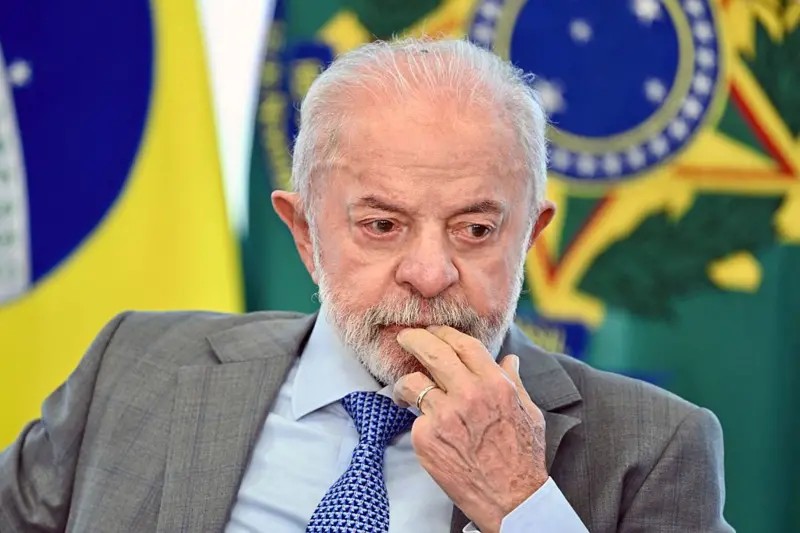
Lula
Getty Images / BBC
According to Zymler, the analysis that supported the authorization of the federal guarantee did not sufficiently demonstrate the economic-financial viability of the state-owned company's restructuring plan nor its effective payment capacity.
For technicians, new projects were included without works already in progress being adequately met and without sufficient provision of resources for the conservation of public assets, in disagreement with the Fiscal Responsibility Law.
Alerts to the government
In addition to the reservations, the TCU issued a series of warnings to the Executive.
According to the report, the increase in mandatory expenses, constitutional minimums and parliamentary amendments has compressed resources destined for public policies and investments that do not have specific legal protection.
Another alert was the accumulation of resources idle in public funds.
The opinion particularly cites the Special Fund for the Development and Improvement of Inspection Activities (Fundaf), pointing out that the high volume of financial surpluses reveals a mismatch between collection and the capacity to execute planned expenses.
Situation of state-owned companies
Minister Benjamin Zymler, rapporteur of the accounts, warned about the economic-financial deterioration of federal state-owned companies and the growing risks for public accounts.
Last year, the TCU created a task force to monitor 11 federal state-owned companies. The work identified a situation of widespread economic-financial deterioration, with different levels of severity, in companies in sectors such as postal services, nuclear energy, port infrastructure, civil aviation, asset management and paper money manufacturing.
According to the report, in some cases the situation already represents an "immediate fiscal risk for the Union", given the existence of resource contribution obligations already assumed or about to be required by the federal government.
"In other companies, the risks are medium term, but they arise from structural weaknesses that, if not addressed, tend to worsen", stated the minister.
Inspection reached companies such as Correios, Eletronuclear, ENBPar, Companhia Docas, Casa da Moeda, Emgea and Infraero.
According to the TCU, the observed deterioration results from factors such as failures in ministerial supervision and risk-oriented monitoring, weaknesses in business models, loss of competitiveness and revenue, high cost rigidity, especially with personnel and actuarial liabilities, and dependence on one-off and non-recurring solutions to balance the accounts.
In light of this In this scenario, the court issued a warning to the Executive Branch that the combination of financial deterioration of state-owned companies and insufficient supervision increases the Union's fiscal exposure and the likelihood of new contributions from the National Treasury, contradicting the legal duty to prevent fiscal risks.
The report also points out problems in the capitalization policy of state-owned companies. According to the minister, the contributions made by the National Treasury in the last 15 years were, in several cases, significantly higher than the physical and financial execution needs of the financed projects.
The practice resulted in the formation of high cash balances and financial investments without immediate link to the projects that justified the transfers.
Correios
The case of Correios, which is facing a serious economic and financial crisis, is viewed with concern by the court.
"The minimum contribution of R$6 billion until 2027 is already included in a contractual clause signed by the Union", highlighted Zymler.
The minister highlighted that "relevant flaws were identified in the procedure for analyzing and approving the granting of the Union's guarantee to the Brazilian Post and Telegraph Company (ECT), notably regarding the evaluation of the economic-financial information that supported the decision." of appropriate consistency", he added.
Because of these failures, he issued reservations about the granting of the Union guarantee to Correios. In the minister's assessment, there was insufficient analysis of the economic-financial viability of the restructuring plan and the real payment capacity of the state-owned company, in disagreement with public governance standards, fiscal responsibility and legal requirements for prior assessment of the company's financial capacity.
What are the government's accounts?
They are a rendering of accounts that provides information on government spending in areas such as health, education and infrastructure.
The TCU is responsible for assessing the president's accounts, that is, examining them in detail and issuing an opinion technical.
Judgment, on the other hand, is the function of the National Congress, which makes the final declaration regarding the regularity of approved accounts, approved with reservations or rejected.
The TCU's assessment is made up of two documents: a report and the preliminary opinion. The report contains the TCU's analysis of budgetary execution and the management of public resources.
The preliminary opinion shows the irregularities and inconsistencies identified, as well as recommendations and warnings.
The preliminary opinion must be conclusive, that is, it must indicate approval, approval with reservations or rejection of the accounts.
The ministers of Planning, Bruno Moretti, the Civil House, Miriam Belchior and the Comptroller General of the Union, Vinicius Marques de Carvalho attended the session.
Source: G1