'Tax on blouses': after the end of the tax, retailers and importers take dispute to Congress and Justice
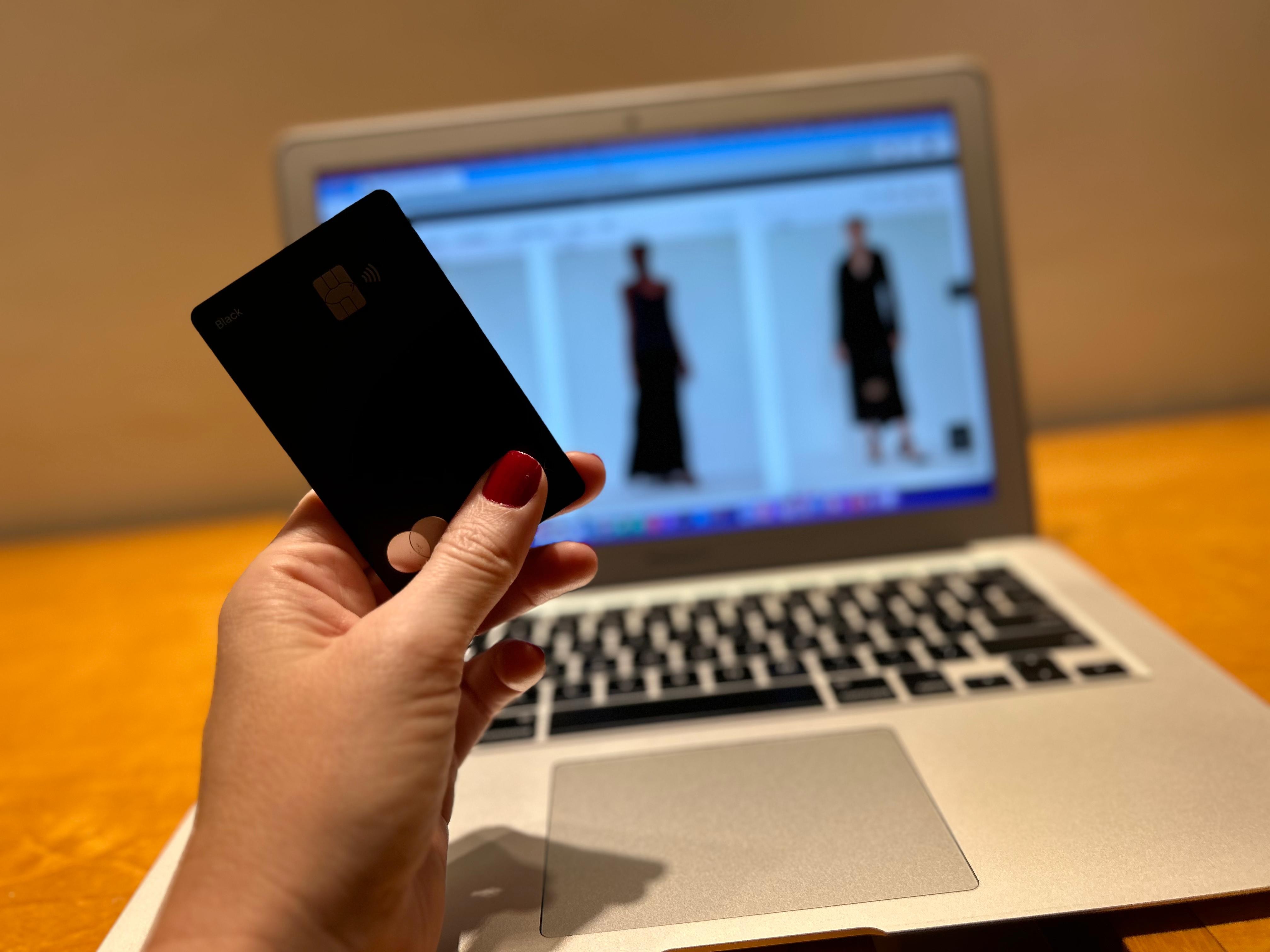
Shopping on Brazilian websites that do not list products coming from China frustrates consumers e-commerce online commerce international shopping credit card consumption
Thaisa Figueiredo/g1
The end of the so-called "blouse tax" did not end the dispute between national retailers and importers, also involving Brazilian consumers. On the contrary, representatives of the sectors expanded the offensive on social media, in the National Congress and even in the Judiciary.
Announced in May by the government, the end of the tax on blouses eliminated the 20% import tax charge on international purchases under US$50 that had been instituted in August 2024. The measure maintained the Conform Remittance program - which regularized the purchase of these products abroad.
Despite the end of the tax imports, the states maintained their taxation, through ICMS, between 17% and 20%. This charge remains in place.
➡While national retail moves towards what it calls "isonomy" (equal taxation for national and imported products), importers work to maintain zero taxation (see below in this report).
Retailers claim that imports have a competitive advantage over national production, which is undermining jobs.
➡As a backdrop to this dispute, there is the fact that the revocation of the tax on blouses was made through a Provisional Measure, which has the force of law. However, it will have to be confirmed later by the National Congress, which can maintain, block or change the measure.
➡At the same time, regardless of the discussion in the National Congress, entities in the national productive sector are already moving to resume collection in the Judiciary. All of this occurs in an election year.
Federal Government announces end of blouse tax
Blouse tax
Started in 2024 and ended this year, the tax was created as a response from the government and Congress to a request from segments of the national industry, following the increase in digital purchases during the pandemic. And also given the difference in tax burden between national products and those imported on online platforms.
➡Controversial, the "blouse tax" was disapproved by a large part of Brazilian consumers mainly because it made low-value popular products more expensive and reduced the attractiveness of international platforms. Critics argued that international tourists had an advantage by not paying the tax.
➡Taxation on parcels worth less than US$50 will return in 2027 through the Contribution on Goods and Services (CBS) - a federal tax created as part of the tax reform on consumption. The rate to be charged, however, has not yet been defined. It will be fixed by December this year. Calculation by Roit consultancy points to a rate of 9.43% in 2027.
➡From 2029 to 2032, there will be a transition from state ICMS and municipal ISS to IBS - the future tax on consumption of states and municipalities. At the end of this period, current state and municipal taxes will be replaced by IBS, whose rate, together with the federal government's CBS, is estimated at 26.5% - one of the highest in the world. The tax will be charged on imports.
Dispute intensifies
Jornal Nacional/ Reproduction
For the Institute for Retail Development (IDV), which brings together Brazilian retailers, such as Americanas, Dafiti, Centauro, Casas Bahia, Lojas Renner and Magazine Luiza, among others, the government's collection of CBS from 2027 is moving forward to correct a "non-equal situation" - given the exemption for low-value imports.
But the entity also requests the reinstatement of the import tax - in addition to the CBS charge.
"All commercial operations with goods and services will, as a rule, be taxed, which is why commercial operations involving low-value and cross-border imports must also be taxed, respecting the law and especially local commerce, which is already so harmed by the tax distortions that are applied to it, whether in the taxation of Import Tax or in taxation on added value, as in the case of CBS", adds the IDV, in a note.
This week, the Parliamentary Fronts for Commerce and Services, for the Business Environment, for Competitive Brazil and for the Defense of Intellectual Property and Combating Piracy, among others, released a document in which they reaffirm their "commitment to the defense of national production, job creation, productive investment and the construction of a business environment based on fair and balanced competition".
"Defending tax equality does not mean defending privileges. It means ensuring that all economic agents are subject to the same rules and contribute in an equivalent way to the country's development. This is precisely why we defend a simple, understandable and fair principle: If you download to a foreign country, you have to download to a Brazilian one", says the document.
On the other hand, the Brazilian Mobility and Technology Association (Amobitec), which brings together technology companies providing services and importers, such as Alibaba, Amazon and Shein, among others, considered the end of the import tax for purchases. of small value is the "most natural and fair path".
The entity highlighted the importance of Congress moving forward with the approval of the Provisional Measure that eliminated the "Tax on blouses". intensify", assessed Amobitec, in a note.
Proteste Euroconsumers-Brasil, which claims to be a non-profit, non-partisan civil entity, independent of governments and companies, a Brazilian consumer protection association, but which also has among its associates Shein, Alibaba and Amazon, that is, importers, carried out a national survey on the "blouse tax".
Among the main results, the survey shows that 92% of consumers consider that eliminating the federal government's 20% taxation was a correct decision - a percentage that reaches 97% in the Southeast and 94% in the Northeast. For 88%, the National Congress should treat the issue as a priority.
The research was carried out between May 12th and 21st, 2026, through personal interviews, with 1,300 consumers aged 18 to 65, with a monthly family income of more than R$1,600. The survey included residents of the cities of São Paulo, Rio de Janeiro, Belo Horizonte, Porto Alegre, Curitiba, Goiânia, Brasília, Recife, Salvador, Fortaleza, Belém and Manaus.
Demand in Justice
The political and social media dispute has also begun to spill over into the courts. In May, the National Confederation of Commerce of Goods, Services and Tourism (CNC) filed a Direct Unconstitutionality Action (ADI) with the Federal Supreme Court (STF) to end the tax on blouses.
The entity says that, given the risk of setback and legal uncertainty for national commerce, "it requests the granting of an injunction to immediately suspend the effects of the exemption".
On the merits, the Confederation asks the STF to declare the total unconstitutionality of the contested rules, "restoring the competitive balance in the Brazilian market."
"The reestablishment of the zero rate for international purchases of up to US$50 is a serious setback that directly punishes the national productive sector.
We cannot accept a legal asymmetry that grants excessive advantages to foreign products free of federal taxes, while Brazilian companies alone bear the weight of our internal tax burden. National commerce does not fear competition, as long as it is fair", says the president of the CNC-Sesc-Senac System, José Roberto Tadros.
Source: G1