Tariffs proposed for Brazil are 'differentiated', says US trade representative
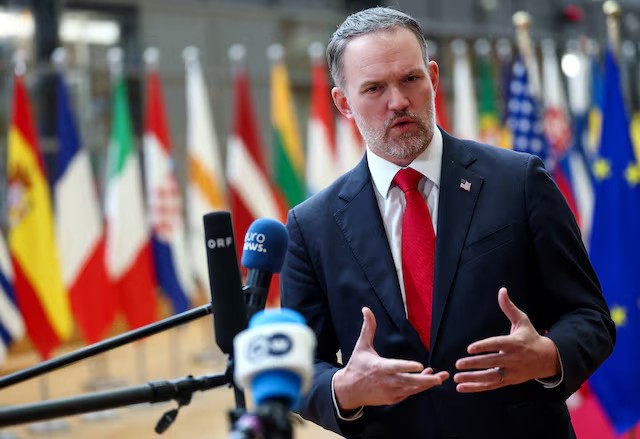
US Trade Representative Jamieson Greer speaks to the press on the day he participates in a working lunch with EU trade ministers, in Brussels, Belgium, November 24, 2025.
Piroschka van de Wouw/Reuters
United States Trade Representative Jamieson Greer said on Tuesday (2) that the Trump administration will release the results of several Section 301 trade investigations in the coming weeks. The information is from the Reuters agency.
🗒️ Do you have any suggestions for a report? Send to g1
He added that the 25% tariffs proposed for Brazil are "quite differentiated" due to the exclusions of beef, coffee, metals, energy and other products. See the full list of exempt products at the end of the report.
USA proposes 25% tariff on products from Brazil, after trade investigation
Greer, speaking on CNBC's Squawk Box program, said that the government has obtained very good results with its tariff program to increase US exports.
He said substantial tariffs are necessary to correct persistent unfair trade practices around the world and a "gigantic" U.S. trade deficit.
What is Section 301
🔎 Section 301 of the Trade Act of 1974 is a mechanism created by the U.S. Congress that allows the U.S. government to investigate countries whose policies or practices are considered harmful to U.S. commerce, businesses, or exporters.
The statement comes shortly after the United States released the report of an investigation that accuses the Brazilian government of adopting practices that "encumber or restrict" trade with North Americans. Among them are PIX, illegal deforestation, piracy and failures in the application of anti-corruption laws.
As a result of the investigation, the US Trade Office (USTR) proposed the application of 25% tariffs on Brazilian goods. The body, however, included a list of exceptions for products considered strategic by the US, such as meat, fruit, coffee, aircraft, rare earths, among others.
Tariff not yet in effect
The new rate is not yet in effect. Under American law, the formal investigation must be completed and a series of public consultations must be carried out before the measures come into force.
After the US Supreme Court considered the tariffs imposed by President Donald Trump to be illegal, the trade investigation based on the Trade Law became one of the main pressure instruments of the American government.
It was opened on July 15, 2025 by order of Trump. A week earlier, he had already mentioned the possibility in the letter in which he announced a 50% tariff on Brazilian imports.
At the time, Jamieson Greer stated that he had documented "unfair commercial practices by Brazil that have restricted the access of American exporters to its market for decades", but did not present evidence to support the accusation.
The document brought together commercial and political arguments, including the allegation that the US has a trade deficit with Brazil. However, the Americans have exported more to the Brazilian market than they import since 2009.
Now, Greer states that the American government maintains an intense dialogue with the administration of President Luiz Inácio Lula da Silva, but that there are still differences between the two countries.
The President of the United States, Donald Trump, and the President of Brazil, Luiz Inácio Lula da Silva, in a meeting at the White House, in Washington
RICARDO STUCKERT/DISCLOSURE
"Over the last year, President Trump and I have had several constructive meetings with President Luiz Inácio Lula da Silva and his cabinet, which have intensified in recent weeks.
However, we continue to have substantial divergences in resolving the issues identified in this investigation," said Greer.
Products exempt from tariffs
Despite the proposal to impose 25% tariffs on Brazilian products, a series of items should be left out of the measure, such as informational materials, donations and products included in a specific list of exceptions.
Exempt products include: certain meats, fruits and minerals, in addition to coffee, tea, spices, cereals, seeds, fruits oilseeds, industrial and medicinal plants, straw and forage.
Aircraft and parts produced in Brazil, rare earths, organic chemicals, medicines and fertilizers would also be among the exempt items.
Source: G1