Sweeping the Strait of Hormuz for mines could take weeks
Peace Agreement: Donald Trump said the Strait of Hormuz will be reopened
Ensuring that the Strait of Hormuz is free of mines could delay the normalization of maritime traffic by weeks following an agreement to reopen the waterway, maritime transport and security sources say.
Favorite g1 on Google and follow the main news of the day
The operation with conventional minesweepers and state-of-the-art underwater drones can will extend for 40 to 50 days before many insurers, shipping companies or oil companies feel confident enough to sail through the strait, according to assessments from five Western maritime security sources.
That could potentially hold back tens of millions of barrels of oil, on top of Gulf oil supplies already blocked since the United States and Israel attacked Iran on Feb. 28, according to estimates based on pre-war flows.
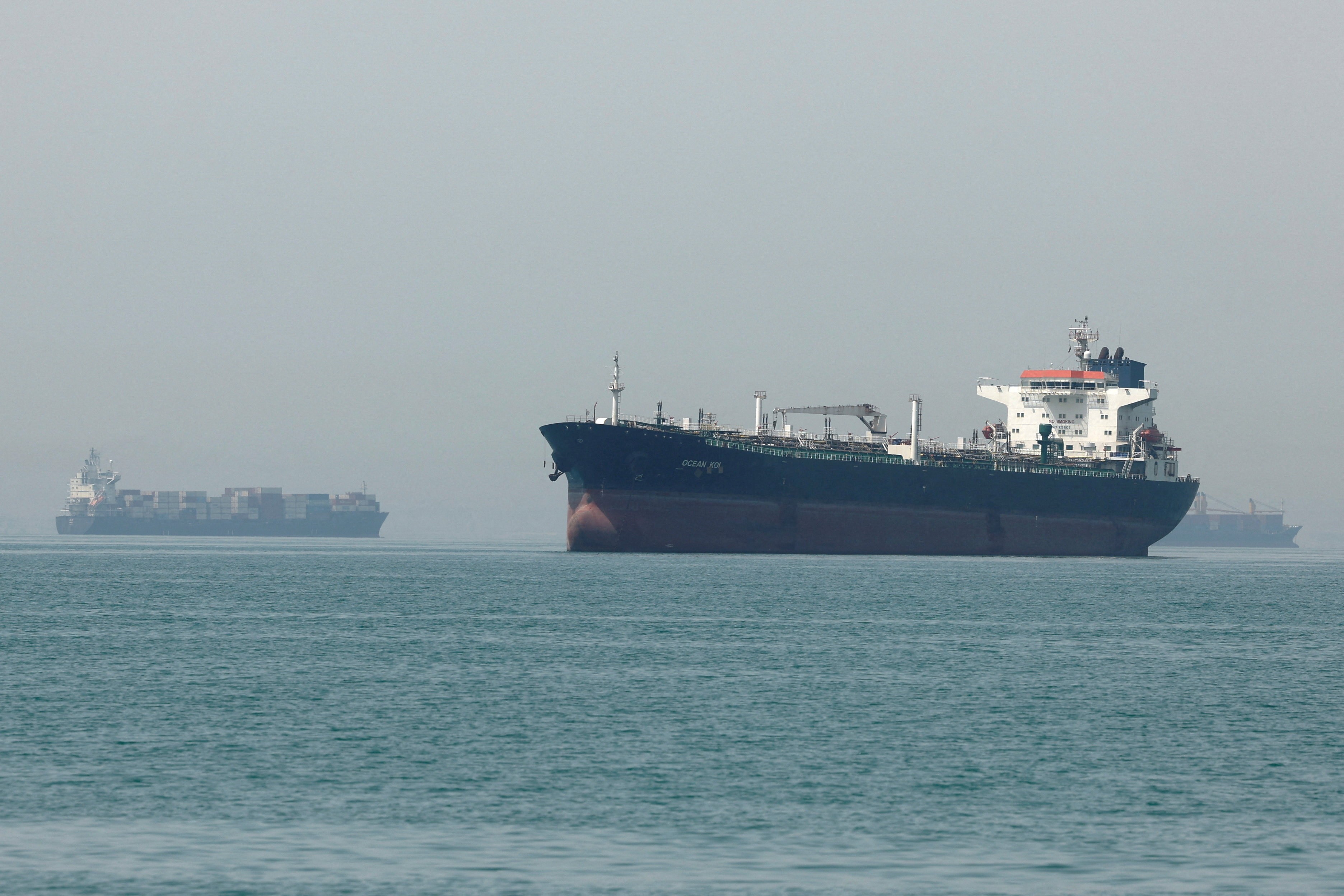
Vessels moving through the Strait of Ormuz
Majid Asgaripour/WANA (West Asia News Agency) via REUTERS
Every barrel exported from the Gulf is crucial at a time when inventories in the world's largest economies are heading for their lowest levels since at least 2003, according to analysis from the U.S. Energy Information Administration last week.
While Iran and the U.S. have quietly helped ships pass through the blocked waterway in recent weeks, shipping officials have continued to urge caution after the two countries announced on Sunday that they had reached a preliminary agreement to end the war and reopen the strait.
"We still consider it too risky for ships to begin the crossing at this time," said Jakob Larsen, director of security at shipping association BIMCO.
"The threat of mines in the area remains an immediate concern, as well as in the future, and it is necessary to establish mine-free routes."
READ ALSO
US claims to have already signed agreement with Iran; text will be released after in-person ceremony on Friday, says Trump
Assurances requested by shippers
It is unclear how many mines Iran may have placed in the strait, which handled 20% of the world's daily supply of oil and liquefied natural gas before the war.
Iran, which has sought to assert its control over the waterway during the war, has threatened to lay naval mines, without commenting on whether its forces have already laid them.
The US has indicated that the mines pose a risk and claims to have targeting Iranian boats responsible for laying mines.
On June 2, US Secretary of State Marco Rubio told a Senate Foreign Relations Committee hearing that Iran had "mined large swaths of Hormuz, international waters", without giving further details.
In a June 11 note, the German Navy, citing information from the US and UK navies, stated that there were mines in four locations around the strait, adding that the location of the mines was not could be verified by Germany.
Even the possibility of mines could deter companies. A supertanker and its cargo of crude oil are worth about $300 million; therefore, war risk insurers, oil companies and tankers would need assurances that passage is safe before attempting to cross the strait, shipping officials said.
"A single sea mine is enough to cause fatalities," said Rene Kofod-Olsen, chief executive of V.Group, one of the world's leading experts in technical ship and crew management, which has 13 ships stranded in the Gulf.
"This is obviously a huge problem for global shipping," he said.
Maritime traffic remained low
When asked last week how many mines had been laid and in what locations, a spokesman for the U.S. military's Central Command (Centcom) said it was not possible to publicly discuss details for operational security reasons.
"The U.S. military's efforts to ensure the Strait of Hormuz is completely free of sea mines laid by the Iran's Islamic Revolutionary Guard Corps remain underway," they said.
The White House did not respond to requests for comment.
Oman's Maritime Security Center on May 30 warned sailors sailing its side of the strait to exercise caution after reporting the sighting of an "object suspected of being a floating mine."
Oman's Ministry of Information did not immediately respond to a request for comment.
While Iran and the U.S. While negotiating the interim agreement to stop the war, both sides allowed some ships to exit the strait.
US President Donald Trump said last week that the US had been withdrawing millions of barrels of oil, and Reuters reported in May how some states had struck deals with Tehran to guarantee the passage of vessels.
The number of ships passing through the strait has increased to an average of 12 to 15 vessels a day in recent weeks, according to shipping data that can be checked as soon as vessels become visible after leaving the strait. But that's a fraction of the 120 to 140 ships that passed through the waterway daily before the war.
Source: G1