Supreme Court changes Alabama's electoral map and benefits Republicans; black population becomes fragmented
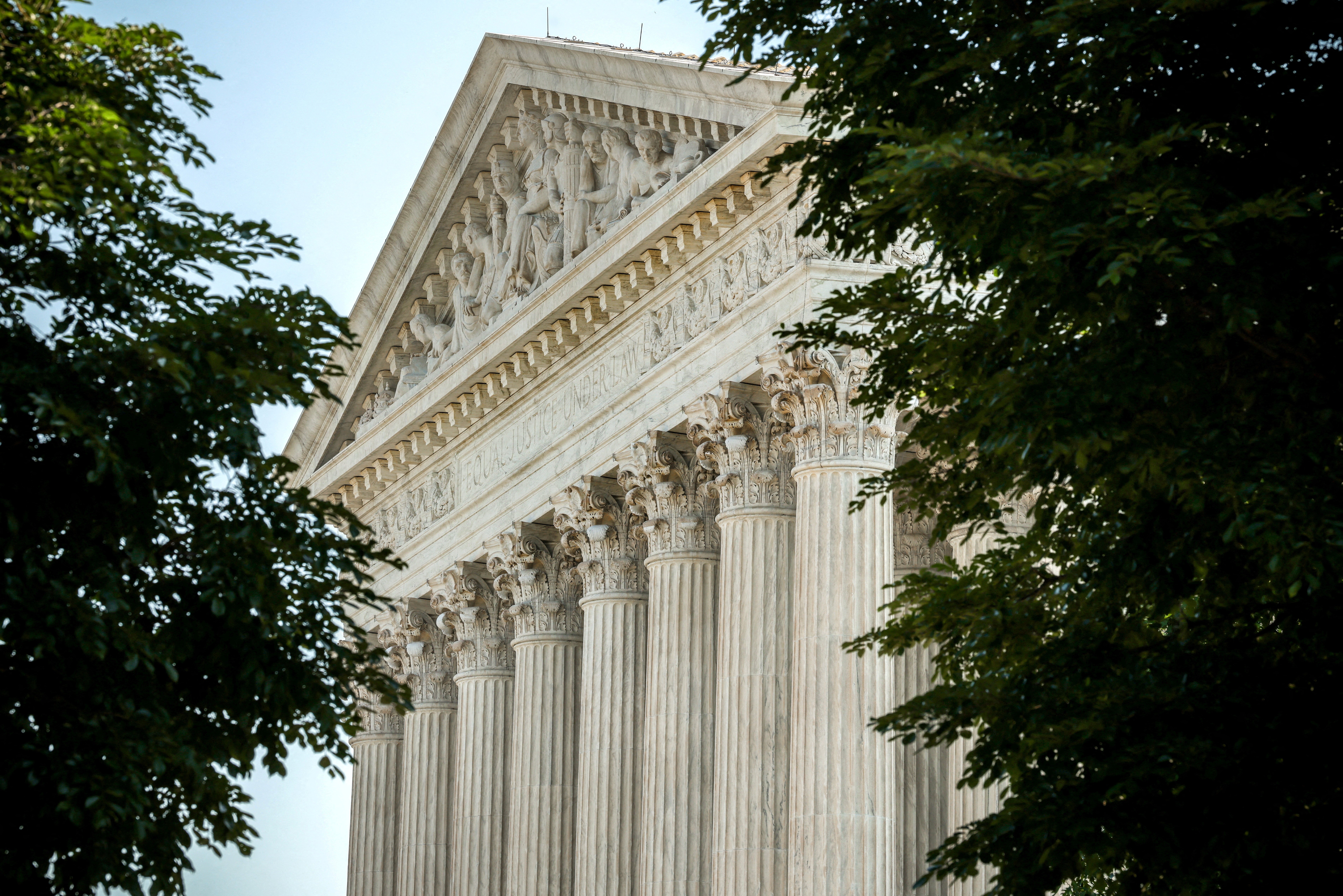
U.S. Supreme Court.
Evelyn Hockstein / Reuters
The U.S. Supreme Court on Tuesday cleared the way for Alabama to use a pro-Republican electoral map that eliminates one of its two districts where black voters represent a majority or near-majority, giving President Donald Trump a boost as his party defends control of Congress in November's midterm elections.
The justices suspended a lower court ruling that had blocked Alabama officials from implement an electoral map designed to transfer control of a U.S. House of Representatives district - currently held by a black Democratic congressman - to Republicans.
The court's three liberal justices dissented from the decision. The court has a 6-3 conservative majority.
Black voters generally support Democratic candidates. Republicans are defending slim majorities in the House and Senate in the midterm elections.
Now on g1
Alabama Republicans have asked the Supreme Court to lift the judicial block imposed on May 26 by a three-judge federal panel. That court ruled that the Republican-backed map intentionally discriminated against black voters, violating the U.S. Constitution's promise of equal protection under the law, and could not be used in the 2026 election.
Alabama Republicans argued in their petition to the Supreme Court that voters would face "irreparable harm" if the state were forced to use a map approved by the lower court instead of the one they proposed.
"Worse still, voters will be forced to vote under a racially gerrymandered map (gerrymandered) court-drawn map, which does not meet Alabama's legitimate zoning purposes," they wrote.
Gerrymandering involves manipulating the geographic boundaries of voting districts to marginalize a particular group of voters and increase the influence of others.
Attorneys for the NAACP Legal Defense Fund, which represents a group of black voters challenging Alabama's map, refuted state officials' claim that use of the lower court-approved map would cause damages.
"States have no legitimate interest in promoting racial discrimination, including by using a map that a court found to be the product of intentional discrimination," they said in a brief sent to the justices.
Alabama's request came amid a frenzied new round of congressional redistricting unfolding across the South, as Republican-led states rushed to take advantage of an April Supreme Court ruling that severely weakened the Voting Rights Act, a 1965 designed to prevent voting discrimination.
Tennessee approved a new map that dismembered a majority-black, Democratic-controlled district based in Memphis, while Louisiana adopted a plan to eliminate one of two districts with significant black populations in that state.
Litigation over Alabama's congressional map has swung between the Supreme Court and the three-judge federal panel in recent years.
Republican state lawmakers have sought to return to a map approved in 2023 that uses the same three-judge panel had previously considered it discriminatory. Such a map would reduce the number of districts where black voters represent a majority or near majority among the state's seven U.S. House districts from two to one.
The black population makes up about a quarter of Alabama's population.
On May 11, the Supreme Court granted the state's request to lift the lower court's earlier ruling that blocked Alabama from using the map.
In a dissent, the Supreme Court's three liberal justices suggested that the three-judge panel could reapply its judicial block on Alabama's Republican-intended map, which would dismantle a House district currently represented by Congressman Shomari Figures, who is black.
The three-judge panel also concluded that Alabama's intended map likely still violated the Voting Rights Act, even under the significantly stricter legal standard announced in the Supreme Court's April decision in the Louisiana case. After the three-judge panel imposed a new judicial blockade, Alabama officials took the issue to the Supreme Court.
In a process called redistricting, the boundaries of legislative districts in the United States are reconfigured to reflect population changes measured by the national census every 10 years. Redistricting is traditionally carried out by state legislatures at the start of each new decade, which makes the current mid-decade contest highly unusual.
Trump sparked the current battle last year by pushing Republican-run Texas to redraw its electoral map in an attempt to win five House seats held by Democrats, triggering similar efforts in several other states led by both Republicans and Democrats.
Source: G1