Super El Niño? What effects can be caused in Brazil
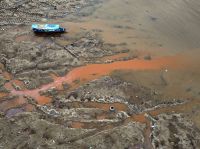
In the second half of 2026, Brazil must face the formation of a phenomenon that experts call "super El Niño". According to published information, the event could cause impacts on the planet's climate that could last until 2027.
For Claudio de Brito Neri, Geography professor at Colégio Presbiteriano Mackenzie Tamboré, despite the phenomenon seeming distant from everyday life, it impacts the lives of millions of Brazilians.
"This becomes clear when we analyze previous periods, in which their consequences ranged from problems in food production to crises in water supply and floods", he said.
Given the situation, bodies such as the Center for Weather Forecasting and Climate Studies (CPTEC), the National Institute for Space Research (INPE) and the National Institute of Meteorology (INMET) seek to alert governments, farmers and the population in general to the possible impacts of this phenomenon.
According to a technical note issued jointly by CPTEC, INPE and INMET, the effects of El Niño may be felt in different ways in Brazilian regions. Check it out below:
Affected regions
In the North region, the expectation is of drought and a reduction in the volume of rain, which causes the rivers to drop, making it difficult to transport people and goods. Riverside communities are the first to suffer from difficulty in accessing food, medicine and medical care. Another worrying factor is that the hotter and drier climate increases the incidence of fires and forest fires.
In the Northeast, the consequence is reduced rainfall and water scarcity. With less precipitation, reservoirs receive less water volume, which affects supply and agricultural production. The greater intensity of heat also increases the risk of fires in vegetation areas.
In the Midwest, the effects tend to be less intense, but the increase in temperature also reduces air humidity, a scenario that favors fires. Some areas may, however, record rainfall within the average, increasing soil moisture.
El Niño has arrived and could be "very strong", says US agency | CNN NEW DAY
The Southeast region has a more variable history: there are places with intense rainfall and others with prolonged periods of drought and predominance of heat, a phenomenon known as "summer weather". Capitals such as São Paulo, Rio de Janeiro, Belo Horizonte and Vitória may experience heat waves that are more intense than normal, which increases electricity consumption.
The region traditionally most affected in Brazil is the South, where the main effect is excessive rain, with floods, flooding and landslides. The three states (PR, SC, RS) tend to face more frequent storms and above-average rainfall.
The professor reinforces the fact that the effects of this phenomenon could end up increasing the price of electricity bills, making food more expensive and reducing the availability of water. In periods of prolonged drought, agricultural production can decline, while excessive rain can affect roads, homes and crops.
El Niño
According to the study, El Niño occurs when there is an above-normal warming of the waters of the Pacific Ocean, which alters the circulation of winds and the formation of rain. This entire process affects the planet, but, in the case of Brazil, there is a variation in impacts between the different regions of the country, ranging from excessive rain and flooding to intense droughts and lack of water in reservoirs.
Normally, winds in the Pacific blow from east to west, that is, from America towards Oceania and Indonesia. This causes warmer waters to be displaced by these air currents, keeping areas close to South America with cooler waters.
The phenomenon alters the balance between winds, pressure and humidity due to the increase in temperature in the Pacific Ocean. When this happens, there is an increase in evaporation, winds become weaker and the warm water that is normally close to Oceania spreads, warming the waters close to South America, which are generally colder. This causes imbalances with consequences on a global scale.
*Under AR supervision.
Source: CNN