STF validates law that paves the way for Ferrogrão to advance
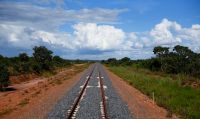
The plenary session of the STF (Supreme Federal Court) recognizes, this Thursday (21), the constitutionality of the law that altered the area of the Jamanxim National Park, in Pará, to enable the construction of Ferrogrão, a railway designed to connect Sinop (MT) to Itaituba (PA) and expand the flow of agricultural production in the Center-West.
Ministers Cristiano Zanin, André Mendonça, Nunes Marques, Luiz Fux, Dias Toffoli and Gilmar Mendes followed the vote of the rapporteur, Alexandre de Moraes. Before them, the then minister Luís Roberto Barroso - now retired from the Court - had already followed the rapporteur's understanding in 2025.
The ministers who opened a divergence were Flávio Dino and Edson Fachin. Minister Cármen Lúcia did not vote due to justified absence.
With the guarantee of the constitutionality of the law that allows the reduction of the area of the national park, the Ministry of Transport will be able to proceed with the Ferrogrão tender. In December 2025, ANTT (National Land Transport Agency) approved the revised railway studies following the then determinations of the STF.
The federal government has shown optimism with the Ferrogrão auction. However, there are still some uncertainties about the market's appetite to cover the investments necessary to build the network. The project also depends on more robust financing structures, such as the line under discussion at BNDES, which provides for longer terms and a greater grace period for railway loans.
Understand the trial
The trial takes place based on ADI (Direct Action of Unconstitutionality) 6553, presented by PSOL, in 2021, which questions the validity of Law 13,452/2017. The standard originated from the conversion of MP 758/2016 and allowed the removal of around 862 hectares of the national park to implement the Ferrogrão right-of-way and sections related to BR-163.
Rapporteur's vote
In the vote, Alexandre de Moraes understood that there was no constitutional irregularity because the change in the park's limits occurred after the conversion of the provisional measure into law by the National Congress. The minister also highlighted that the railway still depends on environmental licensing and all necessary technical studies before any work can be carried out.
According to Moraes, of the 977 kilometers planned for the railway, around 635 kilometers follow the lane already impacted by BR-163, which, in the rapporteur's assessment, reduces the environmental impacts of the project. The minister also mentioned that rail transport can emit up to 50% less CO2 than road transport when transporting grain.
The trial was resumed with the vote of minister Flávio Dino, who partially accompanied the rapporteur. Dino proposed additional conditions for the project to move forward, including the requirement for the exact definition of the railway route before applying for environmental licensing. It also included a device that determines that the route could not exceed the already disused areas of the park.
The minister defended that no new disaffection of the Jamanxim National Park could occur to accommodate future changes to Ferrogrão, in addition to prohibiting any reduction of indigenous lands for the implementation of the railway. Dino also proposed that any indirect impacts on indigenous communities guarantee the right to financial compensation.
Alexandre de Moraes replied that these requirements are already provided for in environmental legislation and, therefore, there would be no need to include them as specific conditions of the judgment.
However, during the trial, he decided to accept Minister Dino's concerns in the basis for constructing the vote - so that there is no change in the final vote.
In this way, minister Cristiano Zanin, who also partially accompanied Moraes at first, decided to accompany the rapporteur. Zanin defended that the STF made it clear in the vote that the Court is not granting prior environmental authorization to Ferrogrão and that the project remains dependent on environmental licensing and analyzes by the competent bodies.
Edson Fachin also disagreed with the rapporteur's vote. For him, the action is valid. "I understand that, in this case, the conversion into law of the provisional measure is not sufficient to meet the required constitutional legality."
For the minister, there was a substantial change between the original text of the provisional measure and the law approved by Congress. While the MP provided for an expansion of the protected area, the final version resulted in the reduction of the Jamanxim National Park to make Ferrogrão viable. In Fachin's understanding, this type of change requires complete legislative processing and greater public debate, as provisional measures could not be used to reduce environmentally protected areas.
According to Fachin, there is also a risk that the STF's decision will be interpreted as a green light not to carry out all the environmental procedures for the Ferrogrão concession.
Relevant Fact: Ferrogrão Concession is not expected to expire in 2026 | CNN PRIME TIME
Source: CNN