SpaceX IPO: how can a company that loses billions be worth US$1.75 trillion?
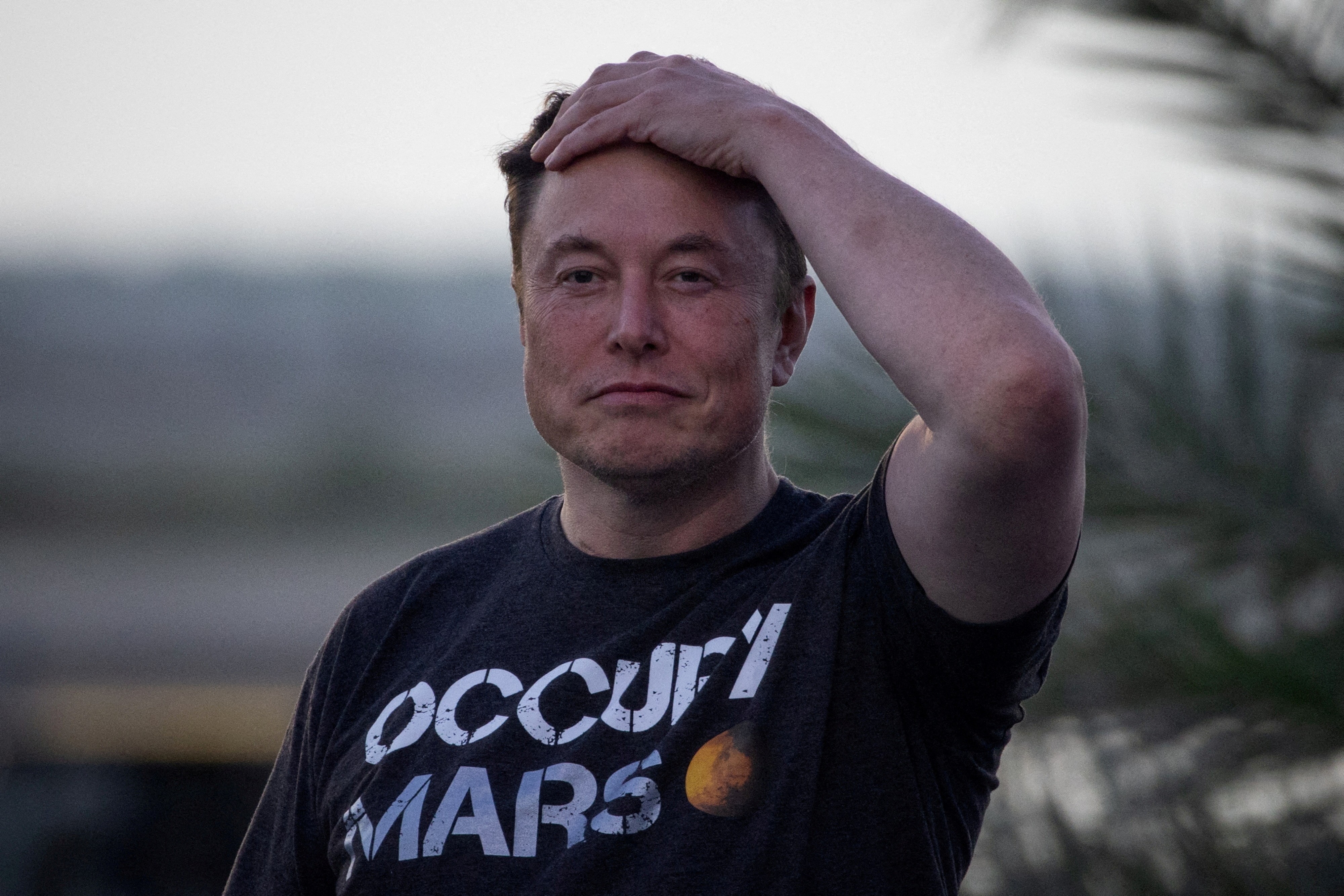
SpaceX is expected to debut this Friday (12) on the New York stock exchange valued at around US$1.75 trillion (R$8.93 trillion). With this market value, Elon Musk's company would occupy eighth place among the most valuable companies in the world.
Wall Street investors' strong bet on SpaceX may seem contradictory. Despite being about to carry out the biggest IPO in history, with an estimated fundraising of US$75 billion (R$382.6 billion), the company is still operating in the red.
Do you have any suggestions for a report? Send it to g1
In 2025, revenue of US$ 18.7 billion (R$ 95.3 billion) was not enough to avoid a net loss of US$ 4.9 billion (R$ 24.9 billion).
Experts consulted by g1 explain that the optimism on the part of investors is explained by the change in the way the market sees SpaceX.
The company is no longer seen just as a rocket manufacturer and is now associated with the potential for integration between xAI's artificial intelligence operations and the services of Starlink's global satellite internet network.
"Musk created a telecommunications 'super company'. Starlink alone ended up becoming a global business that today is larger than the space operation itself in terms of revenue", says Pedro Waengertner, CEO of ACE Ventures.
According to Rylan Chase, research analyst EBC Financial Group market, investors betting on the company are paying in advance for the potential expansion of Starlink's connectivity, the future monetization of the Starship rocket and the artificial intelligence infrastructure thesis created by the combination with xAI.
The most skeptical fear that Elon Musk's plans are too ambitious to live up to expectations. In the document preparing for its stock market debut, SpaceX states that it intends to build a permanent base on the Moon and, in the long term, establish a colony on Mars capable of housing up to 1 million people.
The intentions don't stop there: the company also plans to develop data processing centers in orbit powered by solar energy and boost a "space economy" based on factories, energy systems and infrastructure operating outside of Earth.
You want to wake up in the morning and think that the future is going to be great - and this is it. what being a space civilization is all about. It's about believing in the future and thinking that it will be better than the past. And I can't imagine anything more exciting than going out there and being among the stars.
SpaceX's IPO could put the company in the global top 10
Arte/g1
The bigger the jump, the bigger the fall
As much as SpaceX should make an overwhelming debut on the stock market, its shares could suffer severe blows over time. As many investors are betting on ambitious plans for the company's future, any disappointment could drop its market value.
In the opinion of Chase, from EBC Financial Group, investors are not just looking at the company's current results. Anyone who agrees to pay US$135 (R$688.64) per share is targeting several growth fronts at the same time, and not just the space business.
SpaceX started to bring together telecommunications, artificial intelligence and technological infrastructure businesses in the same company.
Starlink became the company's main source of revenue, while other projects became part of its growth strategy for the coming years.
xAI works as the company's artificial intelligence arm, integrating the Grok chatbot to data from the social network X and Starlink's infrastructure.
Still, the analyst assesses that the projected market value for the company is high, even compared to companies that grow quickly. According to his calculations, the valuation is equivalent to around 109 times the entire revenue obtained by the company last year.
"It is an exceptionally high starting point for any large IPO", he says.
But many analysts believe that this was the natural path.
Álvaro Machado Dias, professor at the Federal University of São Paulo (Unifesp) and specialist in artificial intelligence, says that the company has reached a point where its ambitions require a volume of resources that are difficult to obtain only through private rounds of investment.
An IPO is the first public offering of a company. In this process, the company sells part of its shares and starts to be traded on the stock exchange. The objective is to raise funds to expand operations, invest in projects or reduce debt.
According to Machado Dias, the revenue generated by Starlink coexists with projects that require high investments and can take years to yield a return. In other words, if Starlink helps sustain the company's revenue, the other projects help explain why SpaceX continues to record billion-dollar losses.
"Starship, orbital data centers and the shift towards lunar industrialization demand a type of capital that only the public market can provide."
Does SpaceX's cash flow have a solution?
Musk at the SpaceX Star Base in Brownsville, Texas
REUTERS/Adrees Latif/Photo file
The assessment by Jan-Erik Asplund, co-founder of Sacra, a company specializing in market research for startups and private companies, points in the same direction: SpaceX uses the resources generated by launches and Starlink to finance a strategy that goes beyond the expansion of its current services.
Among the projects he cited is Terafab, a chip factory planned for Texas that could cost up to US$119 billion (R$607 billion). The initiative is part of a broader strategy in which the company seeks to control different stages of its technological chain, from the manufacturing of semiconductors to the operation of satellites.
Another focus is the so-called orbital computing, a concept that envisages the processing of data directly in space through a future network of satellites aimed at artificial intelligence applications. it mainly depends on what it will be able to deliver in the coming years.
Franco Granda, senior research analyst at PitchBook, reinforces the view that the company needs to present itself as a "platform that brings together connectivity, space transport and artificial intelligence". or other specific equipment.
The analyst estimates that this market could reach 1.1 billion users by 2040 and generate more than US$42 billion (R$214.2 billion) per year.
In this scenario, the analyst assesses, Starlink would no longer be just a satellite internet network and would start to play a broader role in the digital ecosystem, offering connection to cell phones, vehicles and other devices.
Gif shows the ship taking off Starship
Reproduction
Making access to space "cheaper"
The second bet is linked to Starship, the company's new generation rocket.
The consultancy's expectation is that the total reuse of the spacecraft will reduce launch costs by up to 80%, allowing more cargo to be transported into space at a fraction of the current cost.
This could expand Starlink's capacity and enable businesses that currently face the high cost of reaching space.
For this reason, according to Granda, an important part of the value attributed to SpaceX is linked to the expectation that Starship will help boost the space economy in the coming years.
Build infrastructure for intelligence artificial intelligence
The third bet involves xAI and the artificial intelligence projects brought together by the group.
According to information released by the company itself in its IPO prospectus, the artificial intelligence division generated revenue of US$3.2 billion (R$16.3 billion) in 2025, but recorded an operational loss of US$6.3 billion (R$32.1 billion).
The numbers reflect the operation's strong investment pace. Spending on infrastructure and expanding processing capacity alone consumed more than US$ 12.7 billion (R$ 64.8 billion) in the period.
➡ Among the projects are large data processing centers and initiatives that plan to take part of this infrastructure into space.
For Granda, SpaceX's trillion-dollar valuation is less linked to current results and more to the expected return of these projects in the coming years.
"The price may seem expensive just looking at the current numbers, but the investors are paying today for the 2030 economy", he summarizes.
The trillion-dollar gear behind SpaceX
Arte/g1
Source: G1