South Africa says more than 900 were arrested during anti-immigration protests in the country
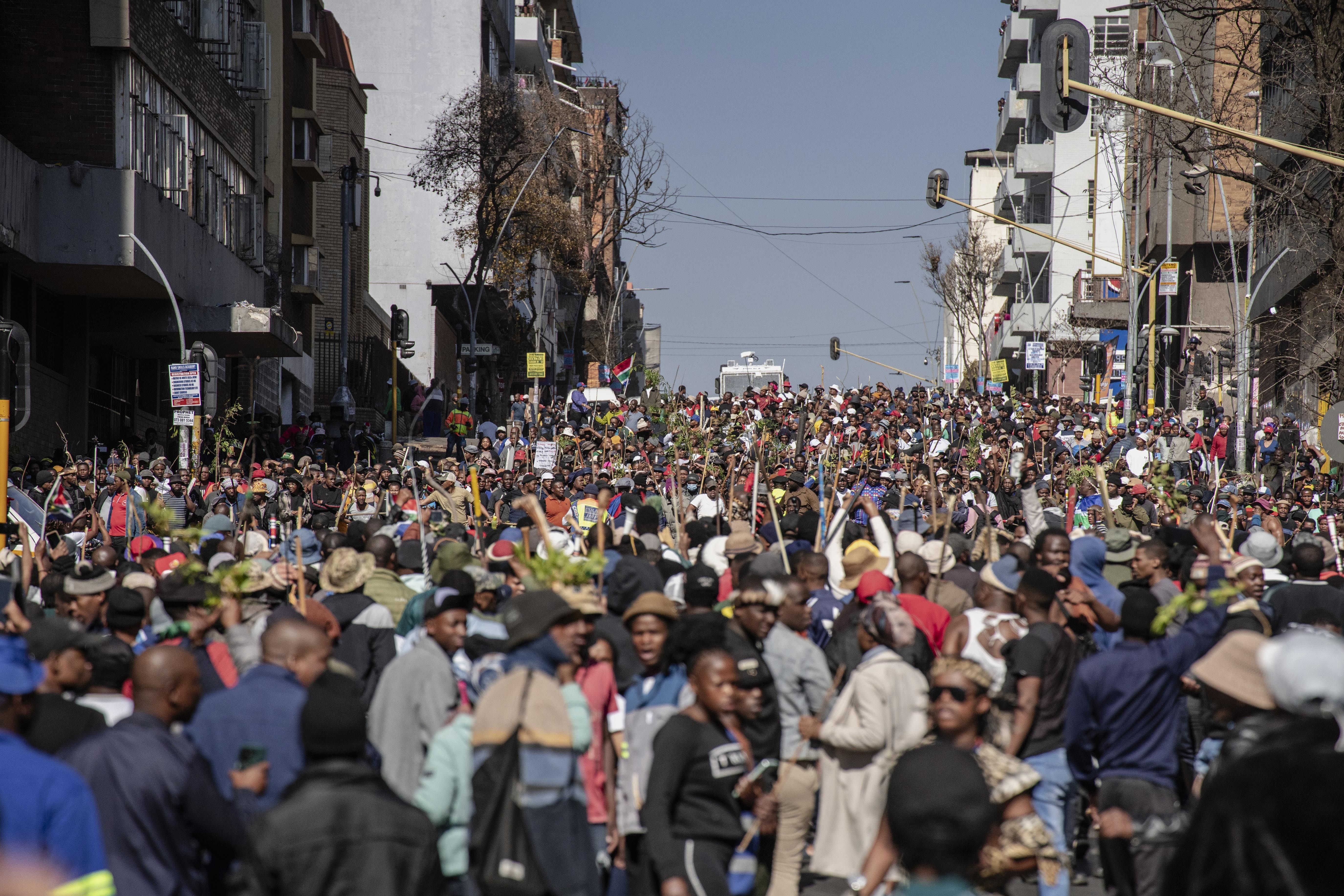
South Africa is experiencing a day of protests against immigration
More than 900 people were arrested this Tuesday (30th) during the anti-immigration protests that took place across South Africa, according to a report released by the local police this Wednesday (1st).
✅ Follow the g1 international news channel on WhatsApp
Tebello Mosikili, deputy commissioner of the national police, said at a press conference that, out of 120 Marches recorded across the country, 108 were peaceful and 12 required the intervention of security forces due to unrest.
Some of those detained were undocumented immigrants, arrested for violating immigration laws, while others were arrested for public violence, harboring illegal immigrants and for theft.
Mosikili said that police reinforcements were sent to five of the country's nine provinces overnight to respond to isolated incidents of looting and crime, and that soldiers were sent to the neighborhood of Hillbrow, in Johannesburg, to support the police.
Tuesday's protests marked the end of the deadline for undocumented foreigners to leave the territory.
Thousands of people from other African countries had already fled South Africa before Tuesday's "deadline", when stores closed and foreign workers stayed home. Immigrants tried to pre-empt further unrest after months of unrest that drew international condemnation.
At least four people were killed and thousands of foreigners were driven from their homes. Others saw their businesses and properties vandalized.
The leader of the anti-migrant movement stated that the group will organize weekly marches until its goals are achieved. "In the next six months, we ask that our national resources be used to expel illegal immigrants from this country. From building to building, they need to leave," said Jacinta Ngobese, leader of the "March and March" group in the port city of Durban. 31 years old. "People are not working, jobs are being taken by illegal foreigners. It's not fair," he said.
Politicians have been accused of siding with xenophobia to win votes in local elections scheduled for November.
Violence against immigrants
Migrants interpreted the deadline as a physical threat, and there were sporadic signs of violence, although many marches were peaceful. Police said they had arrested some looters, without providing further details.
In Thembisa, a suburb north of Johannesburg's main commercial hub, protesters threw stones at police and suspected migrants, while sporadic gunfire could be heard near the central business district.
South African protests against immigrants
Reuters
The Daily Maverick newspaper reported that police deployed tactical vehicles and fired shots in Benoni, east of Johannesburg, after being threatened by 500 protesters.
Police did not immediately respond to a request for comment. In the Soweto neighborhood, protesters looted foreigners' shacks, according to national broadcaster SABC. Also according to the TV, police fired rubber bullets to disperse demonstrations in Pietermaritzburg, near Durban.
In attacks against immigrants, which have occurred sporadically in South Africa since 2008, there is little distinction between those who entered legally and those who did not.
March and March maintains that it cannot be held responsible for spontaneous acts of anger on the part of South Africans. "Unfortunately, we can't be in every community telling them...
how to behave," Ngobese told Reuters in an interview two weeks ago.
Protests in South Africa
Reuters
Anti-immigrant sentiment and what critics see as a failure by police to protect victims have tarnished the reputation of South Africa, which, in the post-Nelson Mandela era, has always been seen as a defender of human rights.
Immigrants are accused of stealing jobs, increasing crime and overwhelming public services. According to social scientists, the claims lack evidence.
Three decades after the end of apartheid, South Africa remains unequal and a third of the population is unemployed. Despite this, the country remains Africa's largest economy and continues to attract migrants. The immigrant population is around 3 million, or approximately 4% of the total - a relatively low proportion compared to global standards.
Source: G1