Soldiers in Ukraine turn to drugs to endure war
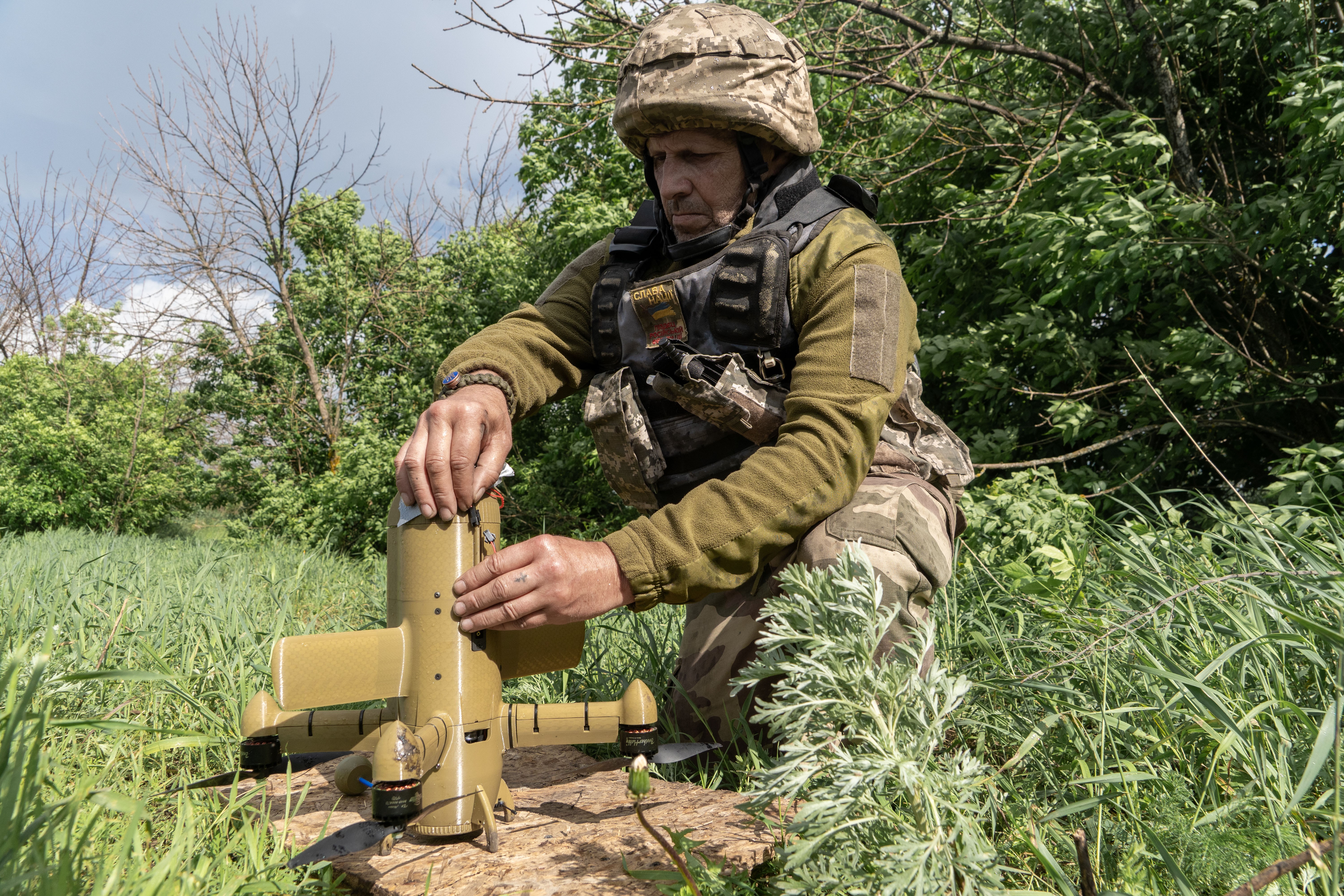
A Ukrainian soldier prepares an interceptor drone during a Russian airstrike, in May 2026.
Andrii Marienko/AP
On both sides of the war front in Ukraine, soldiers resort to the use of drugs to withstand the challenges of the conflict, which has now entered its fifth year. As the fighting drags on, addiction and self-medication have become a growing yet largely neglected problem.
Chemical substances are used to treat pain from injuries, prevent sleep, suppress fear or simply continue functioning.
"War means arms and legs torn off. It's intestines, bad smell and dirt on the body. You urinate, you get dirty. It's an extremely difficult emotional state", reports Dmytro, a Ukrainian officer and recovering addict. "A person who has never used anything in his life ends up using it there."
On the Ukrainian side, many soldiers have been serving since the start of the large-scale invasion in 2022. With insufficient recruitment and no demobilization plan, they remain for long periods on the front line, often without rest.
Stanislav, who served in the Ukrainian counteroffensive in Zaporizhia from 2023 to 2024, couldn't take it. He deserted his unit two years ago and has since lived in hiding while trying to recover from substance abuse. "When you're under the influence of methadone (a potent synthetic opioid analgesic, with efficacy comparable to morphine), you can forget a little. It's not that you gain 'strength'. It's more that you can distance yourself from those horrors and that constant anxiety."
Now on g1
Stimulants and opioids
Drugs have always been part of war. Nazi Germany distributed millions of methamphetamine pills to troops during World War II.
The United States Armed Forces have provided stimulants to recruits for decades, from World War II to Afghanistan and Iraq. During the war in Vietnam, up to 15% of American soldiers used heroin - not to improve performance, but to cope with the effects of war.
In turn, Ukrainian soldiers - largely relatively young - have been turning to both stimulants and various opioids. For specialists, chemical dependency could even accompany them after an eventual end to the fighting.
"In recent history, no Army fought for four years without rotation. These people return with altered biochemistry. And they are no longer interested in anything: neither family, nor home, nor work, nor career," says Ihor Alferow, a psychotherapist with more than 20 years of experience in treating chemical dependency.
In war, he also serves as a military chaplain, supporting troops and working with soldiers facing substance abuse. "They get used to the danger. The drug 'dampens' that part. And then it becomes a problem."
Anti-drone protection net is seen on the road in Sloviansk, eastern Ukraine, in October 2025.
Sofiia Gatilova/ Reuters
Multiple traumas
Traditionally, exposure to multiple traumas leads soldiers to severe pain syndrome, which is not resolved by common medications. The solution, then, becomes the search for alternative means to control the pain and return to combat.
For Dmytro, it all started after his first injury in combat, when he was hit in the arm. "I received injections of painkillers. And the painkillers made me feel really good. When I was released from the hospital, I felt bad. I went back to work, and I felt bad. You have to find something, you have to find a way. I started taking Prinagolin. A painkiller."
Later, he would turn to methadone, which circulated clandestinely among the troops he commanded. "I knew that methadone is also a painkiller, but with a different effect.
I started taking two, three pills and, little by little, I reached a point where I could no longer control myself."
The stress of combat, coupled with a lack of mental health support, is also behind the increase in substance use documented by Health Solutions, an organization that researches drug use in both civilian and military life.
"Even in cases where they are seriously injured, hospitalized and treated, military personnel continue to experience poorly controlled pain, in addition to symptoms of Stress Disorder Post-Traumatic and other psychological conditions that would require a combination of medical, pharmacological treatment and psychotherapy," says the organization's executive director Victoriia Tymoshevska.
READ ALSO:
Israel announces new attacks on the capital of Lebanon and causes mass flight; VIDEO
Iran accuses the US of continuing to violate the ceasefire and conditions the agreement to end Israel's attacks in Lebanon
Lack of support for veterans
A expert estimates that half of frontline soldiers have had some type of drug use experience, which often includes combining alcohol with other substances.
"It started with alcohol. Afterwards, everyone was snorting amphetamine," says Stanislav, about the first days of training, before his addiction to opioids. "Methadone gave me reservations, but, as they say, everything has a price. Without it, I could no longer deal with anything, nor get out of bed."
For many combatants, drugs still represent an immediate risk, as they can compromise their performance on the front line. "The informal practice is that, as long as it does not affect their ability to fulfill their duty and participate in missions, this is tolerated, that is, they turn a blind eye. As long as you operate, show up for duty and fulfill assigned tasks," says Tymoshevska.
For others, still, the problem starts with demobilization, when health services are lacking in civilian life. "There are no places where veterans can meet, spend time, go to museums, to nature. We don't have psychologists working to offer rehabilitation services," points out Dmytro.
Only recently has government support for soldiers with drug addiction been included in the strategy for Ukrainian veterans, as a pilot project. In theory, meanwhile, drug use remains strictly prohibited in the Armed Forces.
Soldiers caught can face severe punishment and, if drugs are found in autopsies, the families of soldiers killed in combat could lose state compensation.
Source: G1