Slimming pens: informal market represents 50% of sales in Brazil
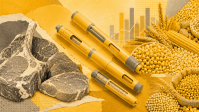
The informal market for weight-loss pens may account for more than half of the doses consumed in Brazil. According to a study carried out by Scanntech, the use of these medications grew 239% in the first quarter of 2026 compared to the same period in the previous year.
The increase corresponds to the sum of the formal market and the estimated consumption in the informal market, based on the analysis of the evolution of syringe sales in pharmacies. The company has built a historical baseline associated with insulin consumption.
In quantitative research with consumers, only 5.2% of users claim to use compounded medicines. In the study that estimates the total consumption of pens based on market data, the results indicate that the informal channel may represent more than 50% of the doses in circulation in the country.
Pancreatitis: Brazil has 6 suspicious deaths linked to weight-loss pens | NOW CNN
Sales of this injectable application material, above the expected trend for insulin consumption, were used as an indicator of the use of medicines purchased in ampoules, outside formal marketing channels.
"Although it is not possible to directly measure the informal market, we can look for relationships. We observed a growth in sales of insulin syringes in pharmacies that is much higher than what would be expected simply from the evolution of insulin consumption. This surplus allows us to estimate that, possibly, more than 50% of the doses of GLP-1 in circulation in the country, since the last quarter of 2025, are being consumed outside the formal market in pharmacies", explains Priscila Ariani, marketing director at Scanntech.
According to the research data, the motivation for using GLP-1 goes beyond medical indications. The fight against obesity is the main declared motivation (29.5%).
Other items are also on the list: rapid weight loss (28.6%), appetite control (23.8%) and weight maintenance (24.1%) appear soon after, above other health issues, such as reducing cardiovascular risk (22.8%) and type 2 diabetes (16.7%).
The largest concentration of consumers is among women aged 25 to 34, with a monthly income between R$22 thousand and R$32 thousand. Consumers over 50 years of age have, statistically, the lowest consumption.
READ ALSO: Weight loss pens begin to be offered to SUS patients
Reflection on consumption
The impact is not just concentrated on losses. The numbers point to growth in product categories, in addition to pens, such as fresh food (+11.5%), gym and well-being (+9.6%), protein supplements (+9.1%), sparkling and still water (+7.9%) and vitamins and supplements (+7.4%).
Among users, 29% reported loss of lean mass, a figure that helps contextualize the growth observed in proteins and supplements.
The difference between the results of the two analyzes does not represent an inconsistency. While the research captures the responses declared by consumers, the retail study estimates consumption based on the behavior observed in the market, suggesting that some users may not declare or are unaware that their medicine originates outside a formal supply chain.
*Under the supervision of Thiago Félix
Source: CNN