'Sinhá Moça', 'Rei do Gado', 'Terra Nostra': remember soap operas by Benedito Ruy Barbosa
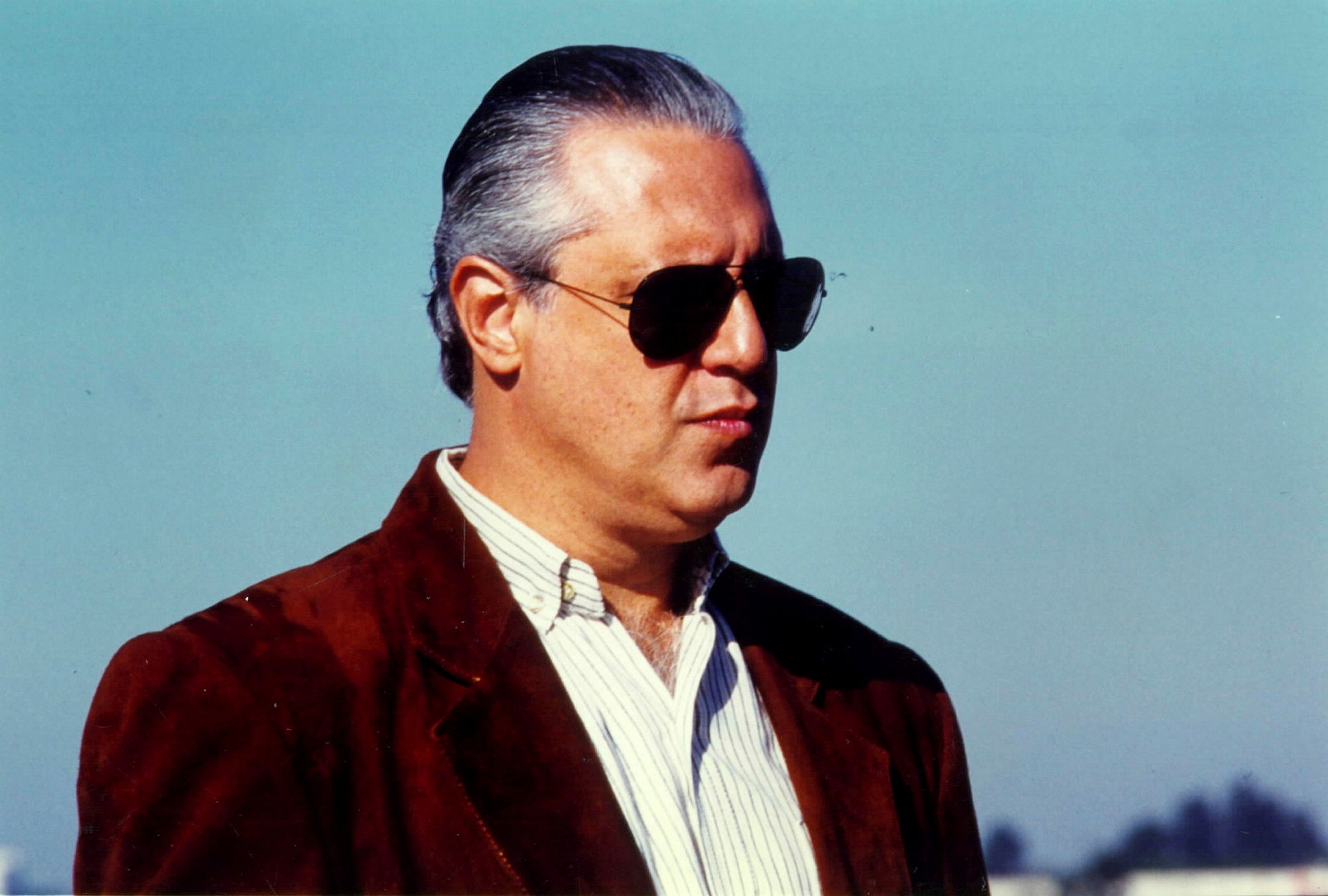
Benedito Ruy Barbosa dies at age 95
The playwright and writer Benedito Ruy Barbosa, author of soap operas such as Pantanal and Terra Nostra, died this Tuesday (7) in the capital of São Paulo. The information was confirmed by Hospital do Coração (HCor).
Known for true sagas, the playwright created stories that traverse the Brazilian rural universe, explore cultural diversity - with a special interest in Italian immigration - and present intense loves.
His legacy includes iconic plots such as "Meu Pedacinho de Chão" (1971), "Pantanal" (1990), "O Rei do Gado" (1996) and "Terra Nostra" (1999), marked by protagonists with "good character, determination to fight, belief in positive values" - as he himself determines.
G1 has selected 10 soap operas for you to get to know Benedito Ruy Barbosa's work better:
Paraíso
Shown between 1982 and 1983, the plot revolved around the passion between the pedestrian José Eleutério (Kadu Moliterno), the "Son of the Devil", and Maria Rita (Cristina Mullins), the "Santinha". They live in the countryside amid local legends, rumors of miracles and strong political disputes between their parents.
Santinha and Zé Eleutério live a troubled romance full of comings and goings. After she almost marries someone else due to a religious promise, she leaves her fiancé at the altar to end up in the arms of her true love.
Cabocla
Highlighted in the 1970s, the soap opera takes place in the 1920s, highlighting the story of Luís Jerônimo (Fábio Jr.), who leaves Rio de Janeiro to treat pneumonia and ends up meeting and falling in love with the cabocla Zuca (Gloria Pires).
The story also highlights the strong dispute for regional political power between the influential colonels Boanerges (Cláudio Corrêa e Castro) and Justino (Gilberto Martinho).
Pantanal
Success that was reinterpreted on TV Globo in 2022, the first version was broadcast on the now extinct Rede Manchete.
The story portrays cattle rancher José Leôncio (Cláudio Marzo) trying to get closer to his urban son, Jove (Marcos Winter), who returns to the Pantanal after years. The boy, who is vegan, shocks his rustic father and falls in love with Juma Marruá (Cristiana Oliveira), an aloof young woman who has the legend of transforming into a jaguar.
Renascer
Another novel by Benedito Ruy Barbosa that was successful in the 1990s and was re-read in 2024.
In it, cocoa colonel José Inocêncio (Antônio Fagundes) rejects his youngest son, João Pedro (Marcos Palmeira), blaming him for his mother's death during childbirth. The gap between them grows when the father falls in love and marries Mariana (Adriana Esteves), João Pedro's girlfriend and former love.
The King of Gado
Antonio Fagundes in a scene from 'The King of Gado'
Cida Souza/TV Globo
Surrounded by the historic rivalry between the Mezenga and the Berdinazi, the work brings a striking social debate about agrarian reform through the landless.
The backdrop is the passion between cattle rancher Bruno Mezenga (Antônio Fagundes) and cattle rancher Luana (Patricia Pillar). She lost her memory in an accident and has no idea that she belongs to the rival family's lineage.
Terra Nostra
Ana Paula Arósio in a scene from 'Terra Nostra'
Jorge Baumann/TV Globo
At the end of the 19th century, young Italians Matteo (Thiago Lacerda) and Giuliana (Ana Paula Arósio) fell in love on board a ship heading to Brazil.
When they disembark to work at the cafe, they get lost and face a journey full of lies to reunite.
Esperança
Another soap opera with characters of Italian origin, "Esperança" portrays the 1930s, under the impact of the Great Depression.
In the work, the young Italian Toni (Reynaldo Gianecchini) immigrates alone to Brazil in search of a better life, after the rich father of his beloved, Maria (Priscila Fantin), prohibits romance. Pregnant, she ends up forced to marry someone else.
The story of the author who most portrayed the rural world in soap operas
Sinhá Moça
Lucélia Santos, Marcos Paulo and Sérgio Viotti in "Sinhá Moça"
Collection
In the teledramaturgy classic first shown in 1986 and set during Brazil's slavery period, Sinhá Moça (Lucélia Santos) returns to the interior of São Paulo and begins to confront her slave-owning father, the Baron of Araruna (Rubens de Falco).
Defender of freedom, she falls in love with abolitionist Rodolfo (Marcos Paulo), without knowing that he secretly frees slaves at night.
Velho Chico
Lucy Alves and Domingos Montagner in a scene from "Velho Chico"
Globo/Estevam Avellar
Broadcast in 2016 and the author's last novel, the plot focuses on the dispute over land and power between families in the 1960s.
Maria Tereza (Camila Pitanga) and Santo (Domingos Montagner) experience a forbidden love that results in her pregnancy, but his son, Miguel, is raised by another man after lies.
READ ALSO: Benedito Ruy Barbosa recalls fight with censorship during the dictatorship: 'It made me indignant'
Trajectory
The oldest among five brothers, Ruy Barbosa was born in Gália, in the interior of São Paulo, in 1931, and spent his childhood in neighboring Vera Cruz, a region of coffee plantations inhabited by Japanese and Italian immigrants.
With his father's early death, he had to work from an early age to help his family. Throughout his youth, he worked as an assistant at a commercial firm, a vegetable seller and a cleaner, until he got a job as a proofreader at the newspaper "Estado de S. Paulo".
Author Benedito Ruy Barbosa
João Miguel Júnior/TV Globo
The taste for writing led Benedito to create his first novel, "Fogo Frio", which was adapted for the theater and awarded by the São Paulo Association of Art Critics, the beginning of his career as a screenwriter.
His television debut took place in 1966, with "Somos Todos Irmãos", on TV Tupi. In the following years, he worked for stations such as Excelsior, Record and TV Cultura. In 1971, he wrote "Meu pedacinho solo", a soap opera produced by a partnership between Cultura and Globo and shown by both.
Five years later, he signed with Globo, where he began a successful streak in the 6pm slot. At that time, he adapted Ribeiro Couto's novel into "Cabocla" (1979).
In 1990, when moving to TV Manchete, Benedito wrote "Pantanal", which innovated by using external locations and exploring the culture and mysteries of the Brazilian biome.
With success, he returned to Globo to write "Renascer" (1993), a plot set in the interior of Bahia and marked by the duel of generations of Colonel José Inocêncio. Both would be remade decades later, written by his grandson, Bruno Luperi.
With "O Rei do Gado" (1996), Benedito addressed the rivalry between two families of Italian immigrants, while discussing topics such as land ownership and agrarian reform.
In "Terra Nostra" (1999), he portrayed the drama of Italians Matteo and Giuliana, separated when they arrived in Brazil at the beginning of the 20th century.
Benedito Ruy Barbosa
Reproduction/TV Globo
Ruy Barbosa also revisited his own works. In 2006 and 2014, he signed the remakes of "Sinhá Moça" and "Meu Pedacinho de Chão".
In the full-color version of the second work, he declared that he finally managed to put on air ideas that Censorship had blocked in the first version, during the military dictatorship.
In 2016, he wrote "Velho Chico", set in the fictional city of Grotas do São Francisco, in the northeastern hinterland. The soap opera brought about a clash of generations and the dispute for land and power in the interior of Brazil.
"First of all, a soap opera needs to have a great love story", defined Benedito Ruy Barbosa in a statement to Memória Globo.
Benedito Ruy Barbosa
TV Globo
Source: G1