See products from Brazil that are excluded from the 25% rate proposed by the USA
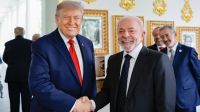
The USTR (United States Trade Representative) proposed, in a document released on Monday night (1st), the application of new tariffs of 25% on all Brazilian imports. However, the proposal excludes some products considered strategic to the American market, such as coffee, minerals and energy commodities.
The US tax proposal considers as motivation acts, policies and practices of the Brazilian government that are relevant and "subject to legal measures", susceptible of being investigated through Section 301 of the Trade Act of 1974.
The legislation aims to combat unfair foreign practices that affect U.S. commerce and can be used to respond to unjustifiable, unreasonable, or discriminatory practices by foreign governments that commercially burden the U.S. country.
Products that may be left out of the measure
The hearing on the action proposed by the USTR is scheduled for July 6th this year, with a deadline for applying the "corrective measure" on July 15th. Even so, the following Brazilian products must be excluded from tariff imposition:
- Beef
- Coffee
- Fruits
- Nuts
- Spices
- Petroleum
- Metallic ores
- Aircraft parts
In the published document, favoring Pix, preferential trade agreements, ethanol, deforestation, among other issues, are among the topics cited by the United States as reasons for recommending the imposition of 25% tariffs on all imports from Brazil.
The proposal is already causing concern in the market. In a statement released by Amcham Brasil (American Chamber of Commerce), this Tuesday (2), new tariffs of 25% will increase costs, reduce competitiveness and create bilateral obstacles.
"The report is not final and reinforces that there is still time to avoid the adoption of new tariffs. The business sector hopes that the two governments will intensify their efforts in the coming weeks and reach a solution that addresses the issues under discussion, preserving the necessary conditions for the evolution of trade and investment in both countries", says Abrão Neto, president of Amcham Brasil.
What does the US proposal to impose a 25% tariff on products from Brazil predict | MORNIG CALL
Fiesp, in turn, says it follows the disclosure with "deep concern". According to the federation, the proposal presented has a strong negative impact on bilateral trade relations and Brazilian competitiveness.
"At this moment, rapid and firm action by the Brazilian government is essential to avoid the confirmation of serious losses to the country's exports before the final decision, expected in July", highlights Paulo Skaf, president of Fiesp.
The government of Luiz Inácio Lula da Silva (PT), in turn, does not observe a significant drop in Brazilian competitiveness, considering that another 59 countries must also be sanctioned for investigations involving "forced labor" in the local economy.
The list includes the European Union and China, trade rivals of the United States, but also countries whose leaders have good relations with Trump, such as Argentina and Japan.
Itamaraty sees room for negotiations
Itamaraty still sees room for negotiations with the US before the application of 25% tariffs. For people directly involved in talks with Washington, the USTR's preliminary report acts as a kind of "noose around the neck" in the final stretch of negotiations and a signal that tariffs may actually be imposed.
However, after almost a year of experience negotiating the "tariff" with the Donald Trump administration, Palácio do Planalto and Itamaraty still believe in the possibility of reversing or easing the recommended rates of 25%.
Understand Trump's tariff on Brazil and how it impacts the economy
Source: CNN