Searching for your mother via chat and mourning the dead via streaming: how Venezuelans abroad face the tragedy of earthquakes
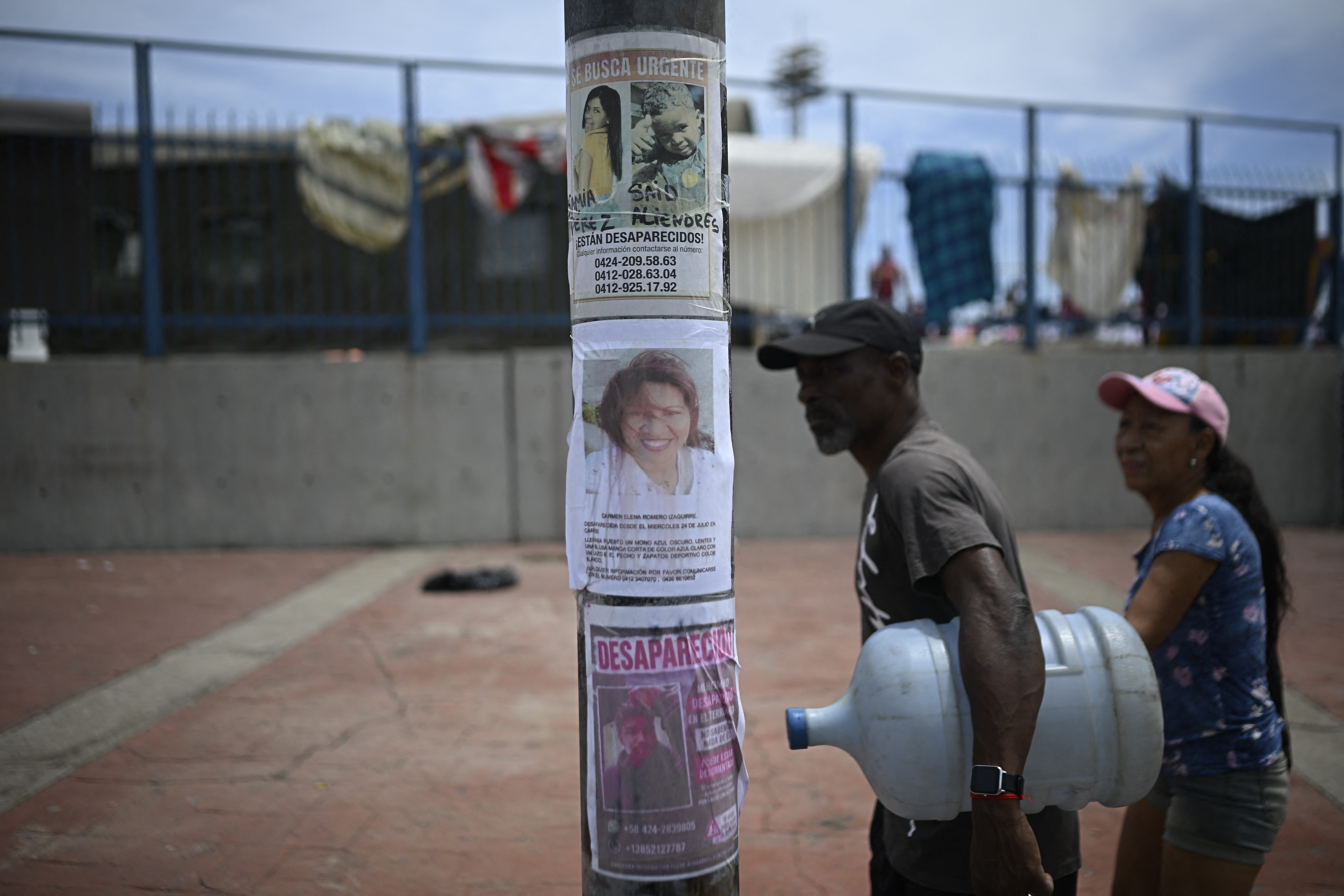
Residents displaced after the two earthquakes of June 24 pass by a pole displaying posters with information about missing people at the Jose Maria Vargas sports complex, in Maiquetía, La Guaira state, Venezuela, on June 30, 2026.
Federico Parra/AFP
From Ecuador, Switzerland and Germany, María Pessina and her siblings spent four days looking for news about their mother in chat groups and on social media. On Saturday, a photograph confirmed the worst: Magnolia died when her building collapsed during the double earthquake that hit Venezuela.
Favorite g1 on Google and follow the main news of the day
"The agony is over," sighed Pessina, a Venezuelan researcher based in Quito, when she managed to confirm that the clothes of one of the bodies found under the rubble belonged to her 79-year-old mother.
LIVE: Latest news about the earthquake in Venezuela
Number of deaths from earthquake in Venezuela rises to 2,295
María herself could have been there. She had spent three weeks visiting her mother and boarded a flight back to Ecuador just hours before the June 24 earthquakes.
"The earthquake happened while I was flying," she told AFP by phone. Upon landing, "my phone exploded with messages because a lot of people thought I was still in Caracas", he reports.
Before even meeting his family to go home, "I had already received a video showing the building reduced to rubble". "That's when the despair went to another level", she confesses.
She and her brothers then began a harrowing search. They activated chat groups for family and neighbors and hired a motorcyclist to check the lists of survivors, injured and missing people in Caracas hospitals.
SEE ALSO
Number of deaths from earthquake in Venezuela rises to 2,295
Thanks to a WhatsApp group, residents of the 14 floors of the Petunia building, in Caracas, managed to reestablish contact with emigrant family members who were looking for news about their relatives from Miami, Spain, Republic Dominican, Panama and Ecuador.
On Friday, a message in this group reported that a body with characteristics similar to Magnolia's had been recovered. A day later, María confirmed that it was her mother.
"I spent three weeks cleaning and folding her clothes; that's why I was able to recognize what she was wearing in that photograph", explains the researcher at the Latin American Faculty of Social Sciences.
"We know nothing about him"
The despair of the Pessina family is repeated among millions of Venezuelans living abroad. Many continue to look for family members among the approximately 2,000 dead and tens of thousands of missing people caused by the earthquakes a week ago, without being able to travel to the country or bury their loved ones.
Venezuela records the largest exodus in recent history from Latin America: 7.9 million people left the country in the last decade, according to the United Nations High Commissioner for Refugees (UNHCR).
From Miami, Madrid and Santiago, this diaspora has mobilized networks to send medicines, diapers and baby formula, in addition to sending ransom demands viral.
"My brother-in-law, Jorge Sedano, is in the Vallarta building, in Playa Grande, and we still don't know anything about him," Andre, who prefers not to reveal his last name for professional reasons, told AFP from Miami. I've been sleeping since this tragedy happened. I publish requests for help, for donations, I reconnect people; we need everything and I receive thousands of messages", she reports.
Indignation takes over her when she confirms that, on Tuesday, rescue operations in the building where her brother-in-law was staying were interrupted after residents caught police stealing dollars among the rubble.
"They didn't arrive in time to save lives.
But they arrived in time to steal."
After earthquake, Venezuela improvises morgue in port; health system operates at its limit
A streaming farewell
"It's strange to be so far away and continue the routine. We are living here, but with our heads there", he wrote in a group of friends at the Broli Rumbos school when he learned, from Spain, that one of his friends spent hours looking for his family among the rubble of a building in La Guaira. high in Caracas, "almost all had family members living abroad."
On Tuesday, residents learned from a group of neighbors that a couple and their daughter had died. Only the other son survived. He was studying in Italy.
Now, the Pessinas wonder how to say goodbye to Magnolia being hundreds or thousands of miles away, probably via a live broadcast, when their mother's sisters receive the ashes.
"We don't know when; All of this is chaos at the moment", she says.
It will be a ceremony with music, "because she loved to sing". And "I imagine we will watch it via streaming, as we have become accustomed to doing for those of us who have built a life away from home", comments Pessina.
But she would like to live this moment alongside the residents of the Petunia building, in some ceremony "in that place that has now acquired a completely different meaning for everyone", she says, referring to what has been her home in Caracas since her birth. birth.
Source: G1