Saltier 'PF': prepared dish becomes more expensive despite the relief in food inflation
Now on g1
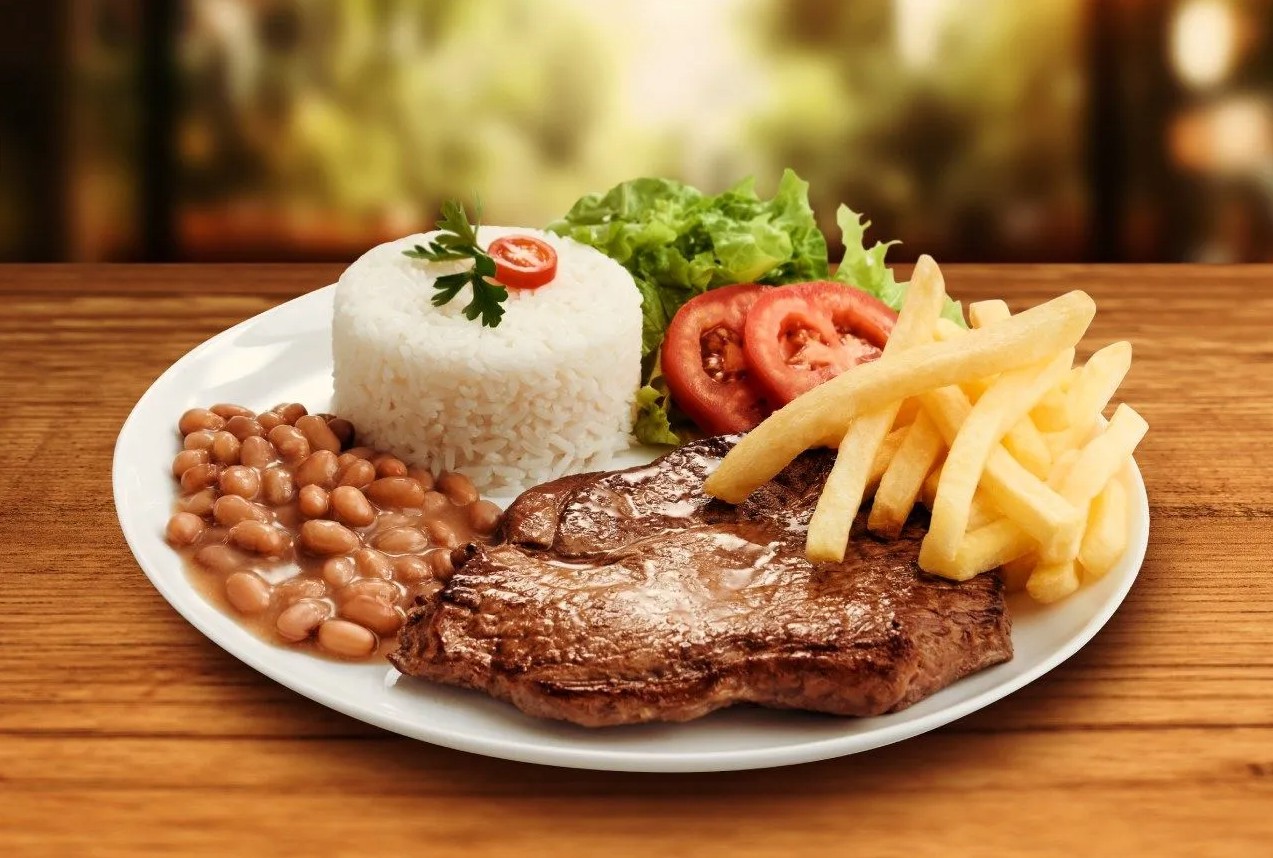
The traditional dish made is perhaps one of the few unanimous dishes on the Brazilian table. But, if before it was known for being one of the most economical alternatives for those who needed to have lunch outside the home, now it takes up an increasingly larger space in the budget.
This is what the Prato Feito Index (IPF) shows, prepared by the Economic Studies Center of the Faculty of Commerce (FAC-SP). According to the survey, the average price of a meal reached R$31.90 in June, an increase of 5.4% compared to March and 7.2% compared to January.
Favorite g1 on Google and follow the main news of the day
This means a worker who eats lunch out during the 20 working days of the month spends around R$638 on that meal alone - a bill that does not include breakfast, snacks or dinner.
The advance occurs precisely at a time when food inflation has lost strength. Data released this Friday (10) by IBGE show that the Food and Beverages group fell 0.24% in June, helping to slow down the IPCA, the country's official inflation, which rose 0.16% in the month.
But food away from home continued to register an increase of 0.15% in June, although at a slower pace than in May, when it had increased 0.49%. While products such as ground coffee, fruit and meat became cheaper, the cost of eating in bars and restaurants remained on the rise.
This is because the price of the dish made depends on a series of costs that go beyond the ingredients served in the meal.
"The dish made is the savings served on the plate. It includes rice, beans and meat, but also the rent of the commercial point, electricity, employee salaries, transport, taxes, the financial cost and the businessman's margin", says Rodrigo Simões Galvão, economist, coordinator and technical responsible for the Prato Feito Index.
According to him, when the dish made becomes more expensive, the adjustment usually reflects the pressure of this entire cost structure - and not just a rise in food prices.
Where lunch outside weighs more on your pocket
In addition to having risen across the country, the price of the meal also varies significantly between regions.
The South records the highest average value, at R$34.90, followed by the Central-West, with R$34.45.
In the Southeast, the dish costs, on average, R$ 31.99.
The North and Northeast have the lowest prices, at R$ 29.99 and R$ 30, respectively.
As a result, the data shows that a worker can pay around 16% more for the same type of meal, depending on the region where they live.
"Brazil does not have lunch at the same price. The dish made highlights important regional differences, but it also shows a common movement: the basic meal is more expensive throughout the country", says Galvão.
According to Economist, factors such as rent, electricity, water, gas, salaries, transport, interest and other operating costs continue to put pressure on restaurants, even in periods of relief in the prices of some foods. In many cases, this is just a partial pass-through of the rise in costs faced by business owners.
"The food business is caught between two pressures: on the one hand, consumers who are increasingly sensitive to price; on the other, operational costs that remain high. The challenge is to preserve quality, competitiveness and financial sustainability."
What could happen in the coming months
Even with the slowdown in food inflation in June, new factors could once again put pressure on the cost of meals.
Experts interviewed by g1 estimate that a possible strengthening of the El Niño phenomenon could reduce the supply of various agricultural products and cause new price increases.
Among the foods that tend to be most affected are potatoes, onions, tomatoes, carrots, apples and grapes.
Corn may also be impacted, which tends to make meat production more expensive, as the grain is one of the main components of the feed used in animal husbandry.
In the opinion of economists, it is still too early to measure the intensity of these effects, but the climate phenomenon is already closely monitored due to its potential to affect agricultural production and food prices.
Dish made
Reproduction
Source: G1