'Robot wolves' become a solution to bear attacks in Japan after record deaths
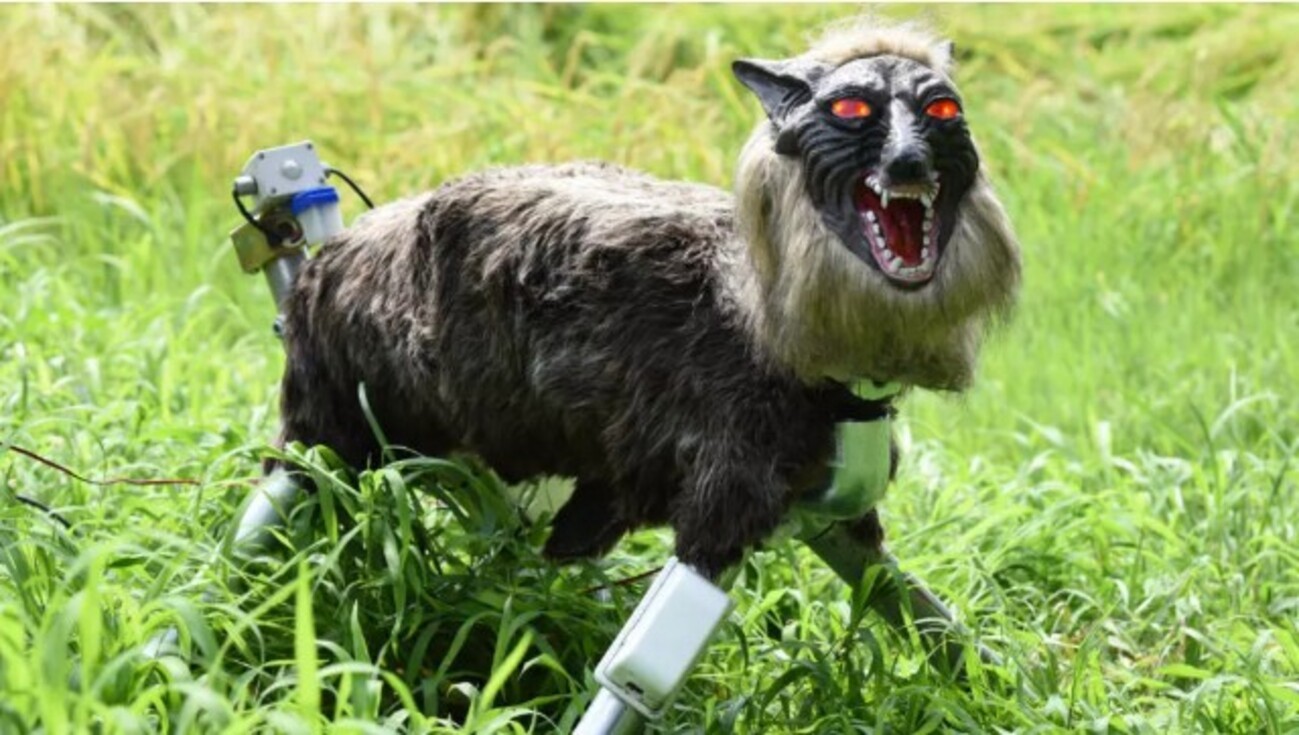
A wolf-like robot, the "Super Wolf Monster", is positioned next to a rice field to scare away wild animals causing damage to crops in Kisarazu, Chiba Prefecture, on August 25, 2017. Japan. The information was released by the AFP news agency.
Called "Monster Wolf", the equipment has a frightening appearance, with an open mouth, red LED eyes and sounds that imitate howls and growls. The device was created to ward off animals that invade rural areas and cause agricultural damage.
According to manufacturer Ohta Seiki, based on the island of Hokkaido, the number of orders this year has already exceeded the volume normally recorded in an entire year.
"We make them by hand. We can't produce them fast enough at the moment," the company's president, Yuji Ohta, told AFP. According to him, customers are being advised to wait between two and three months for delivery.
Orders come mainly from farmers, golf course operators and rural workers such as construction crews.
The increase in demand comes after Japan recorded 13 deaths caused by bear attacks between 2025 and 2026 - more than double the previous record. Official data also points to more than 50,000 sightings of the animals across the country, another historic number.
The bears have been seen entering homes, circulating near schools and even invading supermarkets and hot spring resorts. The number of animals captured and slaughtered also broke a record, reaching 14,601 cases.
Videos trending on g1
The "robot wolf" costs from around US$4,000 (approximately R$22,000) and works with a battery, solar panels, sensors and speakers. The system emits more than 50 types of recorded sounds, including human voices and electronic noises, audible up to a kilometer away.
In addition to the sound effects, the device moves its head from side to side and has LED lighting in the eyes and tail.
Launched in 2016 to protect crops from attacks by wild boars, deer and bears, the equipment was initially treated as a curiosity. Now, the company is working on new versions of the product, including models with wheels, capable of chasing animals, as well as portable versions for hikers, fishermen and students.
The manufacturer is also considering integrating cameras with artificial intelligence into the next models.
"We wanted to use our manufacturing experience to do our part in the fight against bears," said Ohta.
READ ALSO: What is the Russian missile called 'Satan' by NATO, which has undergone final testing?
Source: G1