Rio hosts the biggest world aviation meeting after 27 years
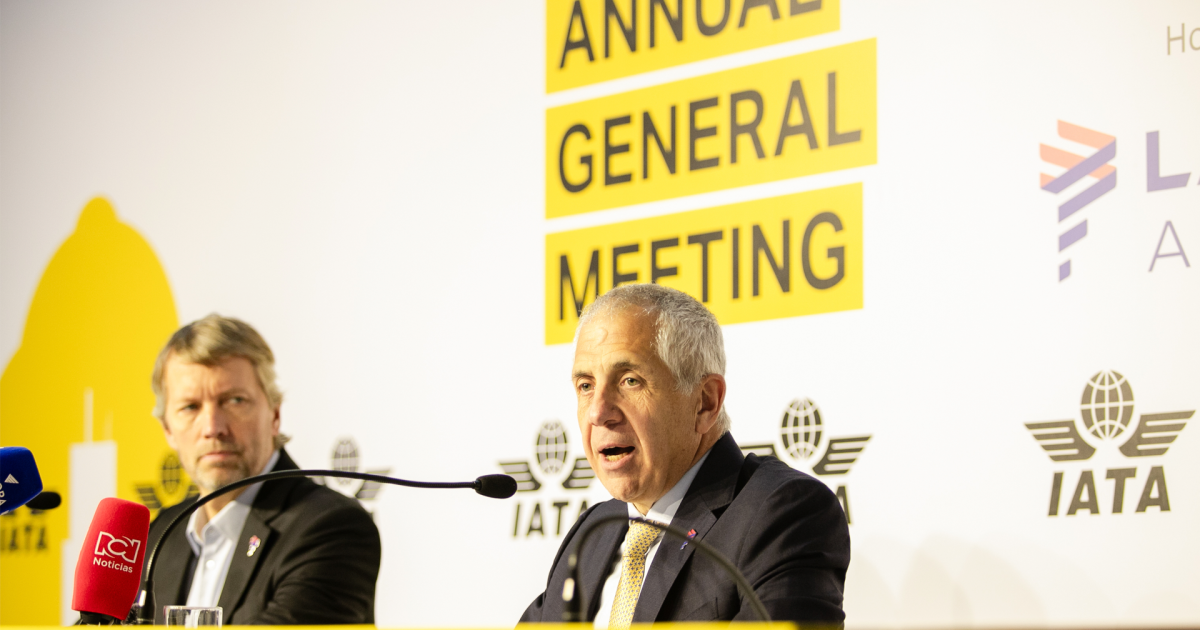
Rio de Janeiro hosted, between the 6th and 8th of June, the 82nd Annual General Assembly of the International Air Transport Association (IATA) and the World Air Transport Summit (WATS), the main meeting of global civil aviation.
Around 1,500 participants, including executives, government authorities, manufacturers, airports and representatives of the aeronautical chain, followed the program. The meeting returned to Brazil after 27 years. The last edition held in South America took place in 1999, also in Rio de Janeiro.
The assembly takes place at a time of growth in air transport in Latin America. Data presented by IATA show that, between 2015 and 2025, the region increased the number of routes available to passengers by 10.8% and increased the number of seats available by 28.9%. Currently, the activity generates around US$240 billion of regional GDP and supports 8.3 million jobs.
Brazil increases passenger movement
At the opening of the assembly, the vice-president of the Republic, Geraldo Alckmin, highlighted the advancement of Brazilian aviation in recent years.
"Hosting the 82nd IATA General Assembly in this city is much more than a prestigious event. It is a recognition of the place that Brazil occupies in global civil aviation", he stated.
Alckmin recalled that the country registered almost 130 million passengers transported on domestic and international flights in 2025, growth of 9.4% compared to the previous year. For the first time, the domestic market surpassed the 100 million passenger mark in a single year.
"We have not yet reached our potential. We have more than 215 million inhabitants, a vigorous middle class and a geography that makes the plane not a luxury, but a necessity", he said.
The expansion of connectivity, operating costs and conditions for expanding access to air transport appeared in different panels of the program.
Costs and international scenario dominate debates
The opening session of the World Air Transport Summit brought an update of projections for the global airline industry.
IATA's chief economist, Marie Owens Thomsen, presented a scenario more pressured by the rise in oil prices and the consequences of the conflict in the Middle East. According to the entity, the most recent projections point to a reduction of around 50% in expected profitability for the global airline industry, a reflection of conflicts in the Middle East and rising fuel prices.
The discussion continued in the panel "The Overview", dedicated to the impacts of geopolitical instability on aviation activity. Among the topics discussed were rising operating costs, energy prices and the challenges of maintaining connectivity in a more fragmented international environment.
The topic was also addressed by Roberto Alvo, CEO of the LATAM Airlines Group. With 25 years of experience in aviation, the executive stated that the sector has reacted well to the current global scenario and demonstrated the ability to adapt in the face of successive crises faced over the years. According to him, companies have already been adjusting capacity in less profitable markets to offset cost pressure.
"If prices don't fall in 2027, we will see a rebalancing of capacity. This is the best way to balance the sector's economy," he said.
Alvo also stated that LATAM has not observed a relevant impact on demand so far and highlighted the performance of the corporate and passenger segments with higher added value.
LATAM hosts meeting and expands presence at IATA
The 2026 edition marked the first time that LATAM acted as host of the IATA General Assembly. Brazil is today the company's main market and accounts for around half of the group's entire operations.
In 2025, LATAM transported 38.8 million passengers on domestic flights in the country. Across the network, there were 87.4 million passengers, an increase of 6.6% compared to the previous year.
The company operates in 27 countries, connects 161 destinations and carries out more than 1,600 daily flights. According to the company, approximately 30% of air traffic between South America and the rest of the world passes through its operation.
Roberto Alvo assumes presidency of the IATA board
One of the main decisions announced during the meeting was the inauguration of Roberto Alvo as president of the IATA Board of Directors for a one-year term.
CEO of the LATAM Group since 2020, Alvo became the 84th president of the board of the entity, which brings together around 350 airlines around the world.
"Aviation is experiencing a decisive moment, playing an increasingly important role in connecting people, enabling trade and supporting economic development around the world," he said.
In his speech, the executive defended greater cooperation between companies, governments and industry entities to increase operational efficiency, strengthen safety and advance sustainability goals.
Tax reform concerns industry
The challenges of the Brazilian market gained space in one of the most followed panels on the program, dedicated to the future of aviation in the country.
Among the topics discussed were operational costs, infrastructure, judicialization and the impacts of tax reform.
Studies presented by IATA indicate that the application of the standard Value Added Tax (VAT) rate to air transport could increase the average price of domestic tickets by around 23%. On international flights, the projected increase is approximately 26%.
The association's projection is that the increase in costs will reduce demand for air travel in Brazil by up to 30%.
Another topic discussed was the high volume of legal actions involving air transport in the country. Data presented by IATA show that Brazil registers one legal action for every 227 passengers transported, one of the highest proportions in world aviation.
According to the association, expenses with litigation and compensation end up being incorporated into the companies' operations and influence the final price of tickets. It is estimated that this additional cost will contribute to increasing the value of tickets by between 3% and 10% in the Brazilian market.
In the panel dedicated to the Brazilian market, Jerome Cadier, CEO of LATAM Brasil, defended measures to reduce the costs of the activity and stated that expanding the population's access to air transport depends on efficiency gains and greater regulatory predictability.
According to the executive, countries like Chile and Colombia, which face similar challenges to Brazil, have higher connectivity rates. "We want to fly more, so we should be reducing the cost of flying. We should bring efficiency to this industry, have a long-term vision of development. We need more regulatory stability," he said.
Diversity and Inclusion Award
On Sunday (June 8), IATA awarded the LATAM Group the Diversity and Inclusion Award, one of the main global aviation awards. The recognition highlighted the company's advances in increasing female participation in traditionally male areas, especially in aeronautical maintenance. Between 2021 and 2025, the number of female maintenance technicians in LATAM grew from 111 to 539 professionals.
Source: CNN