Reforms in Cuba: what changes with the new free market measures adopted by the island
Cuba announces unprecedented economic reforms to contain crisis
Cuba's parliament unanimously approved, this Thursday (18), a broad program of free market reforms during an extraordinary session. This is an unprecedented change for the communist island, which is going through a deep economic crisis and is facing pressure from Washington.
More than 400 deputies from the National Assembly of People's Power were summoned to vote on 176 proposals covering various economic sectors, presented shortly before by Prime Minister Manuel Marrero.
The reforms already had the approval of the top leadership of the Communist Party and former president Raúl Castro, who, at 95 years old, remains influential in the political life of the country. country.
The deputies voted on the changes by raising their hands. They cover the organization of private and state-owned companies, the banking system, tourism, agriculture, foreign investment, taxes, salaries and the foreign exchange market, among other areas.
"This is the most profound economic reform program announced in the last 70 years of the country's economic history, since the victory of the 1959 Revolution," Cuban economist Daniel Torralbas, based in London, told AFP.
For his part, Daniel Pedreira, professor of political science at Florida International University, presents a more nuanced view.
"I believe these are minor changes. Time will tell, but we know the history of the Cuban government. When it promotes similar openings, granting Cubans some space for certain businesses or ventures, later, as soon as these companies begin to prosper, it eliminates this opening, nullifies the gains obtained by the Cubans who participated in them and returns to the previous configuration", he told RFI. "We will see how long this opening lasts, if at all," he said.
In the years following the 1959 Revolution, led by Fidel Castro, large private companies, whether Cuban or foreign-owned, were nationalized, as were small stores and family businesses.
Since then, recurring adjustments have been made to the country's socialist economic doctrine, but without questioning the foundations of a system characterized by extensive planning and centralization.
However, in 2021, for the first time in a century, small and medium-sized enterprises (SMEs) with up to 100 employees were authorized, as a response to the crisis and social discontent. There are currently more than 10,000 of them, employing a third of the country's workforce.
Drastic changes
The main reforms adopted on Thursday include the transformation of state-owned companies into commercial entities, specifically joint-stock companies or publicly traded companies, the authorization of private companies with more than 100 employees, the permission for foreign capital participation in the private sector and the possibility for individuals to open accounts in foreign currency.
Agriculture, tourism, banking and the market exchange rates will be open to private investment, both national and foreign. Previously, such investments were channeled exclusively to state-owned companies.
Cubans will also be allowed to own more than one private business and hold stakes in other companies. In addition, salary negotiations will be allowed within companies.
"The essence of the proposed transformations is to expand the role of the private sector in the Cuban economy, and these are drastic changes.
We are not talking about mere cosmetic adjustments", Torralbas emphasized.
However, no implementation schedule has been announced so far, nor are there plans to challenge the political system dominated by the only party allowed in the country, the PCC.
"These are transformations that aim to correct the course, but always in defense of socialism", declared President Miguel Díaz-Canel after the vote.
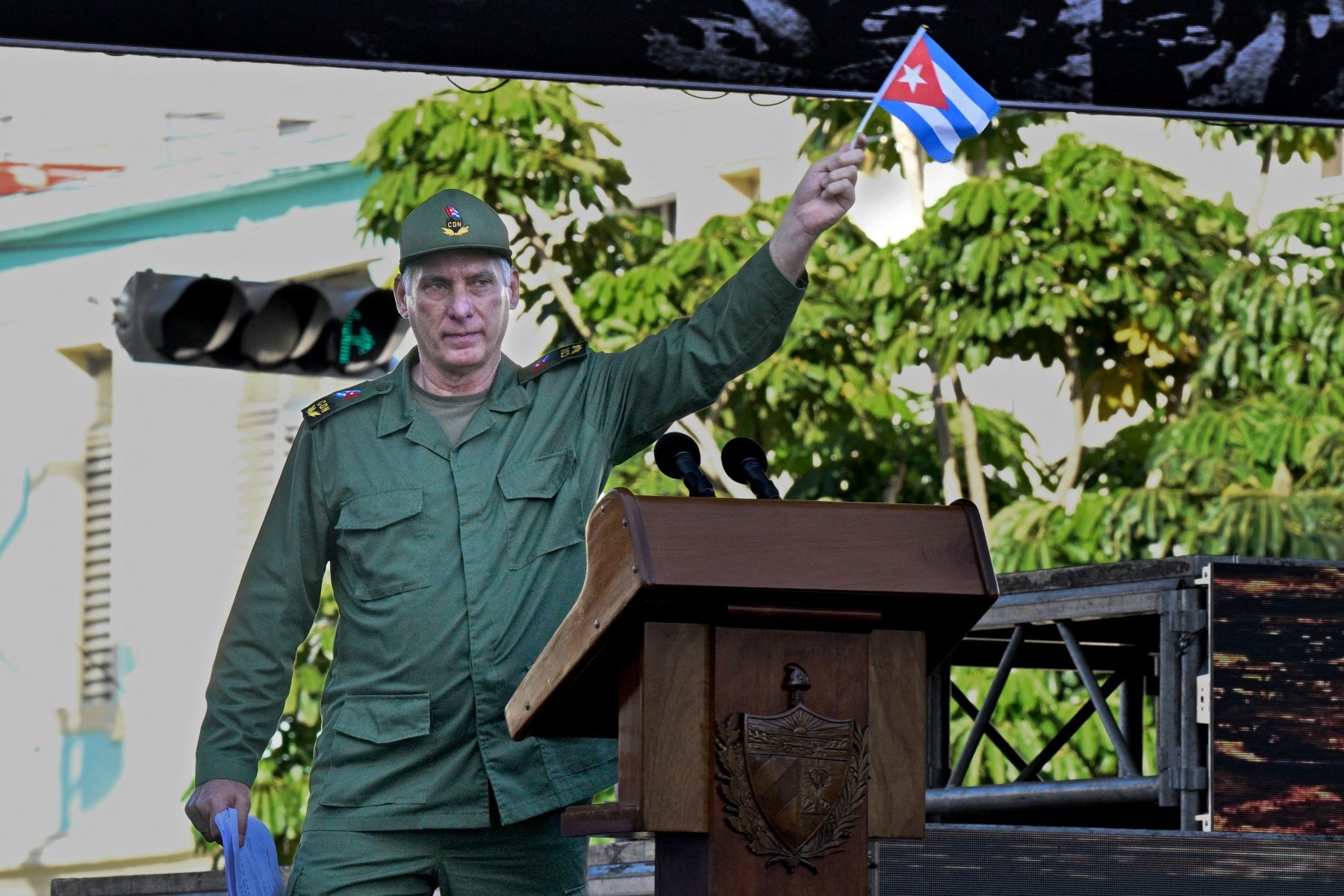
Miguel Díaz-Canel, president of Cuba, says he is ready to defend the country from the United States during the 65th anniversary of the victory of the invasion at the Bay of Pigs
ADALBERTO ROQUE / AFP
"Sovereign decisions"
"We are not doing this due to pressure from the Yankees. We are doing this as a sovereign act," added Díaz-Canel, amid increased pressure from American President Donald Trump on the island, which has been subject to an oil blockade for almost five months.
This blockade has brought the Cuban economy, under embargo since 1962, to the brink of collapse, causing widespread blackouts and shortages of food, fuel, drinking water and medicine.
Washington has made no secret of its desire to see a change in the economic and regime model in Cuba.
"If they make intelligent decisions, we will have a much better relationship," said the Vice President of the United States, JD Vance, when questioned at the White House, on Thursday (18), about a possible military intervention in Cuba after the signing of an agreement between Washington and Tehran on Wednesday.
Source: G1