Record demand from the USA opens up space for Brazilian beef to advance
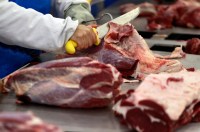
The growing need for beef imports by the United States could open up new opportunities for Brazil in the coming years. According to estimates from the USDA (United States Department of Agriculture), the country is expected to import around 2.77 million tons of protein in 2026 and a volume close to that in 2027. Even without changes to current rules, the expectation is that Brazil will export approximately 318 thousand tons to the North American market.
The assessment is from Geraldo Isoldi, an analyst at Terra Investimentos, who sees potential for even greater growth if the United States eliminates the so-called TRQ (Tariff-Rate Quota), a quota system that limits the entry of Brazilian beef into the country.
"Of these 2.77 million tons that the United States must import, we already project that Brazil will export around 318 thousand tons. This without anything happening, with the TRQ maintained and with the taxes applied after the quota is exhausted", says Isoldi.
Currently, Brazil participates in the quota allocated to the group of "other countries", which by 2025 was 65,005 tons. This year, however, the United States transferred 13 thousand tons of this volume to the United Kingdom, reducing the shared quota to 52 thousand tons. The problem, according to Isoldi, is that this limit is usually filled in the first few days of January, forcing exporters to pay a tariff of 26.4% on shipments made later.
The analyst highlights that the situation puts Brazil at a disadvantage compared to competitors such as Australia and New Zealand. Australia, the main supplier of beef to the United States, has a quota of close to 550 thousand tons and does not pay tariffs within this limit. Even outside the quota, the rate applied is 21.1%, lower than that charged on Brazilian meat.
"Australia has a much larger quota and more favorable tariff conditions. While Brazil pays 40 cents per kilogram within the quota and 26.4% when it exceeds it, Australians enter without a tariff within the limit and pay less tax outside it", he explains.
For Isoldi, an eventual elimination of the TRQ would significantly change Brazilian competitiveness in the North American market.
"If by chance the TRQ were to be overturned, we would compete on an equal footing with Australia, New Zealand and other suppliers for these 2.7 million tons of meat that the United States needs to import. And we know that our meat has a more competitive price", he says.
According to him, although some Australian cuts are preferred among North American consumers, mainly for reasons linked to the quality and profile of the product, Brazil would be able to increase its market share.
"It's not 100% competition, because there are specific cuts in which they prefer Australian meat. But Brazil would certainly be able to export much more than the 318 thousand tons projected today", he says.
The assessment gains strength given the current scenario of North American livestock farming. USDA data shows that the United States cattle herd fell to 86.2 million heads in January 2026, the lowest level in the last 75 years. Furthermore, health problems faced by Mexico have reduced the flow of cattle destined for American feedlots, making it difficult to restore local supply.
In this context, Isoldi believes that the American market can become even more strategic for Brazilian beef.
"Perhaps even to the point of compensating for part of the loss that we may have with the Chinese quota. The United States has a very large need for imports and Brazil combines price competitiveness, production scale and supply capacity", he states.
Despite the announcement made by United States President Donald Trump about the end of the TRQ for beef, the measure ended up being postponed after a strong reaction from entities linked to American cattle farmers. The sector's concern is that greater openness to imports could put pressure on domestic prices and make it difficult for the national herd to recover.
While the decision is not formalized, Brazil continues to expand its presence in the market. In 2025, the United States imported 229.5 thousand tons of Brazilian beef. Between January and April this year alone, shipments have already totaled 135.6 thousand tons, reinforcing the growing importance of the destination for national exports.
https://stories.cnnbrasil.com.br/?post_type=web-story&p=576828
Source: CNN