Rafael Bittencourt reveals how Angra was born and explains the origin of the "spadinha metal boyband"
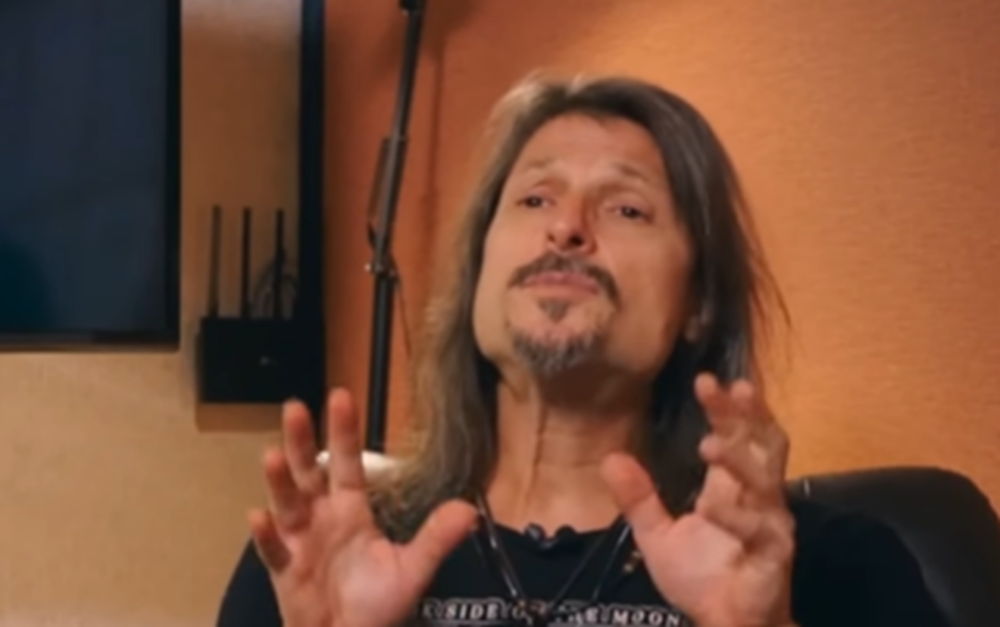
Rafael Bittencourt recalled the origins of Angra and told important details about how one of the biggest heavy metal bands in Brazil was born. The statement was shown on TV Globo's "Sons de São Paulo" program, dedicated to the trajectory of fundamental names in São Paulo rock.
The episode aired in the state of São Paulo and featured members of Angra. In one of the excerpts released on social media after the screening, Bittencourt spoke about the period when he studied at Faculdade Santa Marcelina alongside the late Andre Matos.
According to the guitarist, Angra was born from the collision between two projects. On the one hand, Rafael sought to form a band that combined melodic heavy metal, power metal, classical elements and Brazilian music. On the other hand, Andre Matos already had important contacts, a manager, connections with a record company in Japan and a structure that could boost the project.
Bittencourt explained that his idea was to create Brazilian heavy metal with its own identity. For him, the richness of national culture could not be wasted within a genre that, at that period, was experiencing a strong rise in the world.
It was from this union between musicians, artistic concept and professional structure that Angra emerged. In a good-humored tone, Rafael also mentioned the expression "spadinha metal boyband", a label that became a joke among fans after being used by Régis Tadeu to refer to the group.
In the world of heavy metal, the expression "espadinha" is usually associated with bands that explore medieval fantasy, knights, kings, wizards, epic battles, dragons and grandiose elements in their lyrics, covers and musical aesthetics.
Rafael's speech helps explain why Angra became such a unique band: at the same time as it dialogued with international melodic metal, the group also incorporated Brazilian and classical elements, creating its own sound that marked generations.
The article also highlights that Felipe Andreoli participated in the published excerpt, talking about his own trajectory within music and the band.
More than three decades after its formation, Angra continues to celebrate its history. In April, the group performed at Bangers Open Air 2026, in São Paulo, in a special celebration with former members who had important roles in the band.
At the same time, Rafael Bittencourt and his companions held an exclusive solo show in the capital of São Paulo to celebrate 25 years of "Rebirth", an album released in 2001 that redefined Angra's direction and won over metal fans in different parts of the world.
Another recent presentation took place in Brasília and featured Kiko Loureiro as a special guest, reinforcing the atmosphere of reunion and celebration surrounding the group's trajectory.
Angra still has performances scheduled for the 2nd and 3rd of October at the Tokio Marine Hall, in São Paulo. The shows will be dedicated to the anniversaries of the albums "Rebirth" and "Holy Land", two essential works for the band's consolidation as a global reference in Brazilian metal.
With its mix of technique, melody, weight and Brazilianness, Angra continues to be one of the most important names in the history of national rock, and Rafael Bittencourt's account shows that the band's origins were the result of artistic vision, opportunity and the meeting of talents.