R$1,000 per kilo? Discover wagyu, a beef from Japan that has the most expensive meat in the world
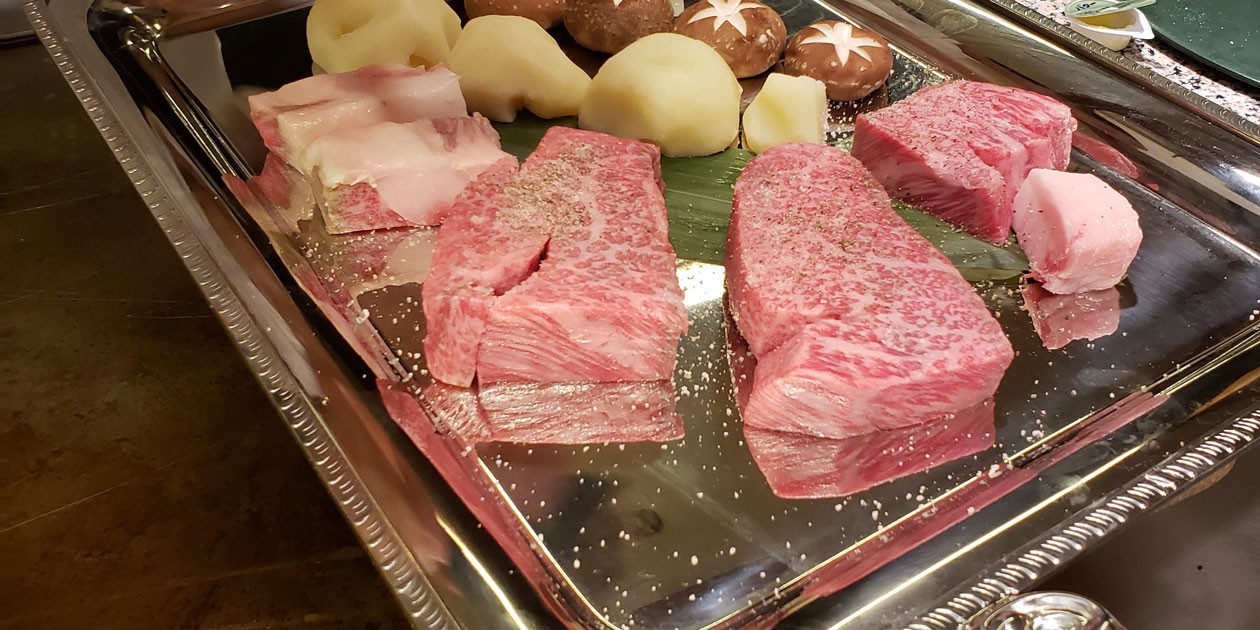
Wagyu meat stands out for its high marbling
Disclosure
Japan, Brazil's opponent this Monday (29), is the birthplace of wagyu, the ox famous for the most expensive meat in the world, whose kilo can exceed R$1,000 in Brazil.
All the fame of wagyu meat comes from marbling: the intramuscular fat that gives the piece a look similar to marble and is responsible for its tenderness.
One of the The most famous variety of wagyu is Kobe Beef, but, to receive this name, the animal must be born, raised and slaughtered in the Japanese province of Hyogo, in addition to meeting strict quality criteria.
In Brazil, it is possible to find different cuts of wagyu, such as picanha, ancho, chorizo, diaper, among others. And the price per kilo will vary depending on the marbling: the bigger it is, the more expensive it is.
More sheep than people? Take the QUIZ and discover interesting facts about the teams
Are you going to have a barbecue at the World Cup? Picanha, brisket and filet mignon are high in meat; find out why
Price of red meat makes consumers rethink barbecue
Does this ox drink beer?
Wagyu became famous due to the "perks" it received in the past, such as drinking beer and receiving a massage. This very special treatment was widely practiced in Japan, but it no longer exists on most farms and is no longer seen in the country's large feedlots.
It was believed that beer would facilitate the animal's digestion, by causing relaxation, while massage would act as lymphatic drainage, helping with the infiltration of fat to form marbling.
In the past, in Japan, Japanese cattle had many "perks", such as drinking beer and receiving a massage, as shown in an image from a 2015 report.
Reproduction/Globo Rural
But none of this has scientific proof, says Daniel Steinbruch, president of the Brazilian Association of Wagyu Cattle Breeders (ABCWagyu). The unique softness and flavor of the meat are, in fact, given by the wagyu's own genetics.
"What we need is to provide the ideal conditions for the ox to express its genetics, which means, for example, providing a balanced diet. The secret is in a diet rich in starch, as it is from this that the ox will draw energy to transform it into marbling", says Steinbruch.
Beer out, barley in
Wagyu meat has fat interspersed in the meat. meat
Rafael Miotto/G1
Grains rich in starch are corn, sorghum, rice, wheat and barley itself. Some wagyu cattle in Brazil, despite not drinking the "beer" directly, feed on the leftovers from this industry.
"What some breeders give is the dregs left over from the barley fermentation process because it is a good source of protein, an excellent food for the cattle", says Steinbruch.
Massage can be used to improve the well-being of the animals, but, on large farms, it is not common, given the size of the animal. herd.
Origin and arrival in Brazil
Wagyu cattle at Yakult Farm
Disclosure
The animal's name comes from "wa", which means "from Japan", and "gyu", which means "cattle".
The earliest ancestors of modern wagyu arrived in Japan around the 2nd century from the Korean peninsula. Descendants of Hanwoo cattle, they were used as draft oxen, responsible for plowing the land and moving grain mills, says the WagyuBrasil association.
Precisely because of their strength and physical resistance, they developed the characteristic that made them famous: the high amount of fat between the muscle fibers.
This herd remained isolated in Japan until 1868, when the Meiji Restoration began the development of modern wagyu. From then on, Japanese breeders crossed with imported breeds until reaching the strains known today.
In 1976, the first specimens of Wagyu left Japan heading to the United States. And, in the 1990s, they began to spread around the world.
In Brazil, he arrived in 1992, through the owner of a famous beverage brand: Yakult, which brought the pure Japanese breed.
More than three decades later, the company remains among the largest wagyu producers in Brazil.
Today, the Brazilian herd is made up of both pure animals and crosses with other breeds. According to ABCWagyu, the country has around 5,000 pure Wagyus and another 30,000 crossbred animals.
Source: G1