Protests in Bolivia are marked by chaos and clashes with police
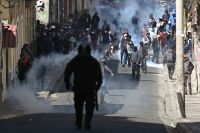
Anti-government protesters arrived in La Paz, where they were attacked with tear gas and repelled by police this Friday (22).
The protest worsens the escalation of instability in Bolivia, with unions, miners and rural groups demanding economic aid.
Tension has been high for weeks as protests, which began with strikes in early May, have morphed into a national movement.
Protesters are putting pressure on the centrist government of President Rodrigo Paz to reverse austerity measures and deal with the rising cost of living, and some are even calling for his resignation.
People blocked roads, interrupting the supply of supplies and the movement of people, which also provoked counter-protests from residents demanding respect for the Paz government.
Countries such as Argentina and Chile have stepped in to provide humanitarian assistance, with aircraft transporting supplies and relief items to Bolivia.
Banks affected
On Tuesday (19), several banks temporarily closed their branches in La Paz, citing security concerns, as anti-government unrest escalates in the country's administrative capital, according to a Reuters witness.
Banks such as BCP (Banco Nacional de Bolivia, Banco de Crédito de Bolivia), Banco Econômico and the state-owned Banco Unión have redirected customers to online banking services and ATMs.
Officials at five banks told Reuters that operations would not resume until the protests subsided.
Bolivian banking association Asoban declined to comment on the cause of the closures, but said the banks were still partially operational.
Understand the wave of protests in Bolivia
Supporters of Bolivia's former left-wing president Evo Morales marched through La Paz on Monday (18), expanding unrest that has blocked roads for nearly two weeks and caused shortages of food, fuel and medical supplies across the country.
According to authorities, trucks were stopped on the highways and patients were left without access to hospitals. Argentina sent a military aircraft with food supplies at Bolivia's request.
Demonstrations that began with strikes in early May turned into a national movement involving labor unions, miners, transport workers and rural groups.
Protesters are putting pressure on President Rodrigo Paz's government to reverse austerity measures and address the rising cost of living, with some calling for his resignation.
Analysts say the unrest has moved from local grievances to broader anti-government sentiment over the country's economic direction.
The protests are centered on growing economic pressures. Teachers are demanding higher salaries and more resources, while transport unions have launched endless strikes amid fuel shortages and supply concerns. Indigenous and rural groups oppose agrarian reforms that they say favor large landowners.
Despite the government repealing a controversial land law this month, protests continued.
Rodrigo Paz, who took office in November and inherited an economy in turmoil, defended spending cuts and reduced fuel subsidies as necessary to stabilize public finances.
He is preparing a reform package for Congress that includes the gradual lifting of fuel price controls and measures to boost domestic energy production and investment.
The government has sought to ease tensions through negotiations and salary increases, while mobilizing around 3,500 members of the security forces to clear roads. Authorities said about 57 people were arrested.
Authorities have blamed the opposition and Morales' allies for encouraging the blockades, which they say contributed to at least three deaths, including patients who were unable to reach hospitals.
Understand what is behind the protests in Bolivia
Source: CNN