Priest with his back, mass in Latin and attachment to tradition: what does the group that confronted the pope and was excommunicated want?
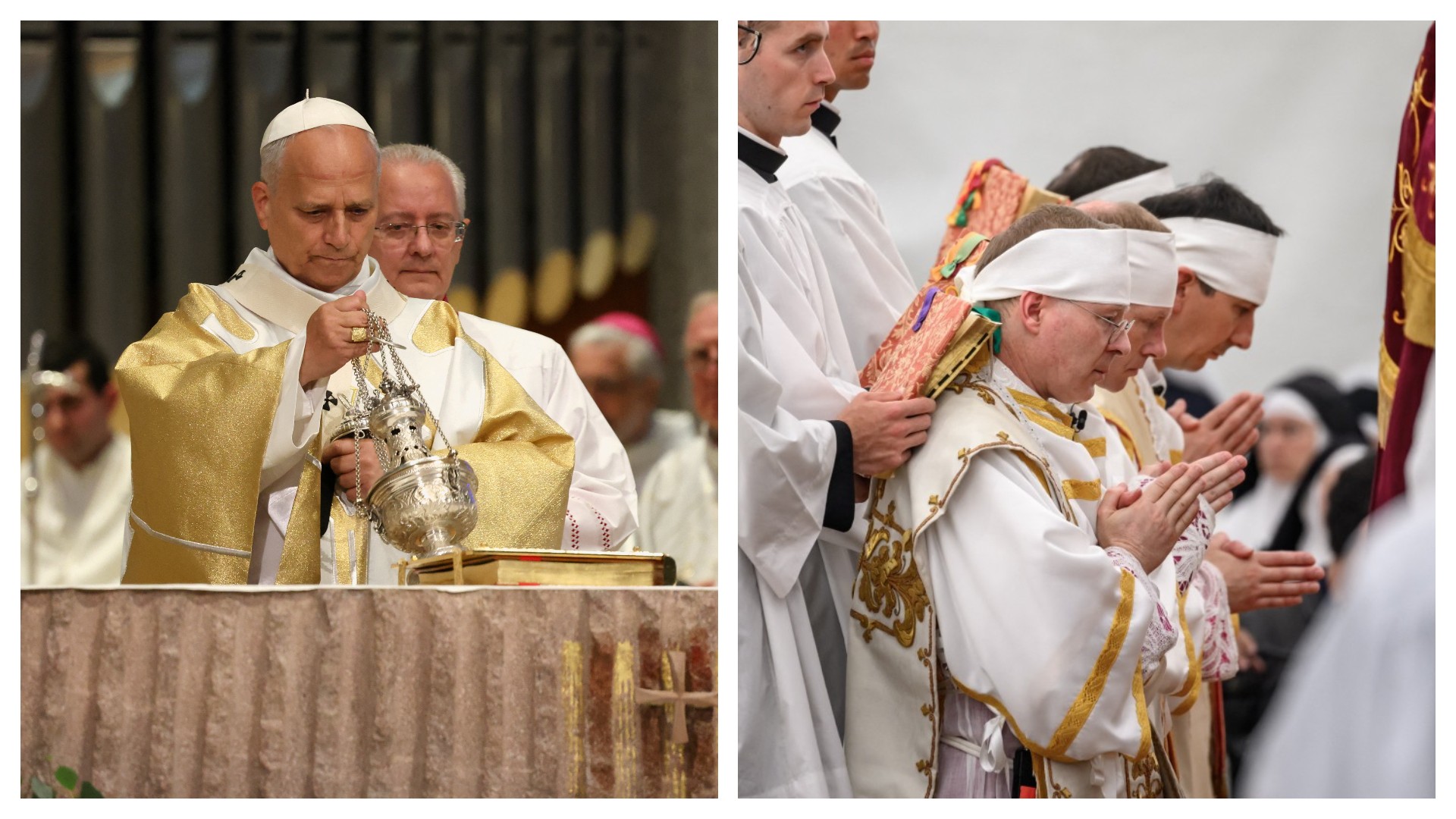
Pope Leo XIV faces crisis with traditionalist groups
The Fraternity of Saint Pius X (SSPX), excluded from the Catholic Church by the Vatican this Thursday (2), is one of the main traditionalist Catholic groups. Its members advocate that the Church return to ancient practices such as celebrations with the priest facing the altar, they are against the modern conception of separation between Church and State and defend a broader role of religion in public life.
➡This Thursday (2), the group had its bishops excommunicated and sacraments, such as weddings and confessions, celebrated by them considered invalid by the Holy See.
Favorite g1 on Google and follow the main news of the day
Understand, below, what the group thinks and what led the Vatican to exclude them:
What is the Fraternity of Saint Pius X?
The Fraternity of Saint Pius For group members, the reforms represented a departure from Church tradition.
➡The council, which took place in the 60s, marked one of the greatest reforms in the recent history of the Catholic Church. Among the changes, masses were no longer necessarily celebrated in Latin and began to be held in the language of each country. Priests were also able to celebrate with the faithful, and the Church expanded dialogue with other religions.
The meeting was designed for the Church to "keep up with changes in the world", explains Vatican analyst Filipe Domingues, doctor in Social Sciences from the Pontifical Gregorian University and director of the Lay Centre.
"They think that there was an ideological political intervention during the council period and that it took the Church in a certain direction, so they reject the reforms", he states Dominguez.
"They think they are the only holders of the true faith and that they even need to go against the pope, in order to defend themselves, preserve, spread this faith and these principles of faith that they consider to be absolute and true", he continues.
According to Domingues, the traditionalist group is not the only one to return to the ancient tradition of the Church, but it is one of the largest, with around 500 thousand faithful and 700 priests.
Among the group's main banners are:
the return of masses in Latin;
celebrations with the priest facing the altar, with his back to the faithful;
the rejection of the separation between Church and State;
the rejection of the Church's openness to dialogue with other religions;
and the rejection of part of the liturgical and pastoral reforms adopted by the Church in recent decades.
The tonsure of one of the bishops consecrated this Wednesday was photographed during the event. The process is a rite in which part of the person's hair is cut as a sign of dedication to God and entry into clerical or religious life. (See below).
After the Second Vatican Council, Pope Paul VI abolished tonsure as an official rite of the Church. Since then, formal entry into the clerical state began to occur with ordination to the diaconate.
This photograph shows the tonsure of consecrated French bishop Michel Poinsinet de Sivry during the schismatic consecration of bishops by the Society of Saint Pius AFP
Challenge to Pope Leo XIV
The decision to exclude the group was announced one day after the fraternity challenged Pope Leo XIV. On Wednesday (1st), the community ignored a request from the Pope and ordained four bishops without authorization from the Holy See, in a ceremony held in Écône, Switzerland.
➡ Ordaining or consecrating a bishop is the ceremony in which a priest is elevated to the position of bishop, becoming part of the highest degree of the sacrament of Order in the Catholic Church. For this to happen on a regular basis, the pope's authorization is necessary.
"It was really a political act. And during the ceremony they say this, that they do not have the pontifical mandate, but they consider that, to defend the true faith, they needed to do this", says Domingues.
The ceremony brought together thousands of faithful from different countries.
Four new bishops were consecrated: two French, one American and one Swiss.
The Vatican expert explains that ordination without the pope's authorization, according to Church law, constitutes automatic excommunication.
"It means that, by doing this, they are already excluding themselves from the Church. They are already saying: 'I am breaking with tradition and with the greatest authority of the church, which is the Pope, and, therefore, with the communion of the church'", he says.
"This is one of the most serious things that can exist in the church, someone breaking with communion", says the Vaticanist.
Schismatic consecration of bishops carried out by the Society of Saint Pius ceremony. In a letter released by the Vatican, the pontiff asked the group to "renounce the project" and warned of the consequences of the decision.
Ultraconservatives x Leo It does not mean that the person ceases to be Catholic, but that they are prevented from fully participating in the life of the Church while the penalty is in force.
In addition to the excommunication of the bishops, the Vatican warned Catholics around the world that the Society of Saint Pius
"There is no validity to these sacraments. In other words, the person who confesses to the priest of the Society of Saint Pius
The Holy See also stated that priests and lay faithful who join the ultraconservative dissident group will be considered in a situation of schism and excommunicated.
READ ALSO: The ultraconservative Catholic movement that defies the pope and grows in Brazil with a Latin mass and a priest with his back
Schismatic consecration of bishops carried out by the Priestly Fraternity of Saint Pius X (FSSPX) in Écône, in the west of Switzerland, on July 1, 2026
FABRICE COFFRINI / AFP
Domingues explains that the group's situation can be reviewed.
"The Vatican is considering that they are in a schismatic situation. At this moment they are out, there is a situation of schism. Now, it is a reversible situation. It is not a definitive thing", he says.
This has already happened before, when Benedict XVI revoked the punishment given to the group by John Paul II. (Read more below).
"Excommunication is an invitation for them to repent and return", explains Domingues. "And the church is in no rush. Maybe not now, but in 10, 15, 20 years, one day, they will come back."
Conflict that spans decades
The confrontation between the Society of Saint Pius X and the Vatican did not begin now. In 1988, the founder of the community also ordained four bishops without authorization from the then Pope John Paul II.
At the time, the ordination led to the excommunication of those involved. The punishment was revoked in 2009 by Pope Benedict XVI, in an attempt at rapprochement, but the canonical situation of the fraternity remained irregular and the differences were never fully resolved.
"They asked for forgiveness and Pope Benedict XVI, in a gesture of seeking to welcome and trying to see if he could resolve this problem, accepted, forgave the bishops who had been excommunicated and they were readmitted into the body of the church, although, again, they were never legitimized", explains Domingues.
Now, with the ordination of four new bishops, the group once again directly challenges the authority of the Vatican, reopening an impasse that spans pontificates and places Leo XIV facing one of the first major crises of his government.
Pope x ultraconservatives: understand the conflict that resulted in excommunicated bishops
Reuters/AFP
Source: G1