President of Bolivia declares state of emergency after 50 days of protests
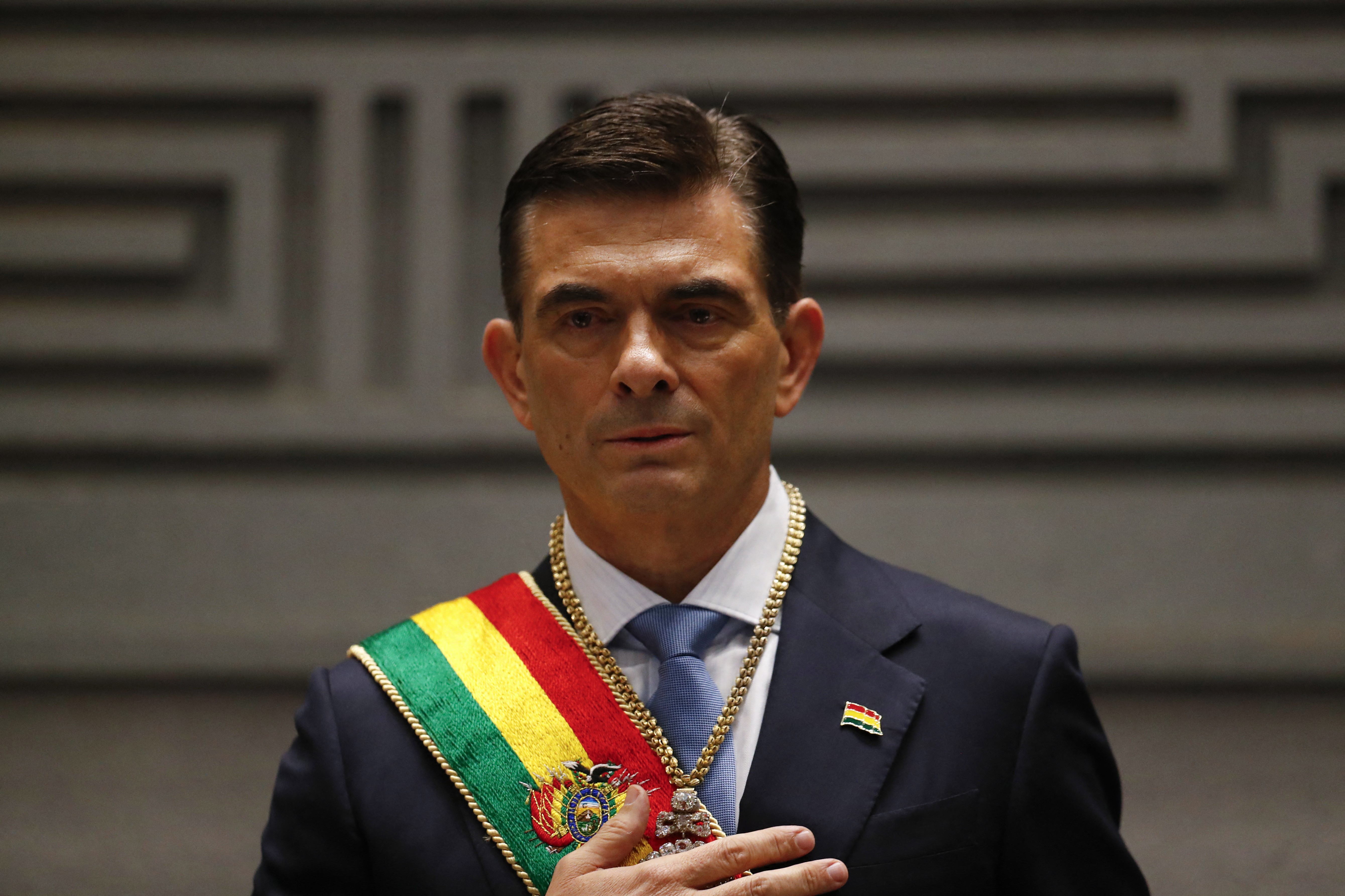
Rodrigo Paz wears the presidential sash after taking office in Bolivia, on November 8, 2025
Luis Gandarillas / POOL / AFP
The president of Bolivia, Rodrigo Paz, declared a state of emergency this Saturday (20), amid the escalating political and economic crisis in the country. The measure expands the government's powers to mobilize the Armed Forces and remove roadblocks that have lasted 50 days and have been affecting supplies and the Bolivian economy.
In an address to the nation, Paz stated that the decision seeks to reestablish order, protect citizens and guarantee the flow of essential goods, such as food, fuel and medicine.
"This is not a state of emergency to restrict people's lives. It is a state of emergency to return freedom to the people, to free Bolivia those who use political conflict to block roads and harm the population", declared the president.
According to Bolivian legislation, the decree comes into force immediately, but the government must notify Congress within 24 hours. After that, parliamentarians have up to 72 hours to approve or reject the measure.
The protests are led by unions and rural associations, many of them allied with former president Evo Morales. Protesters blocked strategic highways in several regions, leaving trucks at a standstill and compromising the supply of basic products in different areas of the country, including the capital, La Paz.
Although Paz announced on Friday an agreement with the country's main union federation, the Bolivian Workers Confederation (COB), to try to reduce tension, groups linked to Morales that control important roads did not participate in the negotiations and maintained the blockades, mainly in the Cochabamba region.
The crisis began after the government cut historic fuel subsidies to reduce the fiscal deficit, amid dollar shortages and negotiations with the International Monetary Fund. Even after measures to stabilize fuel prices and retreat from unpopular agrarian reforms, the protests gained strength and began to include demands for salary adjustments, a solution to the lack of fuel and dollars, in addition to the president's resignation.
Paz stated that the crisis was no longer just an economic reaction and began to represent, according to him, an organized attempt to destabilize Bolivian democracy.
Source: G1