Portuguese-speaking country raised on uninhabited islands: discover Cape Verde, the smallest nation to compete in the knockout stages of the World Cup
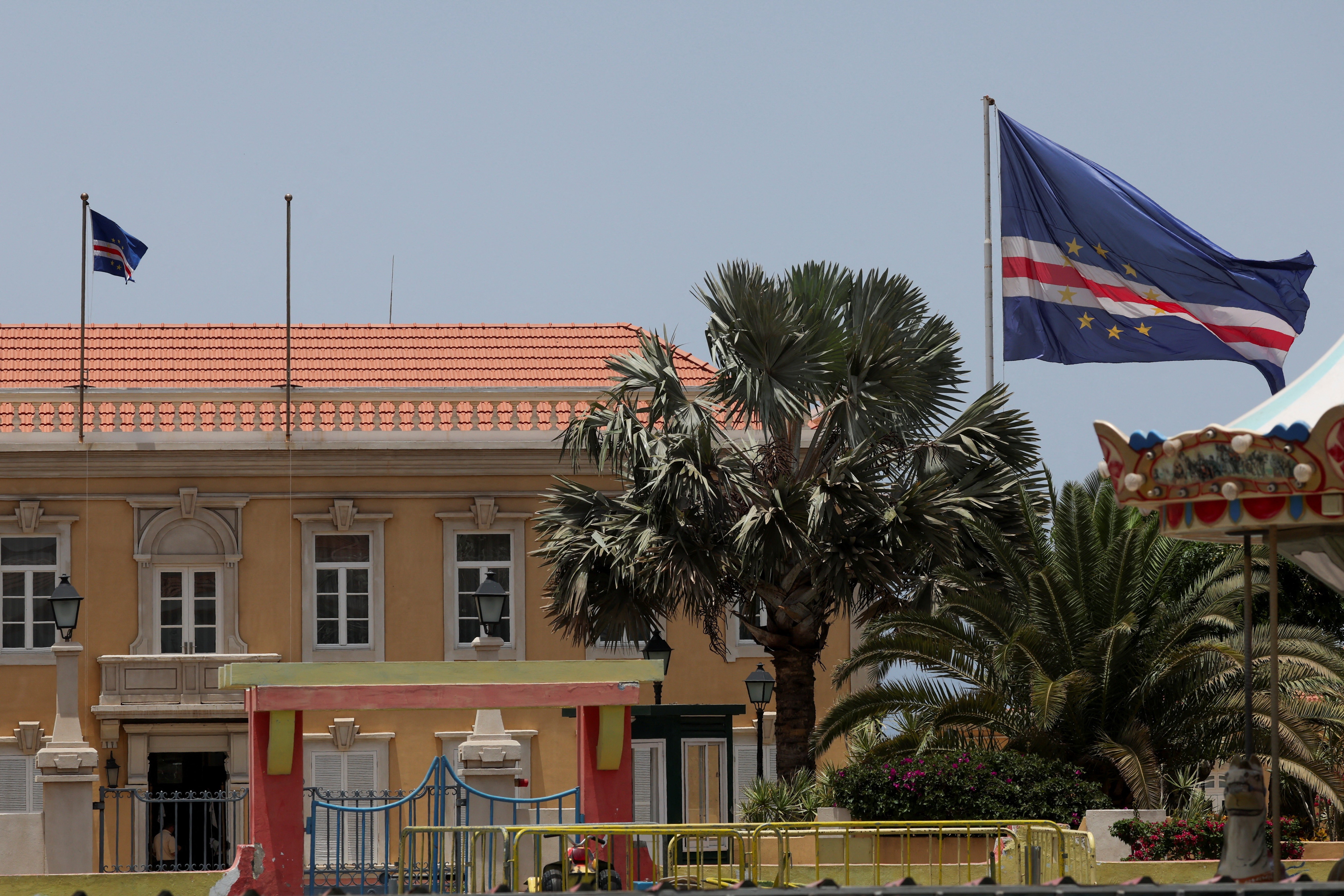
National flag of Cape Verde in front of the Presidential Palace, in the country's capital, Praia
Sodiq Adelakun/Reuters
The Cape Verde national team takes the field this Friday (3), at the Miami Stadium, for the most important football match in its history, against Argentina.
✅ Follow the g1 international news channel on WhatsApp
Debuting in the tournament, the team achieved an unlikely qualification for the knockout phase by obtaining the second place in its group - partly due to the saves of goalkeeper Vozinha, one of the highlights of the competition after holding a 0-0 against the favorite Spain.
The feat is not small: with around 525 thousand inhabitants, Cape Verde will become the smallest nation to compete in a World Cup knockout stage in the history of the competition.
Cape Verde's song about longing that has already been sung by Madonna, Ivete and Marisa Monte
The archipelago has the third smallest population of any country that has already played in the tournament. Iceland, in 2018, and Curaçao, this year, have fewer inhabitants, but did not pass the group stage.
The country is made up of ten islands - and many other islets - in the Atlantic Ocean, close to the African coast.
On signs and in official documents, Portuguese is the language of Cape Verde. In everyday life, it is common to hear Cape Verdean Creole, but the population is fluent in both languages.
Birds and fish
The country's history begins in 1444, when the islands were first sighted by Portuguese explorers. The caravels only arrived there, however, in 1460.
The navigators did not make contact with the native population, because there was no native population. The archipelago was completely uninhabited, and the first Europeans found only birds and fish in the place.
Far from civilization, the closest inhabited place was a cape in continental Africa, known as Cape Verde (currently part of Senegal), from where the country borrowed its name.
With the aim of colonizing the place, the Portuguese Crown encouraged settlement from the 15th century onwards. It was only around 150 years later, however, with the advent of the slave trade across the Atlantic, that the archipelago gained relative economic importance, as a strategic stopping port for ships.
Portugal controlled the islands until 1975, when Cape Verde gained independence, partly due to the fall of the Salazar dictatorship, partly due to the armed struggle of figures such as Amílcar Cabral (1924-1973), who lived in the archipelago and also participated in the independence of Guinea-Bissau.
The first years of independent Cape Verde were under the command of President Aristides Pereira, who established a one-party socialist regime.
Aerial image of the city of Mindelo, Cape Verde
Sodiq Adelakun/Reuters
An attempted merger with Guinea-Bissau was discussed, but failed in 1980, following a military coup on the mainland. The national anthem itself was shared between the two nations until 1992.
That same year, the country gained a new multi-party Constitution, with regular elections.
Economy
Cape Verde does not have a large supply of natural resources, such as minerals or oil. Only 10% of its territory is cultivable, and only four of its islands receive frequent rain.
Despite this, with a GDP per capita of US$5,800 (about R$30,200), the country is doing relatively better than most other African nations, according to the World Bank.
Graffiti shows Cesária Évora kissing the World Cup cup in Praia, Cape Verde
Sodiq Adelakun/Reuters
The country's main income comes from tourism, and transfers from Cape Verdean immigrants are also an important part of the country's economy. Cape Verde needs to import much of its food and all of its oil, which supplies almost its entire electrical system.
Its main trading partner continues to be the former metropolis, Portugal.
Despite the success of Vozinha in the World Cup, the country's most famous figure internationally remains the singer Cesária Évora (1941-2011).
The goalkeeper could come close to the "barefoot diva", however, if the country advances to the next stage in the World Cup - a task that is not at all easy, as this Friday his mission is to hold back the attack of Messi, Lautaro Martínez and co.
Where is Cape Verde
Igor Ramon/g1
Source: G1