Planet "neighboring" to Earth could be favorable to life, study says
A team led by astronomers from UC Irvine (University of California Irvine) discovered a new exoplanet, similar and close to Earth, and joins the list of planets that could be habitable. The study was published on June 30 in The Astrophysical Journal.
Dubbed GJ 3378b, the discovered exoplanet is about twice the size of Earth and orbits a star about 25 light-years from our solar system, in the Milky Way. Its atmosphere may be the ideal thickness for life to survive on its surface.
An exoplanet, according to NASA's definition, is any planet that is beyond our solar system, most often orbiting stars other than ours.
It is located within the habitable zone of its host star, a region known as the "Goldilocks" around a star, where a planet receives the ideal amount of solar radiation so that water can exist in a liquid state on its surface.
According to the university, the study helps reveal how Earth-like planets, close to our solar system, may be more common than previously thought.
The team made the discovery using the "Habitable-zone Planet Finder" on the Hobby-Eberly Telescope at McDonald Observatory in Texas and the NEID Spectrometer on the WIYN Telescope at Kitt Peak National Observatory in Arizona.
Paul Robertson, associate professor of astronomy at UC Irvine and lead author of the study, says the discovered planet is "exciting."
"It's one of our closest cosmic neighbors. 25 light years seems like a long way away, but the Milky Way is about 100,000 light years across, so from that perspective it's our next door neighbor," says Robertson.
He further states that the planet, which he dubs the "super-Earth", receives about 90% of the radiation from its host star compared to what Earth receives from the Sun.
In addition to the UC Irvine team, other collaborators include Michael Endl and William Cochran (University of Texas at Austin/McDonald Observatory), Gudmundur Stefansson (Schmidt Sciences), and Suvrath Mahadevan (Pennsylvania State University).
Funding for the research came from National Science Foundation Astronomy and Astrophysics Research Grants and the NASA Interdisciplinary Consortia for Astrobiology Research.
Birth of planets outside the Solar System is recorded for the first time | CNN PRIME TIME
Doubts to be clarified
The nature of this planet's atmosphere, or whether it even has an atmosphere, is still a mystery. The planet sits on the edge of what researchers call the "cosmic coastline," a region around a star, and if a planet is outside it, solar radiation can dissipate its atmosphere.
Mars, in our own solar system, is an example of a planet that astronomers believe to have had an Earth-like atmosphere in the past, before solar radiation destroyed it.
"If you shrunk the Earth to the size of an apple, its atmosphere would be as thick as the apple's skin," says Robertson. According to him, this amount is enough for an environment that allows the formation of liquid water, so there is breathable air and perhaps a little protection against the harsh radiation environment of space.
To be sure that the planet could be habitable, however, astronomers will have to wait for the construction and deployment of future observatories to confirm whether the planet has some type of atmosphere.
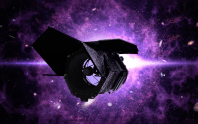
A new observatory, currently in planning, will be able to capture images of planets like GJ 3378b and confirm the existence of an atmosphere. NASA's so-called "Habitable Worlds Observatory" is scheduled to launch in the mid-2040s.
*Under the supervision of Carolina Figueiredo
Source: CNN