Pix threatened? What is the Trump administration's investigation into trade practices in Brazil
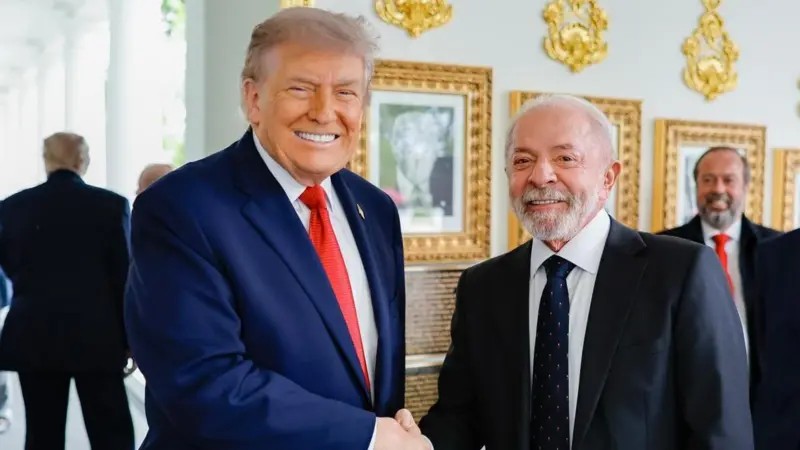
Lula announced an agreement last month to negotiate an impasse over tariffs and an American trade investigation
Ricardo Stuckert/Disclosure
Less than a month after the governments of Brazil and the United States reached an agreement to negotiate an impasse involving tariffs and an American trade investigation, there is an expectation that the White House will announce measures that break this agreement.
According to sources heard by BBC News Brasil, the US government would be close to announcing the result of a major trade investigation launched against the Brazil in July last year - in which he accuses the Brazilian government of a series of unfair commercial practices. The accusations served as the basis for the American government to adopt a series of tariffs against Brazilian products.
Among the Americans' accusations are preferential and unfair tariffs, inadequate protection of intellectual property rights, lack of combat against illegal deforestation and practices that harm the competitiveness of companies in the digital commerce and payment services sector.
The broad package of accusations ranges from complaints about Pix, the Central Bank's payment system, to complaints about illegal deforestation.
See the trending videos on g1
Now on g1
Last month, presidents Luiz Inácio Lula da Silva and Donald Trump discussed the topic in a meeting lasting more than three hours at the White House.
After the meeting, Lula said that teams from both governments should finalize a proposal to resolve the impasse over export tariffs and the trade investigation opened by the Americans against Brazil. According to Lula, the two presidents would receive a new proposal to end the disagreements in 30 days - a deadline that would end next Sunday (06/07).
"I said this: 'Let's put together a working group and let's allow this guy [from the Ministry] of Industry and Commerce of Brazil, together with your Minister of Commerce, to sit down in 30 days and present us with a proposal so we can put the hammer down'", Lula told journalists shortly after the meeting.
"Whoever is wrong will give in. If we have to give in, we will give in."
Last week, the US and Brazilian governments came into conflict again after the American government announced that it will start classifying Brazilian criminal factions as terrorist organizations. The measure was announced by Trump two days after a meeting in the Oval Office with Senator Flávio Bolsonaro (PL-RJ) - pre-candidate for President in the October elections and Lula's rival.
"We don't accept being treated like kids. We don't accept being treated like a republic," said Lula, about the American decision. released, the general view was that the investigation is political in nature and protective of American companies, while at the same time bringing forward many allegations that are contradictory and inaccurate - although some of the commercial accusations make sense.
"For me it is clear that the Trump administration is trying to provide economic motivation so that the tariffs imposed against Brazil are not illegal", said at the time Guilherme Klein Martins, professor at the University of Leeds, in the United Kingdom.
According to the economist, the arguments presented by the American president in the letter in which he officially announced the imposition of the 50% tax on Brazilian exports clearly show that his dissatisfaction is with the fact that former president Jair Bolsonaro (PL) has become a defendant in the action that investigates the attempted coup d'état and other decisions by the Brazilian Judiciary.
Bolsonaro was convicted in September last year and is currently serving a 27-year sentence under house arrest.
The purely political motivation, however, "could generate an internal problem in the United States", says Klein.
Lula said last week that Brazil does not accept "being treated like kids", after the White House's announcement about the classification of criminal factions as terrorist organizations
Ricardo Stuckert / PR
Welber Barral, former Secretary of Foreign Trade of the first Lula governments, states that American discontent with some of Brazilian trade policies had existed for years, but were used in the current context to justify an investigation under Section 301 of the US Trade Law.
This section of US legislation allows the USTR to carry out investigations into practices that allegedly harm American international trade and determine whether or not there are irregularities. The intention is to punish actions considered discriminatory against American companies with sanctions on the target countries.
"The economic relevance of some of these complaints is very small and most, if not most of them, have no factual justification whatsoever", says Barral.
Also according to the foreign trade expert, Trump has argued in the past that the tariffs announced by his government in recent months against several countries would be an attempt to combat the US trade deficit with these nations. In the Brazilian case, however, the trade balance is positive for the Americans.
"Using section 301 is a way for the US to guarantee itself when applying these tariffs against Brazil", he says.
Digital commerce and electronic payment services
In the document released by the USTR on the commercial investigation, one of the areas highlighted as the focus of the investigation is social media and electronic payment services.
According to the agency, there is evidence that Brazil engages in different "acts, policies and practices that may harm the competitiveness of North American companies involved in digital commerce and electronic payment services" in the country.
The USTR cites a Supreme Court judgment on the regulation of digital platforms in the country as an example.
According to the institution, the court voted to "make social media companies responsible for illegal posts by their users, even in the absence of a court order to remove such content."
The change described refers to the appeal judged by the STF on article 19 of the Marco Civil da Internet.
The original section of the law provided that digital platforms would only be held responsible for damages caused by offensive content if, after a specific court order, they did not take measures to remove the material from the air.
The court's new decision did not completely invalidate this understanding, but defined that in cases of crimes, illicit acts and inauthentic accounts (created by robots, for example), the Social media companies become responsible if, after being notified extrajudicially (by the victim or lawyer), they do not remove the content and the Court later considers the material offensive.
STF ruled that social media companies can be held responsible for criminal content posted by third parties
Getty Images via BBC
But in other types of infraction, such as crimes against honor (libel, slander and defamation), a court order is still necessary to remove the content from the air.
O USTR also states in its documents that the Brazilian Court issued "secret orders" instructing American social media companies to "censor hundreds of posts and remove dozens of political critics, including US citizens, from their platforms for legal speeches on American soil". National Congress and the Federal Supreme Court.
For Bruna Martins dos Santos, policy and advocacy manager at Witness, an international non-profit organization focused on technology and human rights, the European Union (EU) also faced similar problems, when the bloc was also pressured by the Trump administration for its digital rules.
Since assuming the White House for the second time, the Republican has repeated that the regulation of big tech by the European Union is a maneuver to weaken American businesses in the 27 countries of the bloc.
"We live at a time of export of the US domestic agenda, of extreme protection of the actions of private companies and of relativization of obligations that were placed around the world around the actions of these actors", says Santos.
"That's why these arguments [presented in the investigation] are meaningless", he says. "Several countries around the world, as sovereign nations, have dedicated years to developing regulations around the digital environment and digital services."
Also according to the expert, there was no censorship in the court decision that determined the removal of posts from the air and suspension of accounts on social networks.
For Santos, the targets of the determinations were repeat offenders, had loyal followers involved in inciting violence and threatened the STF itself and its ministers, leading to more drastic actions.
Pix threatened?
Still in the digital area, the American government also put Pix in its sights, accusing the payment system developed by the Central Bank of being an unfair practice, which would harm American companies operating in the sector.
"Brazil also appears to be involved in a series of unfair practices in relation to electronic payment services, including, but not limited to, promoting its electronic payment service developed by the government", says an excerpt from the document that does not list which allegedly illegal practices it refers to.
Pix was launched in 2020 and became the target of an investigation by the American government
Getty Images via BBC
For experts interviewed by BBC News Brasil, the inclusion of Pix in the investigation would be a way of protecting big tech and American payment services, such as Whatsapp Pay, Apple Pay and Google Pay.
"We are talking here about a technological competition, where the US aims to take away any type of technology that can offer some type of innovation and that is not being managed within the country itself or that is not under US control", says Bruna Martins dos Santos.
"We know that Pix is an extremely innovative and relevant payment method for the Brazilian context, with high levels of adoption. In no way should it be seen as an unfair payment service practice electronic."
And according to Welber Barral, the argument that, because it is linked to the Central Bank, the payment method generates unfair competition, is not appropriate.
According to the former secretary, the World Trade Organization (WTO) allows in its rules that public companies operate in sectors where there are market failures. "We have a very large unbanked population in Brazil. Pix was also a way of integrating these people into the financial market", he says.
In addition, says Barral, the US also has public companies working to address market failures. "This is the case, for example, with the United States Postal Service, which operates in the mail sector. But this does not mean that UPS [a private transport and logistics company] can sue the American government", he says. partial scope preferential trade agreements with globally competitive trading partners, while at the same time applying higher tariffs to American imports.
The American agency specifically cites India and Mexico as countries that would benefit from these preferential tariffs.
"This preferential treatment applies to hundreds of products in various sectors, such as agricultural products, motor vehicles and parts, minerals, chemicals and machinery", says the USTR.
According to former Secretary of Foreign Trade Welber Barral, Brazil it has, in fact, a partial agreement with Mexico, focused on the automobile and chemical sectors.
There is also, within the scope of Mercosur, a treaty with India. In force since 2009, it provides tariff preferences for 450 tariff lines on each side.
Barral explains that, with these preferential tariffs, products purchased from the same manufacturer, but originating in different countries, can be taxed completely differently.
"A company like Ford, for example, has factories in both Mexico and the United States. To export a car model to Brazil, it can pay zero tariff if it comes from Mexico, and 35% if come from the United States.
It's a big difference," he says.
"And some markets involved are sectors of interest to Americans."
Car production in Mexico: Brazil has, in fact, a partial agreement with the country, focused on the automobile and chemical sectors
Getty Images via BBC
Anti-corruption inspection
Another point raised by the American government concerns the fight against corruption and the idea that American companies could be at a disadvantage in an environment with little transparency.
"The evidence indicates that the lack of The application of anti-corruption measures and the lack of transparency in Brazil could harm American companies involved in trade and investment in Brazil and raise concerns regarding standards relating to the fight against bribery and corruption," says the USTR. in the historical series of the Corruption Perception Index of the organization Transparency International, considered one of the main indicators of corruption in the world.
According to the organization, Brazil is failing to reverse the trajectory "of dismantling the fight against corruption", leading to a "process of State capture by corruption" evident mainly due to the "increasing and explicit" presence of organized crime in state institutions.
For Welber Barral, the idea defended by the USA in its allegations "is not entirely wrong". asserts, however, that corruption in Brazil is not an issue that will be resolved by the application of tariffs by Washington.
Intellectual property protection and March 25th Street
The US still complains about Brazil engaging "in a variety of acts, policies and practices that apparently deny adequate and effective protection and enforcement of intellectual property rights".
The country is mainly based on the allegation that the Brazilian government is failing to combat the sale of counterfeit products and piracy in areas such as streaming and gaming electronics.
The USTR also cites Rua 25 de Março, a traditional center of popular commerce in the center of São Paulo, to criticize the supposed failures in the adequate and effective protection and application of intellectual property rights.
There are also complaints about the delay in analyzing and approving patent applications in the country.
"The impact of the current average pendency of patent applications of almost 7 years (and 9.5 years for pharmaceutical patents granted between 2020 and 2024) is to reduce the patent term", says the American commercial body.
Rua 25 de Março, a traditional center of popular commerce in the center of São Paulo, was also targeted by the investigation
Getty Images via BBC
For Guilherme Klein Martins, from the University of Leeds, the inclusion of complaints about piracy "serve much more as an excuse than a fact" to support the tariffs and the investigation.
"Piracy and illegal trade are a global problem entire country, not just Brazil", he says.
A 2025 report prepared by the OECD (Organization for Economic Co-operation and Development) on trends surrounding piracy identifies China, Bangladesh, Lebanon, Syria and Turkey as the main sources of these illicit products.
Regarding the delay in analyzing patent applications, vice-president Geraldo Alckmin - who last year occupied the ministry of Development, Industry, Commerce and Services - stated that Brazil was making efforts to adapt to international standards.
In Brazil, the person responsible for granting patents is the National Institute of Industrial Property (INPI).
The body has been the target of criticism and complaints in recent years.
Owners of inventions began to go to the Judiciary to, case by case, seek a renewal of the term when they have been waiting for the body's decision for years.
In May 2021, the STF declared unconstitutional the sole paragraph of article 40 of the Industrial Property Law (LPI), which provided for a minimum patent term of 10 years from granting, to compensate for delays in analyzing patent applications exceeding 10 years from the date of filing.
"The INPI it was taking seven years to register a patent. We reduced it to six, to five, to four. By the end of the year it should reach three. And next year, two years, which is the international standard", said Alckmin last year, after the American allegations.
Welber Barral also states that, although the delay is a reality, there is no discrimination against the USA, which makes the complaint illogical. "A Brazilian inventor or a Swiss company also goes through this problem. It's not something directed against the US," he says.
Ethanol
The American trade investigation would also include ethanol trade between Brazil and the US.
According to the USTR, Brazil abandoned the reciprocal and virtually tax-free treatment for ethanol, which promoted bilateral trade, and imposed steep and unfair import tariffs on US ethanol.
The American trade body also says that the US ethanol exports to Brazil fell significantly due to these tariffs, indicating a considerable disadvantage for North American producers.
"This is a long-standing American complaint. There have been many negotiations, quota implementation and postponement of decisions", says Welber Barral, former Secretary of Foreign Trade.
According to the expert, Brazil's rates on American ethanol are, in fact, much higher than those found by Brazilian producers in the USA. And the main reason for this, he says, is the need to protect the plants in the northeast of the country.
"A lot of American ethanol enters the region, where production is less efficient than in the USA", he explains.
Imports of American biofuel are subject to an 18% tariff, which is common for all Mercosur member countries. The USA currently imposes a tariff of 2.5% on imports of Brazilian ethanol.
During the negotiations, Brazil even proposed that the USA increase the import quota of Brazilian sugar to the country in exchange for a reduction in tariffs on ethanol, in order to reward Brazilian producers who make ethanol from sugar cane. But the plan was never considered by Washington.
"The US is unilaterally demanding that Brazil reduce the tariff without even responding to the Brazilian proposal," says Barral.
Imports of American ethanol are subject to the 18% tariff in Mercosur. The US imposes a 2.5% tax on imports of Brazilian ethanol
Getty Images via BBC
Experts also claim that American ethanol is the result of production made possible by subsidies on corn, a practice that directly influences the price of the fuel.
For some, therefore, the tariff applied by Brazil to American ethanol would serve as a trade defense mechanism.
"Brazil could also claim that it feels unfair because ethanol in the US is produced in a full of subsidies", says economist Guilherme Klein Martins.
"This opens up space for a broader discussion about what is a fair or unfair tariff."
Illegal deforestation
The US also complains that Brazil is unable to enforce its own laws against deforestation, harming American agricultural and timber producers.
"The conversion of illegally deforested land for agricultural production provides an unfair competitive advantage to agricultural exports, reducing costs and expanding the availability of agricultural inputs", claims the government of Donald Trump, which still points to Brazil as a major competitor of the US in global sales of agricultural products, "including beef, corn and soy".
The initial document of the commercial investigation recognizes that "deforestation rates have decreased in recent years" in the country, but states that the current level is still high.
The MapBiomas Annual Deforestation Report (RAD 2024), released in May this year, revealed a 32.4% reduction in the deforested area in Brazil in 2024 compared to 2023.
Five of the six Brazilian biomes saw a reduction in deforestation, according to the survey.
The total area deforested in the last six years (2019-2024), however, reaches the alarming mark of 9,880,551 hectares, an area comparable to the size of South Korea.
For the executive secretary of the Climate Observatory, Márcio Astrini, the fight against deforestation in the country has proved unstable over the last few years, depending on the government. The expert makes scathing criticisms of the environmental policies of Jair Bolsonaro's government, which according to him "was silent on the issue" and "boosted environmental crime". as a demonstration of hypocrisy.
The secretary of the Climate Observatory also states that the Republican administration has abandoned any type of aid to control deforestation in the Amazon, unlike other American presidents, and that the way the issue is being treated at this moment can be understood as a threat to sovereignty.
"The fight against deforestation must be carried out solely and exclusively by the Brazilian government autonomously. External aid is welcome, but it must not threaten Brazilian sovereignty", he says still the expert.
For Guilherme Klein, from the University of Leeds, the allegations about deforestation are the ones that could make the most sense among all those presented by the USTR.
According to him, increasing import tariffs or restricting imports based on deforestation or carbon emissions is a trend, with, for example, the implementation of mechanisms by the European Union.
The so-called Carbon Border Adjustment Mechanism (CBAM) of the EU establishes a price for the carbon emitted during the production of goods with a high carbon content imported into the bloc.
The economist states, however, that these taxes occur in a very different way to that adopted by the USA with Brazil. "There is no justification for increasing the tariff on all imports by 50%," he says. "It's very out of tune."
* With reporting by Julia Braun, from BBC News Brasil in London
'Tension' over tariffs and surprise in rare earths: behind the scenes of the meeting between Lula and Trump at the White House
Trump government classifies CV and PCC as terrorists and Flávio Bolsonaro celebrates: 'Big day'
'Crisis of what?': Flávio Bolsonaro bets on Trump and debates about factions against the erosion of the Master case
Source: G1