PF director sees 'mistake' in classifying factions as terrorists: 'Confrontation strategy is different'
Andréia Sadi: government monitors US decision on factions, which is already in force
The director general of the Federal Police (PF), Andrei Rodrigues, called the United States' decision to classify the Brazilian criminal factions Comando Vermelho (CV) and Primeiro Comando da Capital (PCC) as "mistake" as foreign terrorist organizations.
The inclusion of criminal organizations on the North American list was announced on May 28 by the US Secretary of State, and came into effect this Friday (5).
"Terrorist organizations have ideological motives, religious motives, objectives different from those of organized crime which, despite terrorizing people, seeks profit", pointed out the director of the PF.
"And this definition is a mistake, because the coping strategy is different for one group and another group. So, we cannot confuse these initiatives, right? For the citizen, it doesn't matter what the definition is, what the semantics are, what the group that is imposing fear will be called", he continued.
Rodrigues explained that the North American decision will not change the Brazilian strategy to combat organized crime nor the PF's role in combating criminal factions.
This is because drug trafficking and terrorism have different characteristics, therefore, they require different strategies.
"There are technical questions that need to be addressed but, at the same time, make it very clear that for us this definition that the United States attributes to criminal organizations in no way alters the vigor and firmness with which we will continue acting against organized crime. It is a different motivation, it is a different objective", he highlighted.
Behind the scenes, members of Palácio do Planalto and Itamaraty defend the maintenance of dialogue with the North American authorities, but admit that the decision is unlikely to be reversed in the short term.
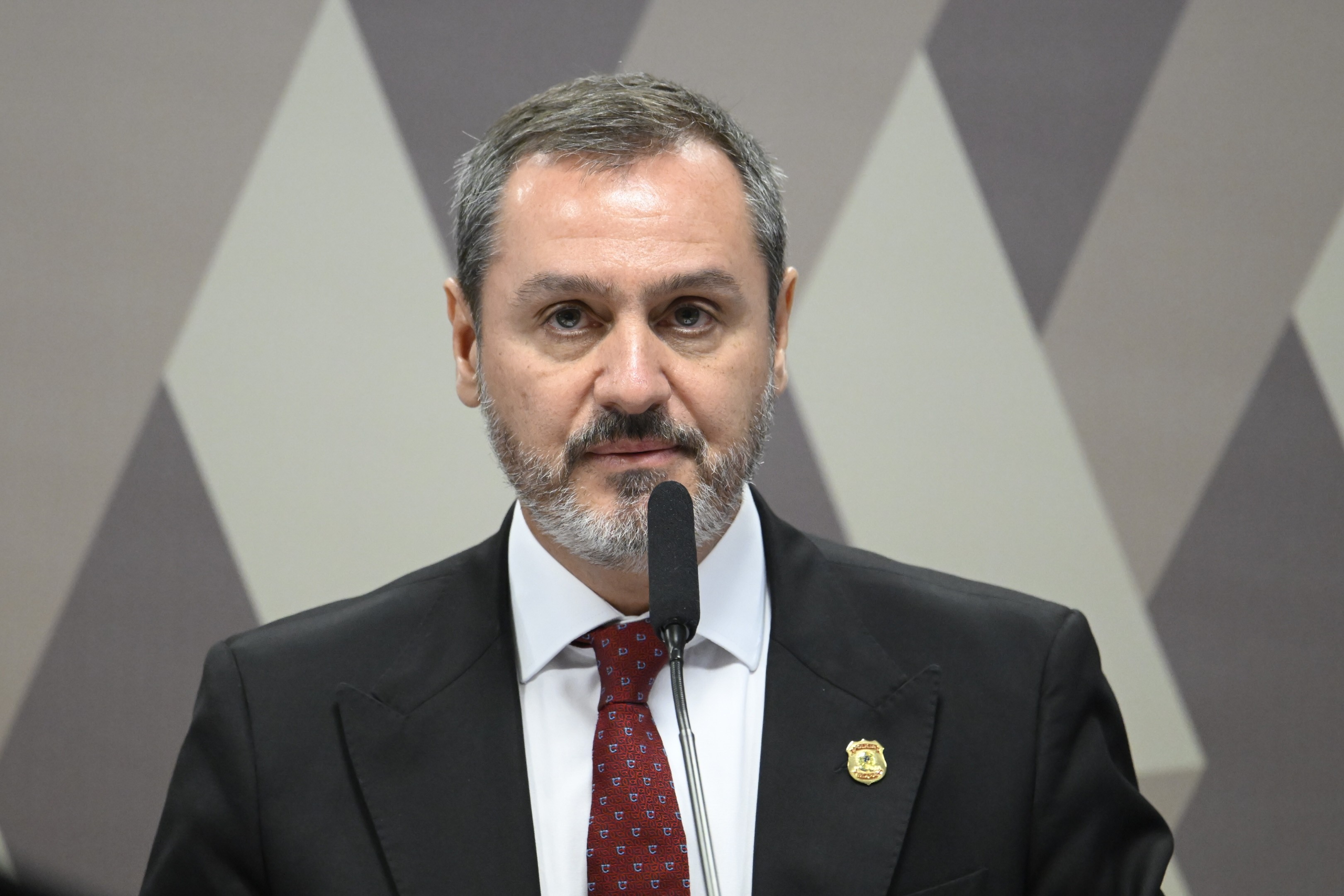
Director General of the PF, Andrei Passos Rodrigues, is heard at the Organized Crime CPI
Andressa Anholete/Agência Senado
The Federal Police was not officially communicated about the measure and learned of the decision through the press. According to the PF director, it is still too early to assess whether the classification will have an impact on cooperation between Brazil and the United States.
"We have not had any changes, no dialogue that has signaled an immediate change in this cooperation. We need to wait to find out what the United States' policy will be and whether there will be changes," he said.
The PF director also highlighted that Washinton's decision has "no influence" on crime fighting policies in Brazil.
"In practice, this decision by another sovereign country has no influence, it does not have the power to change Brazilian public policies. Our way of confronting organized crime is based on integration, the decapitalization of these criminal organizations and the arrest of leaders", he stated.
Space for cooperation
Despite criticism of the classification adopted by the United States, Andrei assessed that the measure could serve as an opportunity to expand international cooperation.
"I think this becomes an opportunity to expand cooperation, to have more exchange of information, to block the shipment of weapons to Brazil, to arrest fugitives from Brazilian justice in the United States. Those countries that truly want to confront organized crime and cooperate will have the Federal Police and our country as a great partner", he declared.
Experts also point out possible economic effects of the measure.
For Eduardo Mello, professor of Politics and International Relations at FGV, the classification could increase compliance requirements for companies that maintain business or financial relations with the United States.
According to him, investors and companies could face higher costs to prove that they do not have any links with organizations classified as terrorists, which could discourage investments in Brazil.
In a statement released last week, the Brazilian government stated that combating organized crime is a priority, but highlighted that international cooperation must respect national sovereignty.
Members of the Ministry of Justice also assess that international legal cooperation is an essential tool for the repression of organized crime and that Brazil maintains agreements with several countries in this area.
Source: G1