Peru goes to the polls this Sunday in an election marked by polarization and political instability
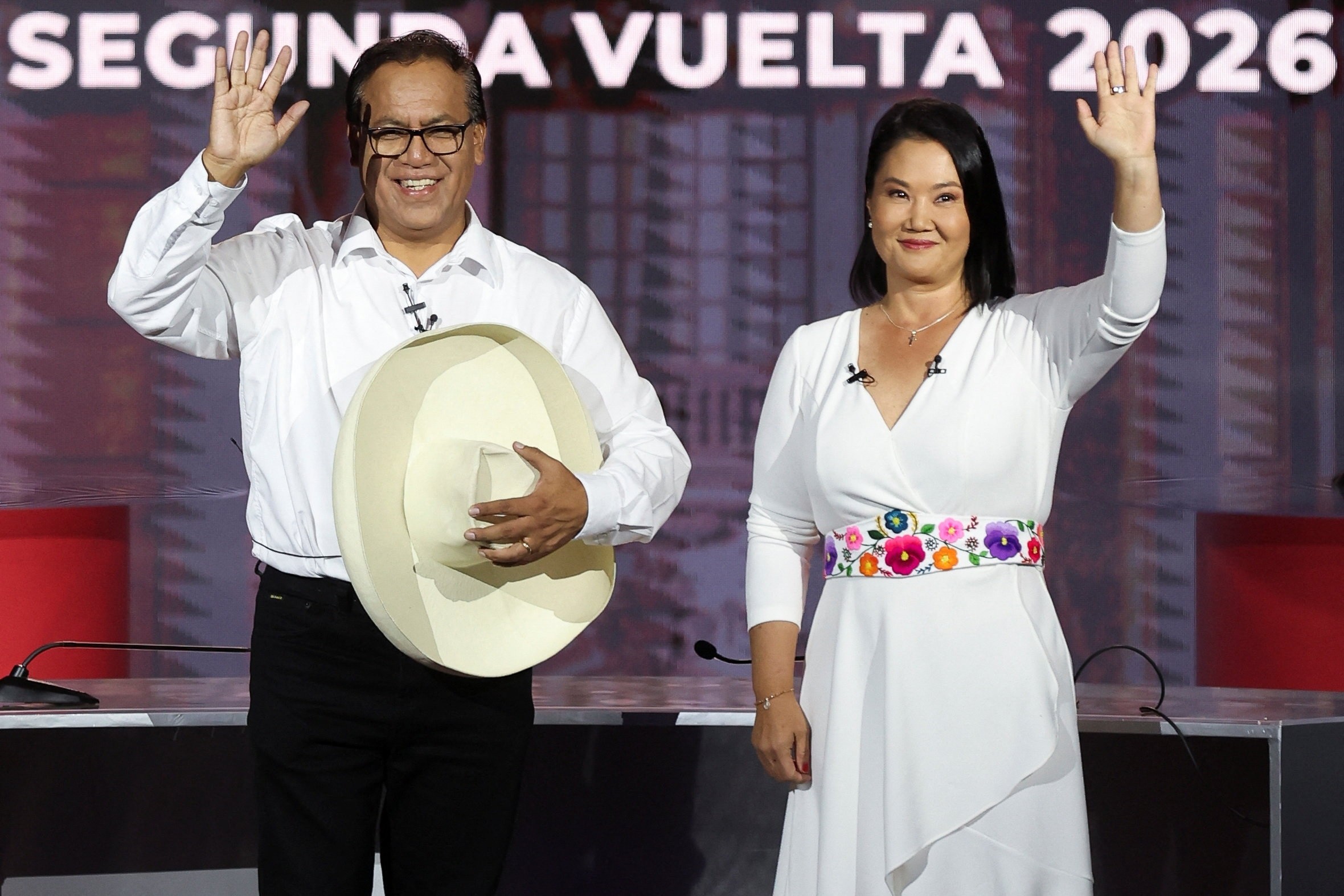
Peruvians go to the polls on Sunday (7) amid the political crisis
Peru will hold the second round of presidential elections this Sunday (7) in a fierce dispute between the right-wing candidate Keiko Fujimori and the left-wing Roberto Sánchez.
The vote takes place amidst a scenario of strong political polarization, institutional instability and uncertainty about the direction of the country's economy.
Download GloboPop to watch short vertical videos from Globo
Polls released in recent days indicate a technical tie between the candidates. An Ipsos survey showed Sánchez with 43.8% of voting intentions, against 43.2% for Fujimori, while around 13% of voters stated that they intended to vote blank or cancel their vote.
The election takes place after a decade marked by political turbulence. Since 2016, Peru has had eight presidents, in a sequence of resignations, dismissals and interim governments that fueled the population's distrust of institutions.
Daughter of former president Alberto Fujimori (1990-2000), Keiko is trying to reach the Presidency for the fourth time. His campaign's main pillars are the fight against crime and the defense of the economic model adopted by the country in recent decades.
For her supporters, she represents stability and security. Critics associate his candidacy with the authoritarian legacy and allegations of corruption that marked his father's government.
On the other hand, Roberto Sánchez presents himself as a representative of rural regions and the poorest sectors of the country.
A former minister and congressman, he defends political and economic reforms, including changes to the Constitution and greater state presence in the economy.
In recent days, however, he has sought to moderate his speech, promising to respect the independence of the Central Bank and maintain Peru's economic openness.
In an interview with AFP, Sánchez stated that he intends to maintain "respectful" relations with the United States and preserve the country's open economy policy, while at the same time seeking to expand investments and reduce regional inequalities.
The dispute has also been closely monitored by financial markets. On Friday (5), the Lima stock exchange registered a drop of more than 4% after surveys indicated a slight advantage for Sánchez.
Investors show concern about possible changes in economic policy and in the mining sector, responsible for around 12% of the Peruvian Gross Domestic Product (GDP).
One of the central themes of the campaign is precisely informal mining. The REINFO program, which allows small miners to operate without all the licenses required for the activity, has become one of the main electoral issues.
It is estimated that around 500 thousand informal miners are linked to the sector, responsible for approximately half of Peru's gold exports.
Machu Picchu enters the electoral debate
In addition to the economic and political challenges, the next president will also have to deal with issues linked to tourism.
In recent weeks, the preservation of Machu Picchu has gained prominence following warnings about management problems, allegations of corruption in ticket sales and risks to the international image of Peru's main postcard.
Analysts estimate that this Sunday's result will be a test for the country's ability to overcome chronic political instability and rebuild trust in its institutions.
The elected candidate will assume the Presidency on July 28 and will face the challenge of governing with a fragmented Congress that has historically been in conflict with the Executive Branch.
Candidate in the crosshairs of Justice
This week, the Peruvian Court decided to put Roberto Sánchez on trial for alleged irregularities in the accounting of his party's financing between 2018 and 2020.
According to the Public Ministry, the politician had failed to declare more than US$57 thousand received for party activities. The Prosecutor's Office is asking for a sentence of five years and four months in prison.
The defense informed that it will appeal the decision, which does not prevent its participation in the election.
If elected, Sánchez will have constitutional immunity.
*With information from Reuters, AFP and RFI
The right-wing candidate for president of Peru, Keiko Fujimori, and the left-wing candidate, Roberto Sánchez
REUTERS/Alessandro Cinque
Source: G1