Peace agreement between US and Iran foresees a private fund of US$300 billion for Tehran, says agency
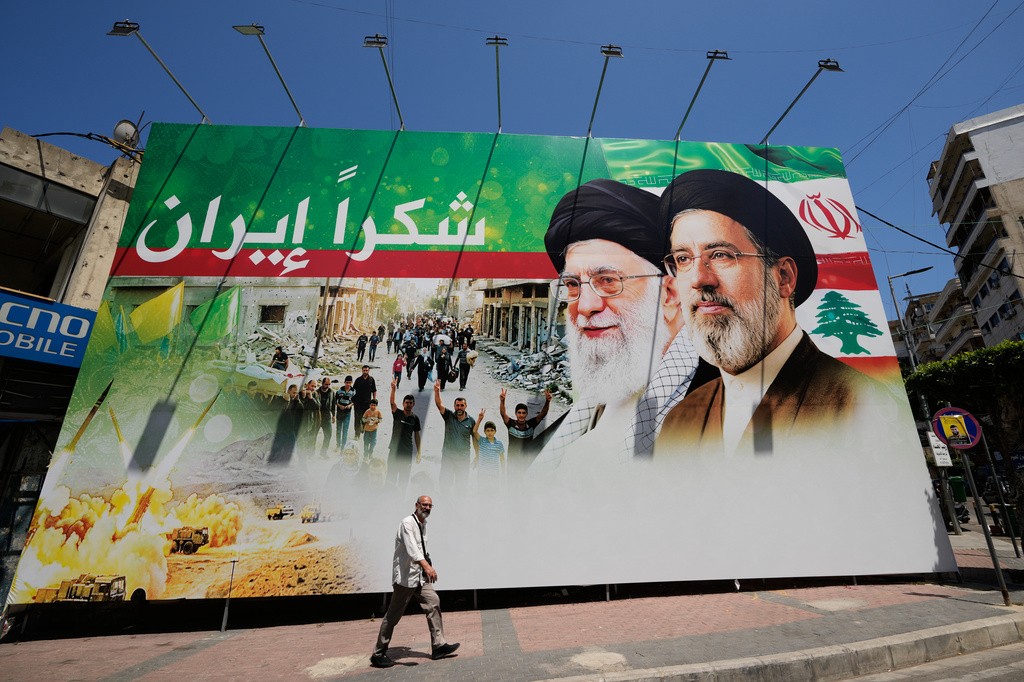
A man passes by a billboard showing photos of former Iranian leader Ali Khamenei and the current supreme leader, Ayatollah Mojtaba Khamenei, with the words in Arabic 'Thank you, Iran', in Dahiyeh, south of Beirut, capital of Lebanon, on June 15, 2026
Hussein Malla/AP
A US$300 billion private fund designed to boost investment in Iran is planned in the framework agreement between the United States and Iran, and more than half of that amount has already been committed, a source with direct knowledge of the negotiations told Reuters.
✅ Follow the g1 international news channel on WhatsApp
According to the source, who spoke on condition of anonymity because the plan has not yet been officially announced, the fund was designed to give both parties an economic incentive to conclude a definitive agreement. Washington and Tehran prepare to sign the agreement on Friday.
US and Iranian officials said on Sunday they had reached an agreement to end the war that began when American and Israeli forces attacked Iran on February 28, end the American blockade against the country and reopen the Strait of Hormuz, a strategic route for global oil and gas supplies.
The new fund will be a private investment vehicle, not a reconstruction or reparations program. There will be no government resources or public subsidies, the source said. Companies based in the United States, Gulf Arab countries, Asia, South America and Africa have already agreed to provide financing.
The pledged investments cover the energy, logistics, manufacturing and transport sectors.
Iran confirms that negotiations for a final agreement with the US begin on Friday
A high-ranking Iranian source told Reuters that Tehran had initially requested US$400 billion in compensation for the damage caused by the war, but Washington said it would not provide this value.
It was then that the idea for the fund emerged, which should be called the Reconstruction and Development Fund.
According to the Iranian source, the mechanism envisages that countries in the region will contribute in different ways. These include guaranteeing loans, opening lines of credit or directly financing the reconstruction of war-damaged facilities, including the Mobarakeh Steel complex, refineries, airports and, more broadly, conflict-affected infrastructure.
Four decades of sanctions
One of the largest economies in the Middle East, Iran has received virtually no significant foreign direct investment over the past four decades, having been excluded from global capital markets by successive rounds of sanctions imposed by the United States and the Commonwealth. international.
The country has the second largest proven natural gas reserves in the world and the fourth largest proven oil reserves.
It also has a young and educated population of more than 92 million inhabitants, a diversified industrial base and a still little explored potential in sectors ranging from petrochemicals and mining to tourism and agriculture.
According to the source, the investment fund is completely separate from a parallel negotiation on the suspension of American sanctions and the release of Iranian sovereign assets frozen abroad. These are distinct financial mechanisms, with different objectives and timelines.
The fund will only be created and come into operation after the conclusion of a final agreement considered satisfactory. The memorandum of understanding, once signed, will serve to structure the process over the next 60 days.
"It will only be created when the final agreement is signed," said the source.
"During these 60 days, the fund's administrators will work with Iranians and investors to plan and scale the projects."
Iran's Foreign Ministry and Pakistan's Foreign Ministry - which helped broker the deal related to the investment fund - did not immediately respond to requests for comment.
Reached by Rmuters, a White House spokeswoman pointed to an interview Monday by Vice President JD Vance with CBS, in which he said Iran may have access to a US$300 billion reconstruction fund supported by Gulf countries if it fulfills an agreement with Washington.
Among the demands would be the dismantling of Iran's nuclear program, the elimination of its stockpile of enriched material and the acceptance of a rigorous inspection and oversight regime.
The source did not say how the fund will be administered nor who will be responsible for its management, noting that important details still need to be defined.
The same source cited companies from South Korea, Japan, Singapore, Malaysia and the United States among those which have already made investment commitments, but declined to provide a complete list.
The memorandum of understanding agreed between the US and Iran provides for a 60-day ceasefire and constitutes a general agreement, not a final agreement. During this period, American and Iranian negotiators must work simultaneously on several fronts, including nuclear issues, sanctions and regional security.
Source: G1