PCs with AI: what is Nvidia's new bet and how it can change the way we use notebooks
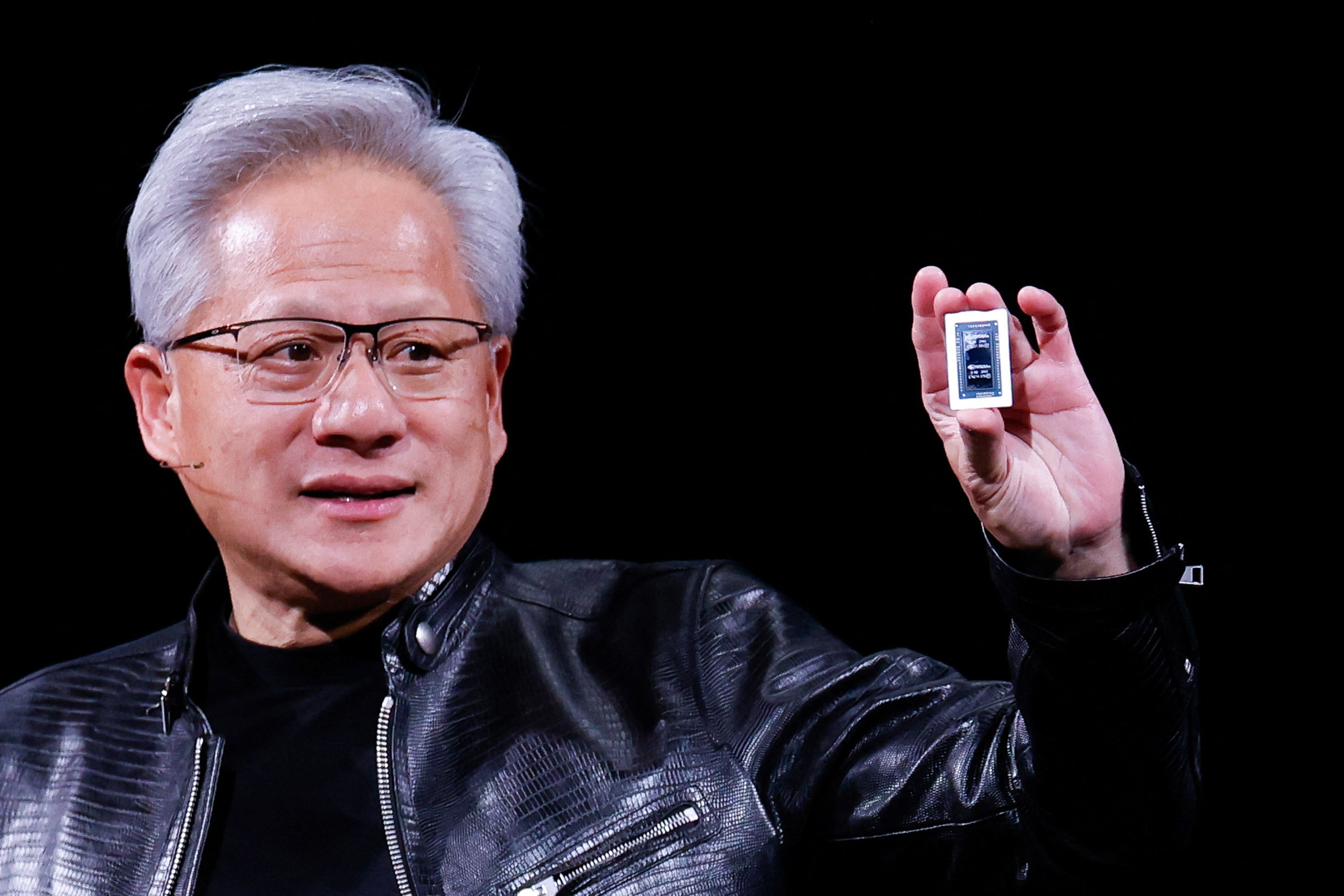
Nvidia CEO, Jensen Huang, presents the RTX Spark GPU.
REUTERS/Ann Wang
Nvidia once again drew attention to so-called PCs with artificial intelligence after the company's executive president, Jensen Huang, presented a new chip capable of running AI resources directly on notebooks and desktop computers.
The company's bet comes at a time of uncertainty about the demand for this type of equipment.
🗒️ Do you have any reporting suggestions? Send to g1
While HP says AI computers have helped boost its bottom line, Dell said consumer interest has not yet grown at the pace expected.
Now on g1
What is an AI PC?
Manufacturers define AI PCs as computers capable of performing artificial intelligence tasks directly on the device, without relying so much on the internet or remote servers.
In practice, they can process AI resources faster and perform functions such as virtual assistants, chatbots and content creation tools on the computer itself.
Today, most AI services, such as ChatGPT and Claude, work in data centers. PCs with AI transfer part of this processing to the user's machine.
Some models are also capable of performing more advanced tasks related to AI, which would normally require more powerful servers.
Jensen Huang presents models of laptops using RTX Spark GPUs.
REUTERS/Ann Wang
Interest in these computers has also grown with the advancement of so-called AI agents, programs capable of performing tasks more autonomously, with little human intervention.
Nvidia presented recently the RTX Spark chip, developed in partnership with MediaTek and Microsoft. According to the company, the component was created to allow AI agents to work directly on the computer, without relying on cloud computing.
Manufacturers hope that these features will attract consumers who already use AI for activities such as writing emails, organizing appointments and planning trips.
HP reported at the end of May that PCs with AI represented 44% of its computer sales in the second quarter, up from more than 35% recorded in the previous quarter.
Despite this, analysts point to challenges in the popularization of these equipment. Among them are the possible shortage of memory chips and the increase in component costs.
The IDC consultancy predicts that global computer sales could fall in 2026 due to the lack of some components and the increase in production costs.
What technology do these computers use?
work notebook laptop
Pexels
PCs with AI have a component called NPU (neural processing unit), designed specifically for artificial intelligence tasks.
This processor works in conjunction with the CPU, responsible for general computer tasks, and with the GPU, mainly used for graphics and parallel processing.
The combination of these components allows you to run AI applications more efficiently and quickly.
Are there any concerns?
Microsoft logo
Unsplash
Yes. One of the main discussions involves privacy.
In 2024, Microsoft announced the Recall feature, which recorded activities carried out on the computer to allow the user to find previously accessed information.
The tool generated criticism for storing a detailed history of the device's use. After questions about privacy and security, the company postponed the launch and strengthened protections before making it available to some users.
On the other hand, experts say that performing AI tasks directly on the computer can increase privacy in some cases, as it reduces the need to send personal data to external servers.
Smart glasses become a rage in online pranks with exposure to third parties
Young people return to using iPods to escape cell phone distractions
See the moment in which the Starship separates in space
Source: G1