PCC x CV: Effects of the US decision are still unclear, says expert
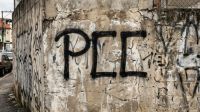
The United States' decision to classify the PCC (First Capital Command) and the CV (Red Command) as terrorist organizations does not yet have clearly defined practical effects. This is what Priscila Caneparo, specialist in International Law and professor at Washington and Lincoln University, assesses in an interview with Agora CNN.
According to Caneparo, the measure raises complex issues involving national sovereignty, international cooperation and the Brazilian electoral scenario. "It's very premature, it's very incipient," said the expert when analyzing the possible concrete consequences of the designation.
Electoral impact and national sovereignty
Caneparo highlighted that the American decision can be read from two perspectives in the context of the October elections in Brazil.
If the public debate focuses on the public security issue, the measure could represent a gain for the wing opposing the government.
"The public security debate, not only in Brazil, but in Latin America as a whole, precisely feeds back into this electoral scenario", he explained.
On the other hand, if the discussion expands to topics such as national sovereignty and international cooperation instruments, the scenario may favor the government.
The expert cited the case of Mexico as a parallel: after Mexican criminal organizations were given the same name as terrorists by the USA, Claudia Sheinbaum's government discovered, due to a traffic accident, that the CIA was infiltrated in the country.
"If this debate wins, it will certainly be an additional point in this electoral race for the government's situation", said Caneparo.
Criticism of the denomination and effects on cooperation
The expert declared herself "very critical" of the terrorist denomination applied by the USA.
She highlighted that there is no historical record of a case in which terrorism or alleged terrorism was terminated due to this type of unilateral classification.
Caneparo also considered that the PCC and the Red Command already have a proven structure in at least 28 countries, which would make any coordinated action extremely complex without formal cooperation agreements - or without violating national sovereignty.
Another point raised was the direct impact on existing cooperation mechanisms between Brazil and the United States.
Caneparo explained that the Palermo Convention had established an instrument called "direct communication", which allowed the rapid exchange of information and evidence between the FBI and the Brazilian Federal Police. With the new terrorist classification, this channel tends to be closed.
"As soon as there is a designation as a terrorist group, this perspective ends, because it becomes a matter of State for the United States and any and all evidence collected by the United States tends to be confidential", he warned.
The expert also pointed out that there are legitimate ways to designate an organization as terrorist, such as the UN Security Council's Anti-Terrorism Commission, without the questions that the unilateral American decision generated.
The texts generated by artificial intelligence on CNN Brasil are made based on video cuts from the newspapers in its programming. All information is investigated and checked by journalists. The final text is also reviewed by the CNN journalism team. Click here to find out more.
Source: CNN