Passenger sucked out of plane window: a similar case has already happened to a pilot, who spent 20 minutes 'hanging' out of the window and survived
Video shows passenger whose body was partially sucked out of a plane window after the incident.
A Ryanair flight was forced to make an emergency landing at Thessaloniki airport, in Greece, this Friday (10) after a window broke and caused a passenger to be partially sucked out of the plane. The man was rescued and received medical attention.
✅ Follow the g1 international news channel on WhatsApp
Passenger says man sucked out during flight had his head and neck out of the plane and 'luckily he was wearing a seatbelt'
The flight was scheduled to go from Thessaloniki to Memmingen airport, in Germany. According to the European press, a part of the engine came off and hit a window during the flight
Occurrences of this type in commercial aviation are very rare, but they have happened before. The most famous case is that of British Airways flight 5390, on June 10, 1990.
The aggravating factor in this case was that the person being sucked out of the aircraft was not a passenger, but the captain himself.
Timothy Lancaster, aged 42, spent around 20 minutes with his head and entire torso outside the aircraft, exposed to the wind and very low temperatures. Despite this, he survived.
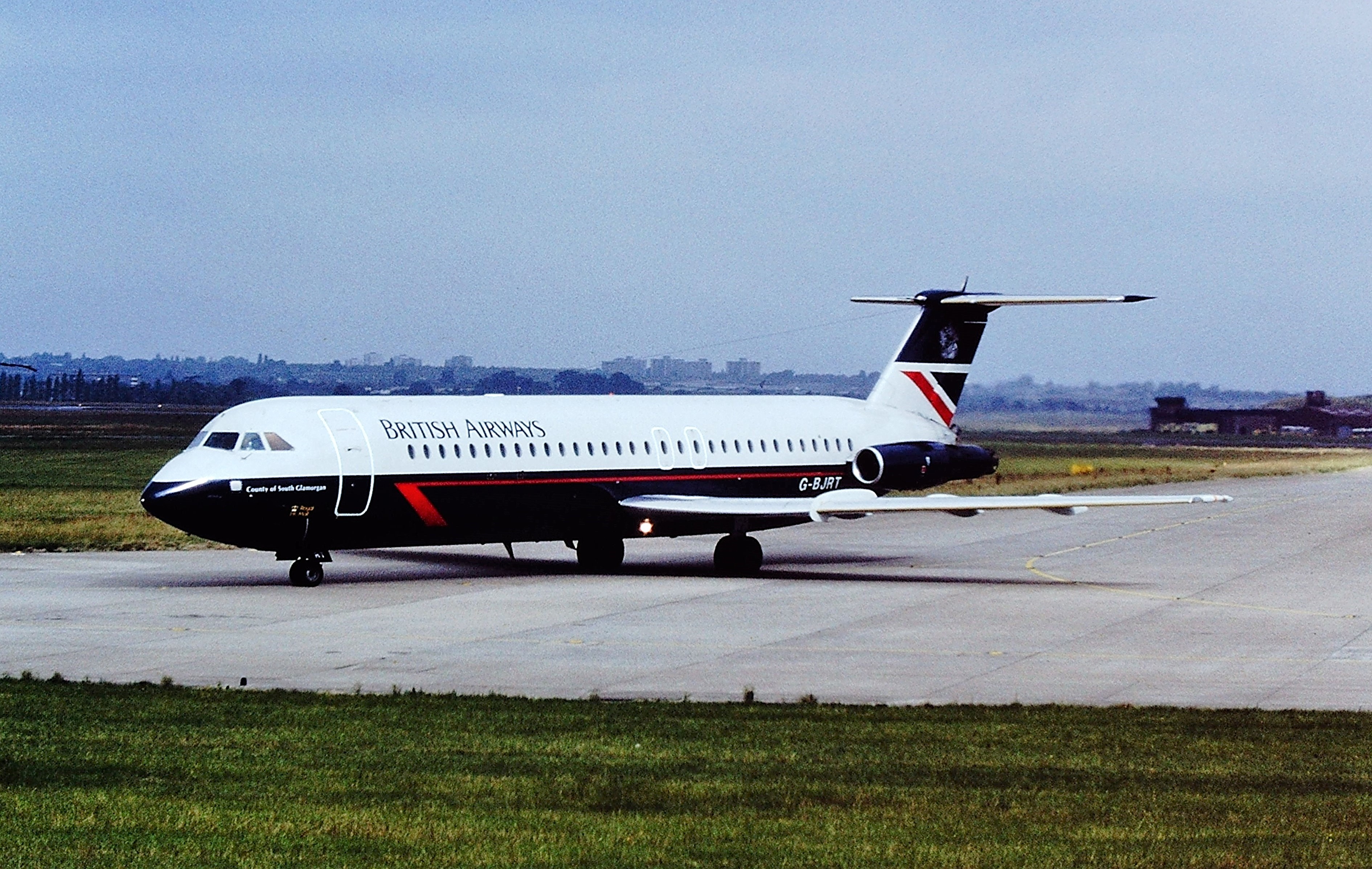
BAC 1-11 aircraft that lost its front window in mid-flight, in an image taken at Birmingham airport in 1989
Rob Hodgkins/Creative Commons
Flight 5390 was operated with a BAC 1-11 model aircraft manufactured in 1971, and would connect the English city of Birmingham to Málaga, in Spain, with 87 people on board - 81 passengers and 6 crew.
The aircraft had climbed to an altitude of approximately 5,300 meters and Lancaster removed his seat belt. The flight attendants were preparing to begin flight service.
At that moment, when flight attendant Nigel Ogden opened the door to the pilots' cabin, he heard a very loud noise of explosive decompression: it was the left front windshield, on the Lancaster side, which had just come off.
The cabin filled with a mist of condensation. The noise made communication between the crew members very difficult, and it was barely possible to hear the communication radio with air control.
Lancaster was immediately thrown out, held only by his knees, which caught on the panel. Logbook and other objects flew out of the plane.
Ogden immediately grabbed Lancaster's leg, which had become caught in the seat belt, so he wouldn't come loose. It was up to the co-pilot, Alastair Aitchison, 39, to take control of BAC 1-11 and declare an emergency.
Aitchinson controlled the aircraft, restarted the autopilot that had turned off, and descended the plane in a controlled manner to a lower altitude to counteract the depressurization.
Air control did not initially understand the nature of the incident, and Aitchinson could not hear the controllers.
Ogden needed exert a lot of force to hold the commander. At some point, two other commissioners took over the task. The co-pilot finally managed to hear air control instructions to land at Southampton Airport, which occurred 22 minutes after the window broke.
Until landing, it was unknown whether Lancaster was dead or alive. Efforts to prevent him from breaking free were based on the hope that he would survive, but also so that his body would not hit the engine or rear stabilizer, which could bring down the plane.
Lancaster was alive. He was rescued with fractures to his right arm and wrist, as well as frostbite. His blazer and shirt had been torn off by the force of the wind.
Ogden was also not unscathed, with burns and a dislocated shoulder. All other occupants of the aircraft disembarked without injuries.
The commander returned to active duty and continued flying until his retirement in 2008.
The flight attendant suffered from post-traumatic stress disorder and stopped flying in 2001.
Passenger, with his head down and wearing an oxygen mask, after the incident
X / Reproduction
The investigation showed that, during a maintenance cycle, the screws used to fix the windshield in place were exchanged for others with a smaller diameter, which could not withstand the load imposed by the difference in pressure between the internal and external environment.
Another case involving cabin decompression occurred in 2005. This is the Helios 522 flight, which, unlike the British and Ryanair cases, did not have a happy ending.
After the loss of pressure, passengers and crew were unconscious in mid-air, until the plane crashed into mountains in Greece - the same country where last Friday's incident occurred. g1 already told this story; read here.
Ryanair flight makes emergency landing in Greece after passenger was almost sucked out of the plane on July 10, 2026.
Reproduction/Bild
Source: G1