Paraguayan soybeans are on track for a record harvest, while the weather puts pressure on corn
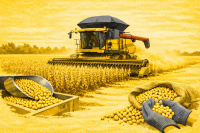
Paraguay is expected to end the 2025/26 cycle with the largest soybean harvest in its history, while off-season corn is entering a phase of greater attention due to the risk of loss of grain quality.
StoneX's July report, sent first to CNN Agro, kept the country's soybean production estimate unchanged at 12.34 million tons - adding the main harvest and the off-season -, while preserving the corn projection at 5.31 million tons.
The Brazilian market follows the Paraguayan cycle, which influences it for two reasons. In the country, there are many "brasiguaios", who are Brazilian farmers who settle in Paraguay in search of land for planting grains, mainly as an extension of Brazilian crops.
The second reason is the Paraguayan supply, which influences prices. The country is a strategic breadbasket, where 60% to 70% of soybean producers are concentrated. And also because Paraguay is the largest supplier of soybeans to Brazil.
Despite being the largest producer of the grain in the world, Brazil buys soy from abroad to meet internal demands in border regions and oil-crushing industries, due to the cost-benefit in relation to transporting soy from the Brazilian Center-West.
Soybean
In the case of soybeans, production continues to be supported by a strong performance in both the main harvest, estimated at 10.94 million tons, and the second harvest, projected at 1.40 million tons.
According to StoneX, the arrival of the second harvest supply did not put significant pressure on prices in the Paraguayan market. Commercialization is also progressing at an accelerated pace, with around 90% of production already negotiated, which reinforces the dynamism of sales in the neighboring country.
The numbers reinforce Paraguay's weight in regional supply at a time of strong competitiveness in South America in the global market.
According to StoneX, the total soybean area in the 2025/26 cycle reaches 3.72 million hectares, with emphasis on Alto Paraná, Itapúa, Canindeyú and Caaguazú among the main producing centers in the country.
The advancement of the record harvest and the good pace of commercialization help to sustain Paraguayan exportable supply.
Corn
Corn is the point of attention for the second half of the year because of the potential impact of quality on prices received by producers and climate risk. The concern is no longer volume, but rather the quality of the cereal.
Although the first harvests in June brought positive productive results, the combination of frequent rains, high relative humidity, lower light and episodes of low temperatures began to favor the emergence of diseases that compromise the quality of the cereal.
The risk, according to StoneX, is not in a significant drop in productivity, but rather in the increase in batches with damaged grains, subject to discounts on delivery to the industry.
"Some producers have already reported loads close to the tolerance limit in the first deliveries", highlights the StoneX report.
The pace of harvesting was also delayed. According to the consultancy, the rains forecast for the beginning of July tend to hinder the natural drying of corn and lengthen the work schedule, which was initially supposed to be completed this month, but could now go on until the beginning of August.
On the market, cereal sales remain slow, as much of the production is still in the field. Prices hover around US$140 per ton, but the behavior of prices in the coming weeks will still depend on more robust supply entering the market.
Source: CNN